

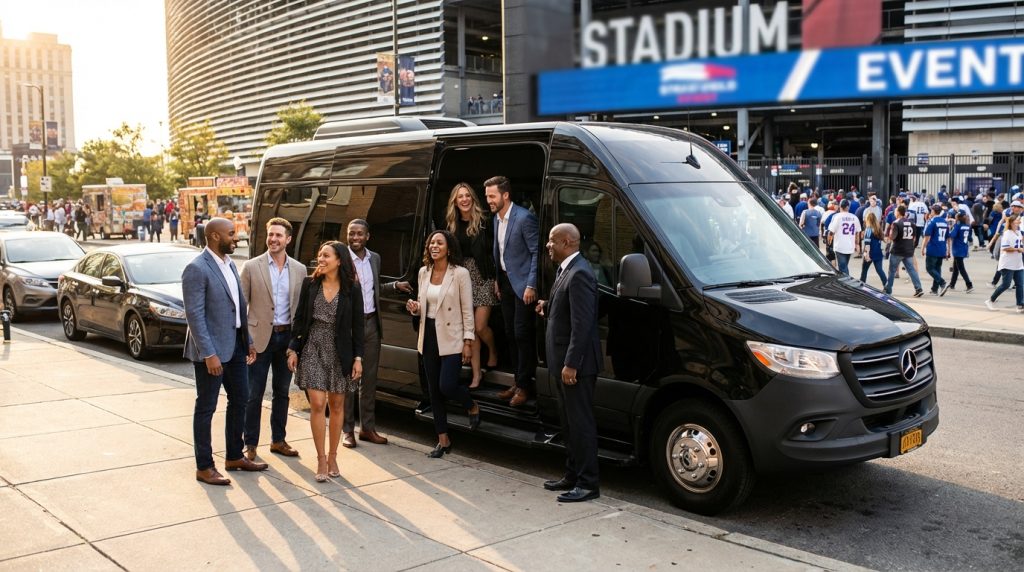
Getting your whole team to the Blue Jays Home Opener, together, on one schedule.
A corporate group at 1 Blue Jays Way faces 49,282 fans and a 90-minute arrival crunch. The fix is matching the real vehicle to your real headcount, from $175 per hour, with a fixed quote back within the hour.
The Home Opener is 1 of the highest-stakes group logistics days on the Toronto calendar: 49,282 fans, road closures on Front, Bremner, York, and Blue Jays Way, and a corporate group that has to arrive together and look like it planned ahead. The fix is not a bigger van, it is the right vehicle for the real headcount, timed against the 90-minute arrival window and the post-game crush that traps unprepared groups for 45 to 90 minutes. Everything below is drawn from the same operational detail our drivers run on the ground, not a generic event-transport script recycled from a different venue.
Corporate Group Size to Vehicle: The Rogers Centre Matrix
5 vehicle tiers cover every corporate group size, and matching the tier to the real headcount is what keeps a Home Opener outing from turning into a coordination problem, not the badge on the vehicle.
| Group size | Vehicle | Apprx Rate | |
|---|---|---|---|
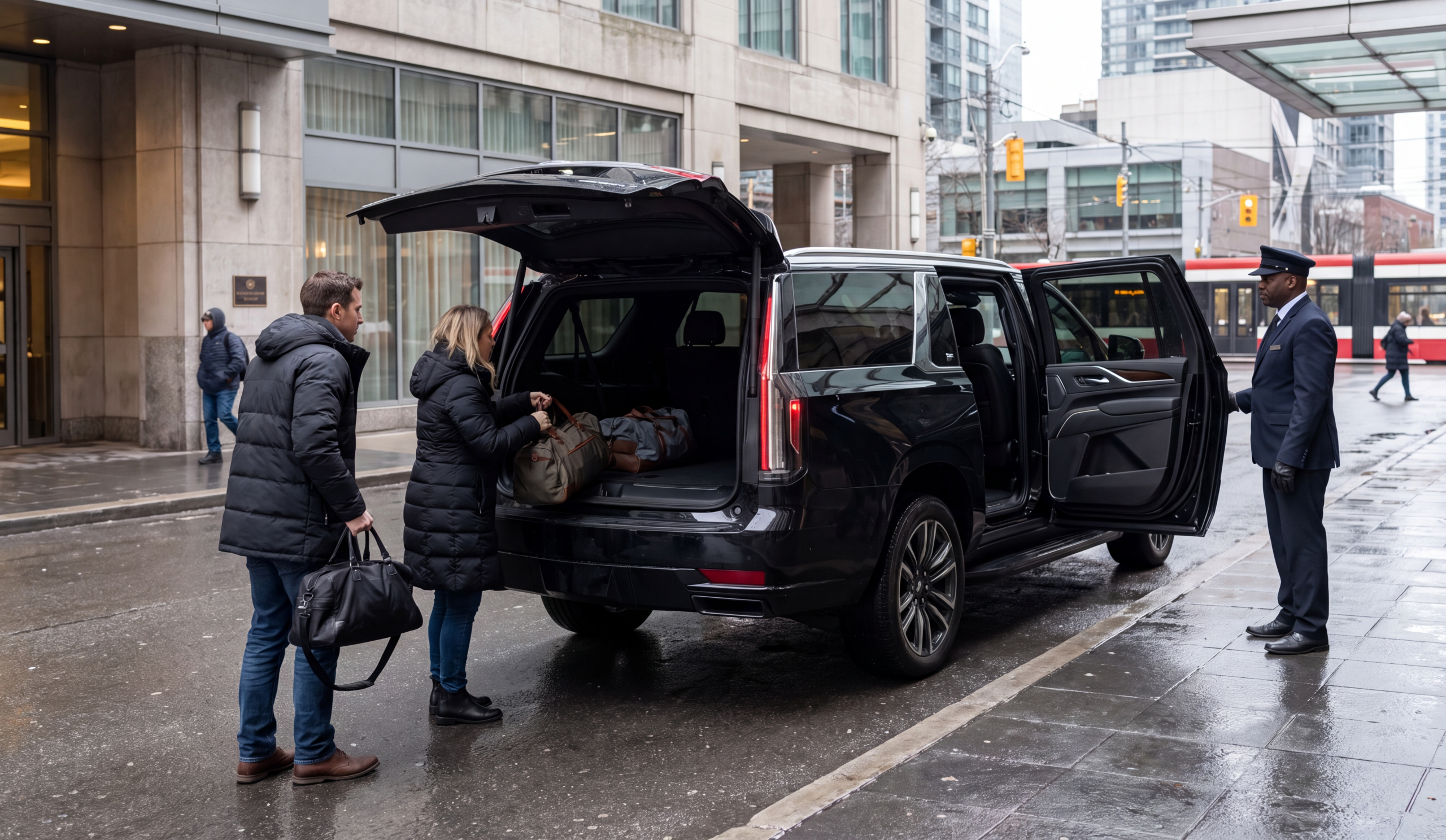
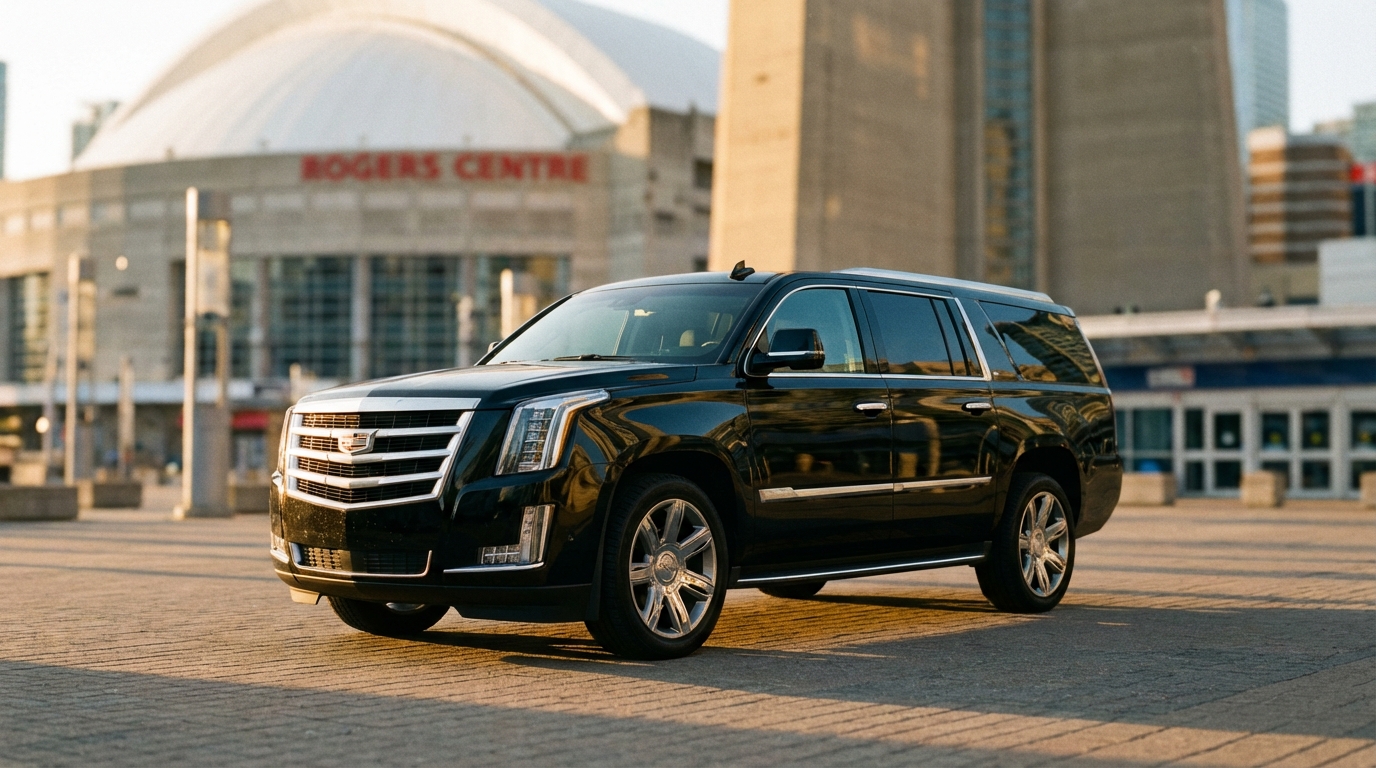
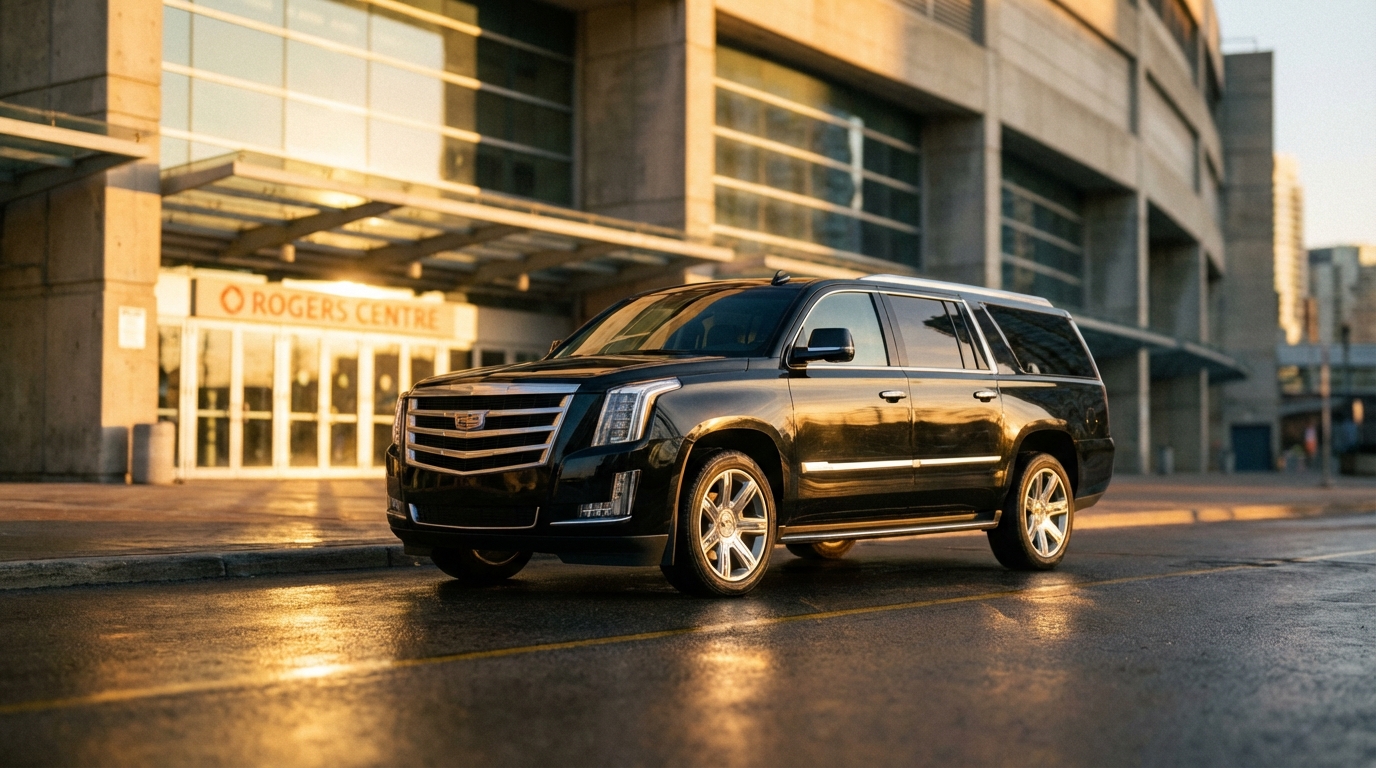
| 4 to 6 executives | Cadillac Escalade | $450/leg | |
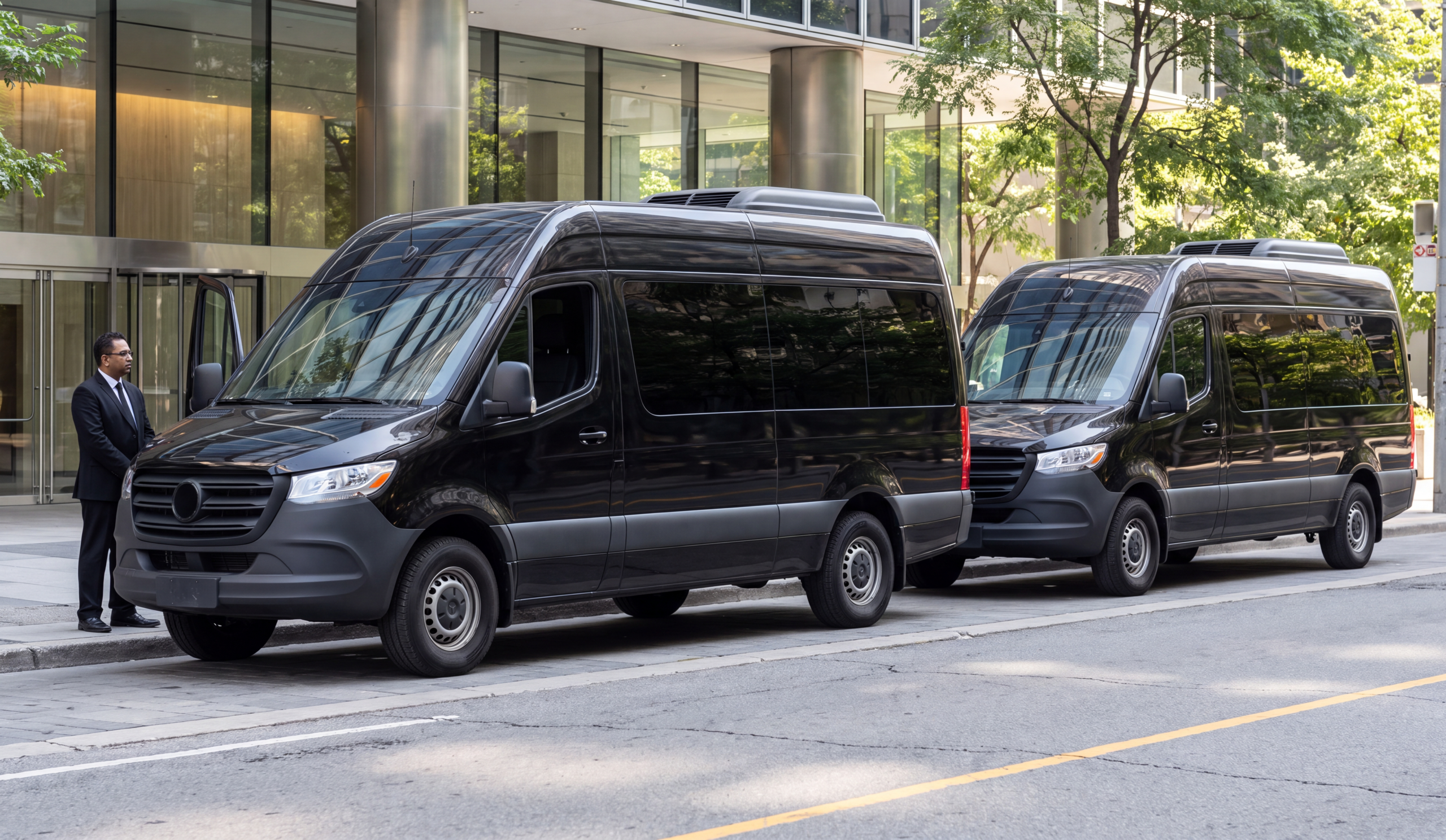
| 8 to 14 team members | Mercedes Sprinter | $800/leg | |
| 14 to 27 mixed group | 27-Seat Mini Coach | $250/hr (8 hr Minimum) | |
| 27 to 35 company event | 35-Seat Limousine Bus | $250/hr (8 hr Minimum) | |
| 35 to 56 company-wide | 56-Seat Coach | $325/hr (8 hr Minimum) |
All 5 tiers from our published rate card, plus HST 13% and gratuity 15 to 20 percent. The old rule of thumb, cram maximum occupancy into each vehicle, fails for corporate outings where suit jackets, laptop bags, and conversation space matter: a 14-passenger Sprinter comfortably seats 10 to 12 professionals for a 45-minute Home Opener run, not the full 14 it fits for an airport transfer.
The per-person math still favors the group vehicle even at the lower comfortable occupancy: a 10-person Sprinter booking at $875 for 5 hours works out to about $88 a head before tax, against the cost of 10 separate rideshare trips at Home Opener surge pricing plus 10 separate parking headaches. The comparison gets more lopsided once the post-game 20-minute trap enters the picture, since a chauffeured group skips it entirely while individual rideshares queue inside it.
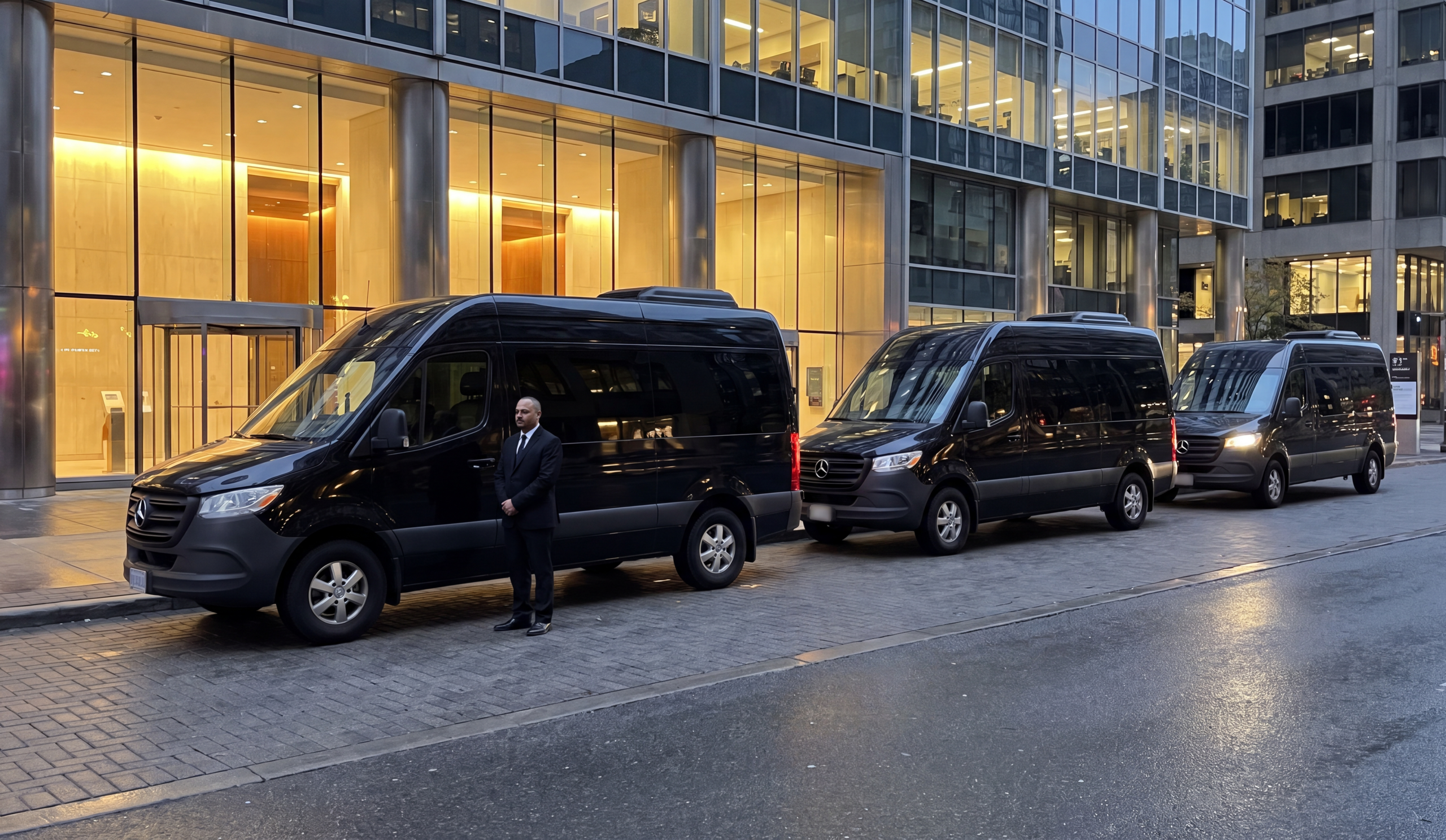
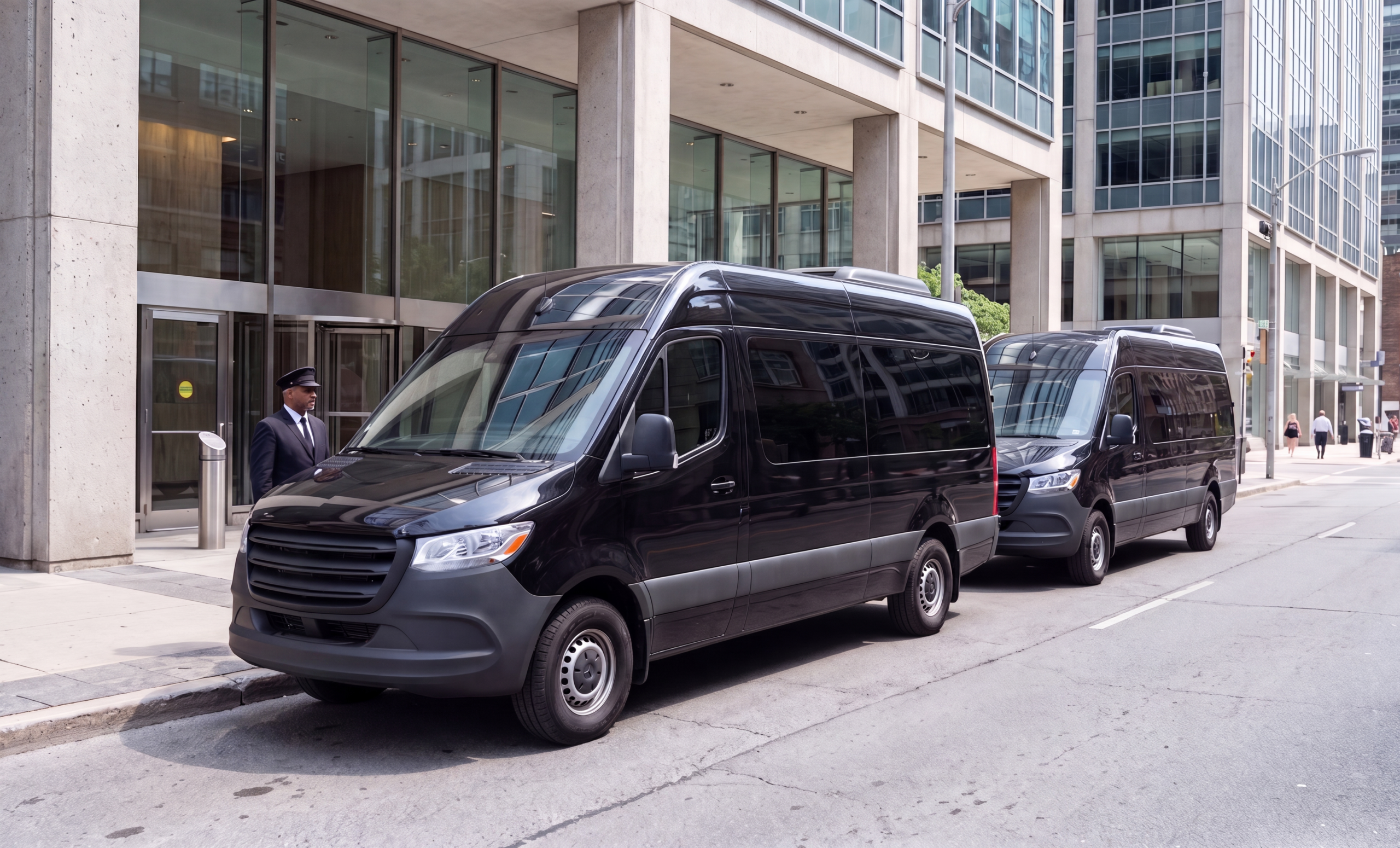
4 to 6 executives get the Escalade, the intimate setting for senior leadership without a shuttle-bus feel, at roughly $175 per hour. 8 to 14 team members is the Sprinter sweet spot, department outings where the group needs 1 vehicle and natural conversation groupings. Past 14, the choice is 2 coordinated Sprinters for hierarchy-appropriate groupings or a single mini coach for unified company-wide arrival; past 35, the 56-seat coach is the only tier built for it.
The Executive Sprinter tier at $195 per hour earns its premium on client-entertainment days specifically: leather seating, individual climate zones, and a sound system built for a pre-game conversation rather than a commute. A standard Sprinter at $175 per hour is the right call when the group is entirely internal staff and the priority is simply arriving together on schedule. Neither tier is objectively better; the client list on the invite decides which one is worth the extra $20 an hour.
The Rogers Centre Transportation Reality Check
Rogers Centre sits at 1 Blue Jays Way in the heart of the Entertainment District, which means your group’s route collides with Union Station commuter traffic, Financial District office workers, and tens of thousands of fans, all funneling through the same 6 to 8 blocks at once. Most planners treat it like any other downtown venue, and that assumption is exactly what causes the trouble.
The venue holds 49,282 fans at Home Opener capacity, and roughly 60 percent arrive by car or corporate transportation, which puts 8,000 to 10,000 vehicles into that same 6-block radius inside a 90-minute window. Front Street, Bremner Boulevard, York Street, and Blue Jays Way were never built for that volume. Corporate groups feel this differently than casual fans: your team needs to arrive together, hold a professional appearance, and often continue straight into post-game networking, none of which survives a 15-block walk from a distant parking spot.
April weather compounds the problem. Toronto’s Home Opener window swings from unseasonable snow to sudden downpours, which eliminates the budget parking-plus-walk combinations that work fine in July. A transportation plan that only accounts for good weather is not a plan.
The 6-block radius around Rogers Centre is smaller than most people picture until they are standing in it: Front Street runs the north edge, Bremner Boulevard the south, York Street and Blue Jays Way box in the east and west, and every one of those streets carries its own baseline traffic before a single fan arrives. Financial District office towers empty out at the same 5 to 6 PM window most Home Opener first pitches are scheduled for, which means your corporate group’s departure competes directly with the daily commute leaving the same blocks. A driver who only knows the venue, not the surrounding grid’s daily rhythm, is planning around half the problem.
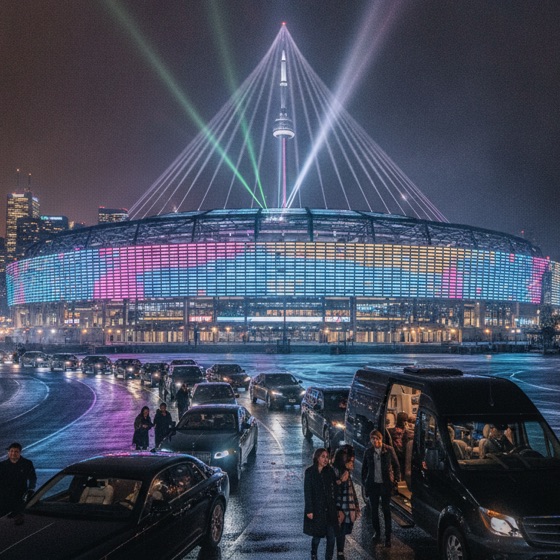
Timing Strategy: Arrival and the Post-Game Trap
Home Opener timing runs on a compressed 90-minute arrival window instead of the normal 3-hour spread, driven by season-ticket-holder excitement, media presence, and ceremonial first-pitch activities.
The workable corporate arrival window is 2.5 to 1.5 hours before first pitch: early enough to clear peak fan congestion, late enough to skip standing around, and timed to land your team in Rogers Centre’s corporate hospitality areas before the post-ceremony seating rush. Departure is the harder problem. What transportation professionals call the 20-minute trap is the period right after the final out, when 30,000-plus fans attempt to leave simultaneously; groups caught in it face 45 to 90 minute delays that wreck dinner reservations and cascade into the rest of the evening. Home Opener specifically adds ceremonial first-pitch activities and a longer pre-game program than a regular-season night, both of which push the safe arrival window earlier than a planner might assume from a normal Tuesday game.
2 departure strategies actually work: an early exit around the 7th inning for attendees with evening commitments, or an extended stay in the hospitality area until the worst of the crowd clears. Leaving with the crowd, the middle option, is the one that costs the most time for the least benefit.
Tiered departure is the sophisticated version of this: split the group so junior staff with evening plans leave during the 7th-inning stretch in 1 vehicle while senior leadership stays for the full game and networking in a second, each vehicle staged and timed independently. This only works when it is planned before the group leaves the office, not decided in the stands once the score gets tight. Building the plan into the original booking, rather than improvising it during the 8th inning, is the difference between a smooth 2-wave exit and 2 groups both stuck in the same jam.
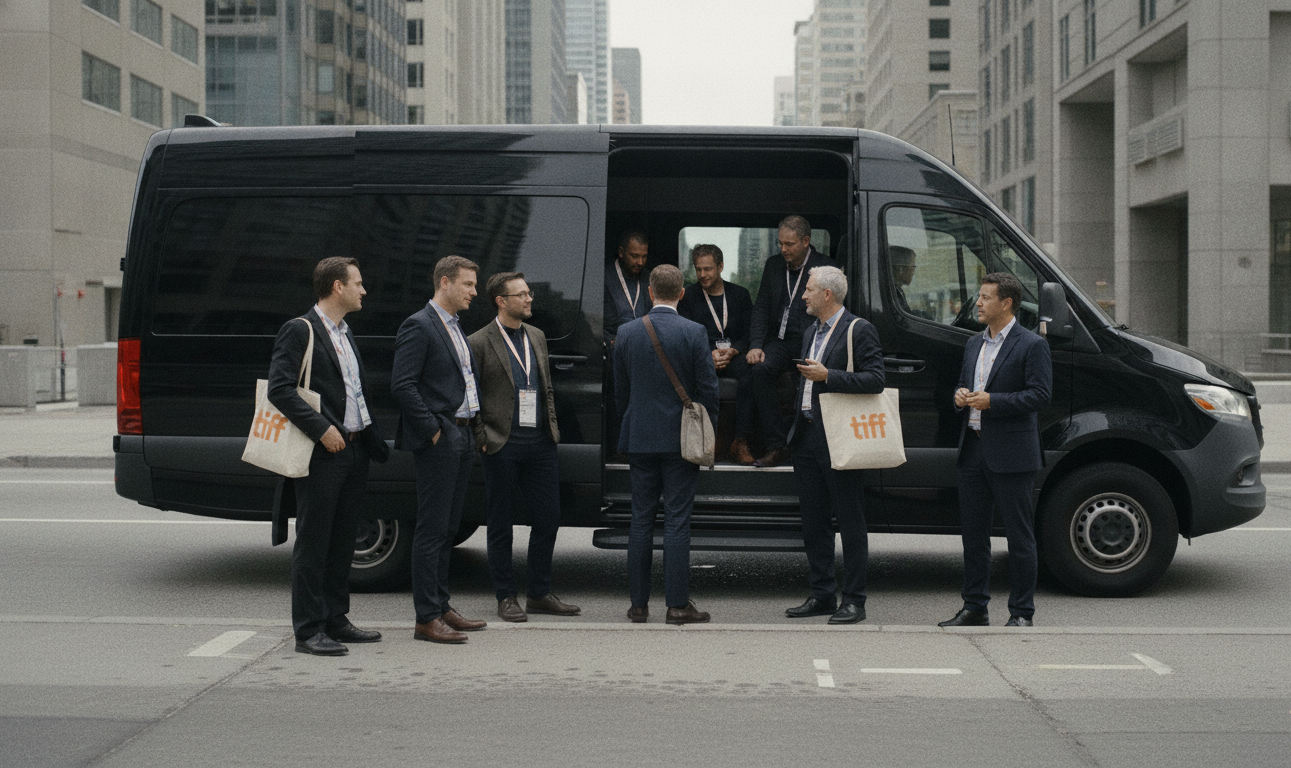
Beyond Consumer GPS: Gardiner vs Lakeshore
Standard GPS routing fails on Home Opener day because consumer navigation cannot account for dynamic road closures and police-directed traffic, turning a normal 15-minute route into a 60-minute one.
The Gardiner Expressway is fast until the York or Bay Street exits, then becomes a parking lot; the Lakeshore approach runs slower but consistently, adding 8 to 10 minutes of baseline time in exchange for predictability. Curbside drop-off at Rogers Centre saves walking time but may be restricted during Home Opener, while the underground parking structure protects from weather but adds a 10-plus minute walk through the crowd. The PATH system connects Union Station to Rogers Centre through climate-controlled walkways, useful as a severe-weather fallback, though it adds 15 to 20 minutes during peak periods.
Professional operators run dual-route planning as standard: a primary route for normal conditions and a backup that activates the moment real-time intelligence shows the primary failing, the same coordination discipline our Rogers Centre group transportation page runs for every event at the venue, and the pattern our drivers apply at Scotiabank Arena and Coca-Cola Coliseum on their own event nights.
The intelligence layer matters more than the route itself: drivers working Rogers Centre regularly maintain contact with other professional drivers reporting live conditions, plus a working sense of which police-directed detours are temporary versus which ones hold for the whole event. None of that shows up on a consumer map, and none of it updates fast enough on a rideshare app for a group that needs to be at a specific gate at a specific minute. A route decision made 10 minutes before departure, with current information, consistently beats a route locked in the night before, which is the entire reason a professional driver outperforms a self-driven group running the same GPS everyone else is running.
Booking Corporate Group Transportation for the Home Opener
Send 4 things: the date, the confirmed headcount, the pickup addresses, and the departure plan (7th-inning exit or full-game hold). A fixed quote with HST and gratuity itemized comes back within the hour.
Book 2 to 3 weeks ahead of Opening Day specifically, since it is the single highest-demand date on the Rogers Centre calendar and the right-sized vehicle sells out first. Assign 1 transportation point person within the group, someone with authority to make real-time departure calls, who is not necessarily the most senior executive attending. NET 30 invoicing is available for corporate accounts, and the corporate Sprinter program covers the same fleet for non-game-day executive travel.
The point person matters more than most planners expect: on a night when cell signal is patchy inside a 49,282-person stadium and the group is scattered between hospitality areas and seats, having 1 named person who can text the driver and make the call, rather than a group chat trying to reach consensus, is what keeps a tiered departure plan from collapsing into everyone improvising at once. Give that person the driver’s direct line before the group even leaves the office, not as an afterthought once the game starts.

“We received transportation to and from the airport (party of 6). Punctual, professional, polite, respectful, efficient and friendly staff. Reasonable price for service provided. Great communication from staff. Clean, comfortable, high end vehicles. Water provided to customers. Safe drivers. Drivers assisted with customers getting in/out of vehicles as required and managed the loading/unloading of bags/suitcases. Highly recommended. Will call upon them for transportation in the future.”
“I would like to appreciate David and his team of professionals for giving such an amazing service of picking up my family from their home in Mississauga and dropping them off at Pearson Airport, Toronto. Back and forth communication through email with David made my life easy as he thoroughly explained all the related expenses and detail of vehicles readily available to choose from. Their executive sprinter van was so big and comfortable which adjusted as many as 13 big bags and 5 travelling passengers. The passengers had a very good experience to the airport. I highly appreciate their professional team in terms of arriving on time, vehicle professionally driven. Keep up with the good work. Looking forward using this service very soon. Thanks”
“We booked a car service for a special evening out, and were not disappointed. The driver was professional and punctual. The car was comfortable. A great enhancement to our evening!”
Corporate Rogers Centre Transportation FAQ
The vehicle-size, timing, and booking questions Toronto corporate planners actually ask about Blue Jays Home Opener logistics.
How much does corporate group transportation cost for the Blue Jays Home Opener?
$175 per hour books the Escalade or the base Sprinter tier, with a 6-hour minimum on the Escalade ($1,050) and a 5-hour minimum on the Sprinter ($875), plus HST 13% and gratuity of 15 to 20 percent. Executive Sprinter and coach tiers run $195 to $325 per hour depending on group size. The quote is fixed before you approve it, so nothing changes on the invoice.
What size group fits in an Escalade for a corporate Rogers Centre outing?
6 passengers is the real Escalade capacity, the right fit for 4 to 6 senior executives who want an intimate setting without a shuttle-bus feel. Groups of 7 or more need the 14-passenger Sprinter instead. Matching headcount to the actual seat count is what keeps the per-person cost honest.
How many people fit comfortably in a Sprinter for a 45-minute corporate outing?
10 to 12 people comfortably, even though the Sprinter technically seats 14, because corporate groups carry suit jackets, laptop bags, and need more personal space than an airport transfer group. For a short, professional-appearance outing like a Home Opener run, book toward the lower end of that range. The full 14-seat count works better for longer, more casual bookings.
Is the driver included in the corporate transportation rate?
Yes, 100 percent of quoted rates include a professional, commercially licensed driver, fuel, and insurance across every vehicle tier from the Escalade to the 56-seat coach. There is no self-drive option. HST 13% and gratuity of 15 to 20 percent are itemized separately on the quote.
What is the minimum booking length for a Home Opener corporate outing?
6 hours on the Escalade and 5 hours on the Sprinter tiers, regardless of how long the game itself runs, because the booking has to cover pre-game arrival timing, potential traffic delays, and post-game departure coordination. A typical Home Opener booking runs pickup 2.5 hours before first pitch through a post-game departure. Shorter one-way transfers are available for groups arranging their own return.
How far in advance should we book for the Blue Jays Home Opener?
2 to 3 weeks minimum, since Opening Day is the single highest-demand date on the Rogers Centre calendar and the right-sized vehicle for a specific headcount sells out first. Standard regular-season games often book same-week. The quote holds once approved, so early booking costs nothing extra.
What is the best arrival time for a corporate group at Rogers Centre?
2.5 to 1.5 hours before first pitch is the workable window: early enough to clear peak fan congestion, late enough to avoid standing around, and timed to land your group in the corporate hospitality areas before the post-ceremony seating rush. Home Opener compresses the normal 3-hour arrival spread into 90 minutes, so timing matters more than on a regular-season night. Your driver adjusts the pickup time to hit this window from your actual starting address.
How does post-game departure work for large corporate groups?
2 departure strategies actually work: an early exit around the 7th inning for attendees with evening commitments, or staying in the hospitality area until the worst of the 30,000-plus person exodus clears. The period right after the final out, what our drivers call the 20-minute trap, produces 45 to 90 minute delays for groups that try to leave with the crowd. Staging the vehicle away from the immediate gate rush avoids both problems.
Can we split a large corporate group across multiple vehicles?
Yes, 2 coordinated Sprinters is the standard move for 20 to 35 people, letting senior executives and junior staff split naturally while both vehicles stage and depart on 1 unified schedule. The quote combines into 1 invoice regardless of vehicle count. Precise driver-to-driver communication keeps both vehicles arriving within minutes of each other.
What is the difference between the 27-seat mini coach and the 35-seat limousine bus?
Both run $250 per hour, so the choice comes down to group shape: the mini coach suits a straightforward company outing, while the limousine bus suits a group that wants lounge-style seating for a more social night. At 20 to 27 people either works; past 27, the limousine bus is the only one with room. Neither carries a coordination penalty the way splitting into multiple Sprinters can.
Does the rate change for high-demand dates like Opening Day?
No, the same published hourly rates apply on Opening Day as any other Rogers Centre date: $175 to $325 per hour depending on tier, plus HST and gratuity. What changes on high-demand dates is availability, not price, which is why booking 2 to 3 weeks out matters more than negotiating the rate. There is no surge multiplier on any tier.
Can the driver adjust the route in real time on game day?
Yes, 2 primary routes stay live the whole drive: Gardiner Expressway when it is moving, the Lakeshore approach when it is not, with the call made against real-time conditions rather than a fixed GPS route. This is the same routing discipline used for every major Toronto venue our fleet serves. Consumer navigation apps cannot see the road closures a professional route already accounts for.
Is curbside drop-off available at Rogers Centre during Home Opener?
10 minutes of extra walking is the worst case: curbside access may be restricted during Home Opener specifically, in which case the underground parking structure becomes the fallback with full weather protection. Your driver confirms which option is active as the date approaches. Either way, the group is dropped closer than any rideshare lot can reach.
What happens if the game runs into extra innings or is delayed?
0 broken bookings: hourly rates absorb a reasonable extension at the same rate, and the driver tracks the actual game ending rather than the scheduled one. Rain delays and extra innings are normal baseball-night variables the booking already accounts for. 1 text confirms the adjusted pickup time once the situation is clear.
Can we book transportation for a full-day corporate event around the Home Opener?
Yes, the vehicle can be held for the full day: a morning offsite, the game itself, and an evening client dinner all run on 1 hourly booking with the driver staging between stops. NET 30 invoicing covers the whole day as 1 line item for corporate accounts. Tell us the full itinerary at booking so the hours are quoted accurately upfront.
How do we coordinate pickup from multiple office locations?
1 combined route picks up from up to several addresses before heading to Rogers Centre, sequenced by the driver to minimize total travel time. This is standard for departments spread across different downtown offices. Confirm all pickup addresses and a rough headcount at each stop when you book.
Is there a weather contingency plan for outdoor pickup and drop-off?
Yes, the PATH system connects Union Station to Rogers Centre through climate-controlled walkways as a fallback, adding 15 to 20 minutes during peak periods, and every vehicle tier provides covered loading to keep the group dry at the curb. Severe weather triggers the backup route automatically as part of the dual-route planning every booking includes. Your group is never left waiting exposed at a curb.
Can corporate accounts get monthly invoicing instead of paying per trip?
Yes, NET 30 invoicing is available for corporate accounts booking Rogers Centre outings and any other event or executive travel through the same account. 1 monthly invoice covers every booking instead of a folder of individual receipts. Set this up once with our corporate transportation team and it applies to every future booking.
What vehicle amenities matter most for a client-entertainment Home Opener outing?
3 amenities carry the Executive Sprinter tier: leather seating, individual climate controls, and premium sound, all built to support a pre-game conversation in a way the base Sprinter does not, which matters when the group includes clients rather than only internal staff. Covered loading also protects clients from an April downpour on the way to the curb. The upgrade cost is small against the impression a basic rental van leaves on a client relationship.
How does chauffeur transportation compare to individual expense-account reimbursements?
1 vehicle and 1 invoice replace a stack of individual rideshare and parking reimbursements, and the real savings shows up in the time executives are not spending on parking logistics or travel stress. A 12-person Sprinter group splits roughly $73 a head on a 5-hour booking before tax, well inside what a single senior executive’s time is worth for that afternoon. The math favors 1 coordinated vehicle any time a group tops 4 people.
One team. One schedule, on time.
Send the date, the headcount, and the departure plan. A fixed corporate quote comes back within the hour. The plan holds whether it is 6 executives in an Escalade or 40 colleagues split across coordinated vehicles.