
Airport Shuttle for Corporate Teams – Group Sprinter Service
Synchronized arrival coordination for corporate teams at Toronto Pearson YYZ. Time-critical group departure management, multi-team shuttle staging, and business travel operational excellence supporting consolidated check-in sequencing and flight schedule adherence across Greater Toronto Area employment centers. Book online for your corporate team shuttle.
Corporate Airport Shuttle Fleet Configuration
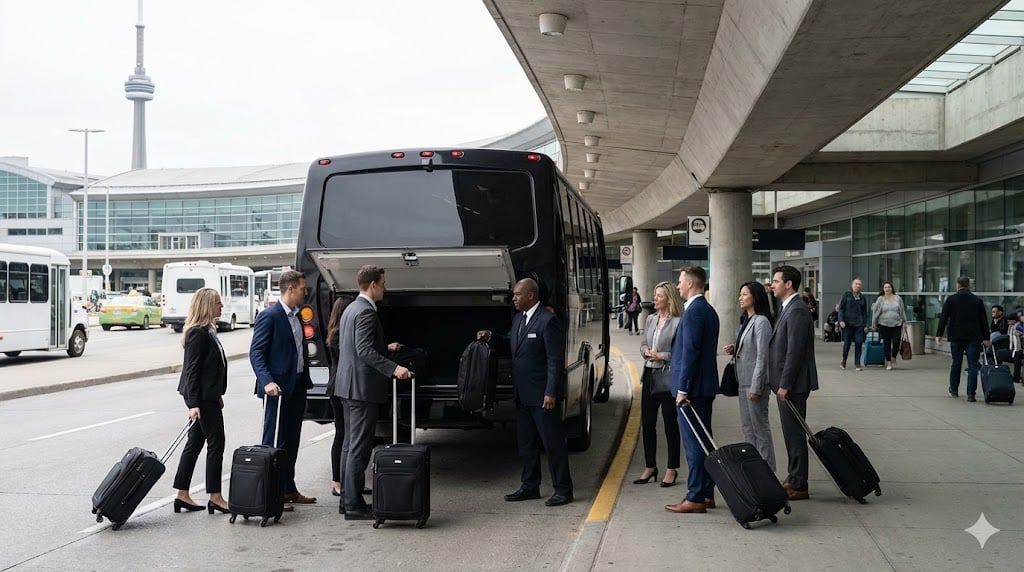

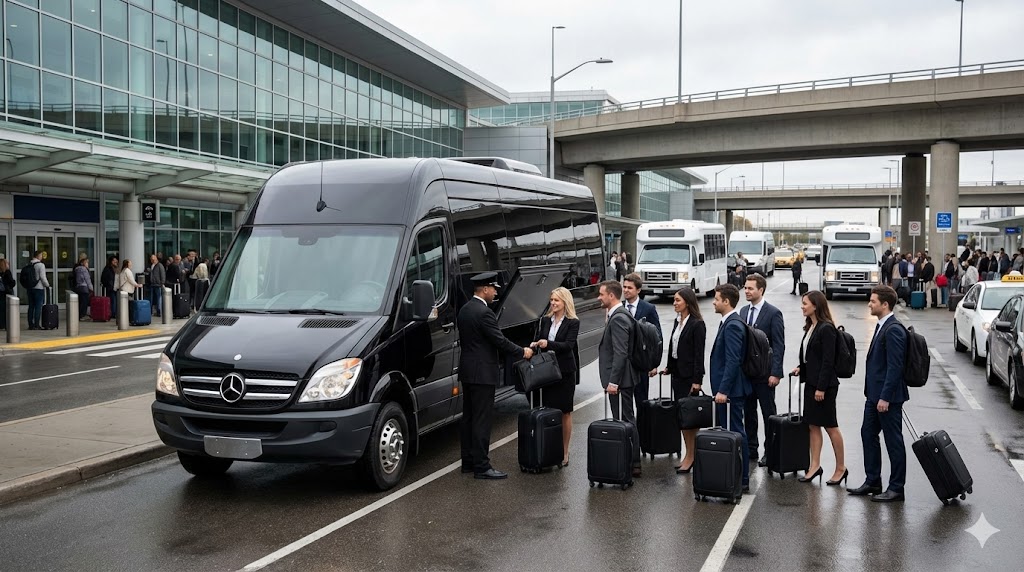

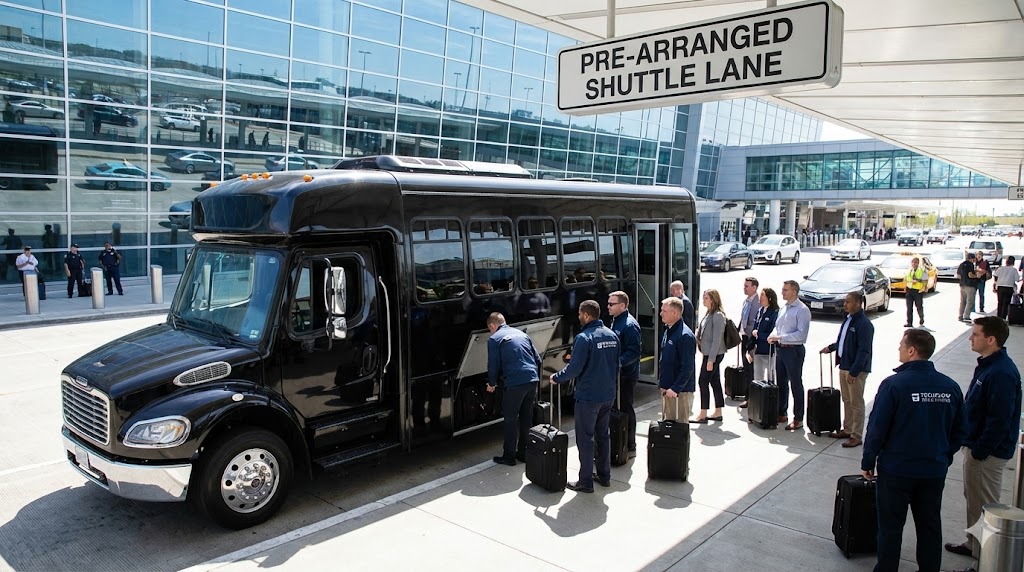
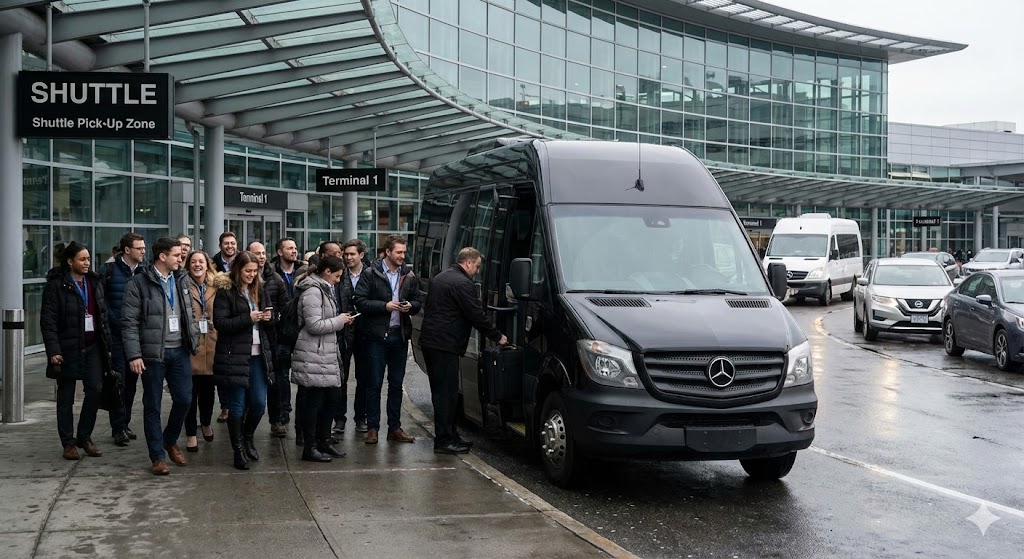
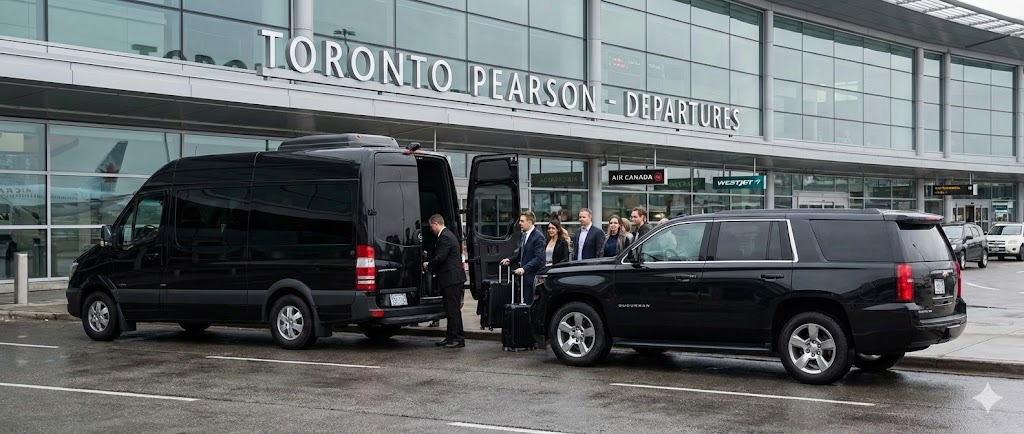
Corporate Airport Team Coordination: Operational Framework
Airport shuttle coordination for corporate teams demands precision execution across multi-dimensional operational parameters including flight schedule synchronization, terminal access protocols, group check-in timing optimization, and consolidated departure management. Organizations deploying teams for conferences, client meetings, site visits, and business development initiatives require integrated group transportation solutions ensuring synchronized arrival coordination, efficient baggage management, and time-critical check-in sequencing supporting on-time departure reliability across Toronto Pearson International Airport, Hamilton International, and Billy Bishop Toronto City Airport operations.
Business travel coordination represents critical operational infrastructure supporting corporate mobility objectives through seamless departure sequencing, arrival reception management, multi-team staging protocols, and consolidated ground transportation eliminating individual employee coordination complexity. 14-passenger Sprinter deployment supports team volumes ranging 4-14 participants enabling consolidated vehicle allocation versus fragmented sedan coordination creating timing variability and operational inefficiency. Organizations executing time-sensitive travel programs leverage professional shuttle services addressing departure deadline pressure, airline check-in requirements, security processing coordination, and arrival timing predictability.
Service framework: Travel coordinators establish operational parameters defining pickup location specifications, departure timing windows, airline check-in deadlines, luggage quantity allocation, and arrival coordination requirements. Professional driver teams execute synchronized departure protocols ensuring terminal arrival timing aligned with airline check-in window requirements (typically 90-120 minutes domestic flights, 180-240 minutes international departures). Real-time flight tracking integration enables dynamic arrival coordination responding to flight delay notifications, gate changes, and baggage claim variations. Request airport team coordination proposal: 905-633-5804.
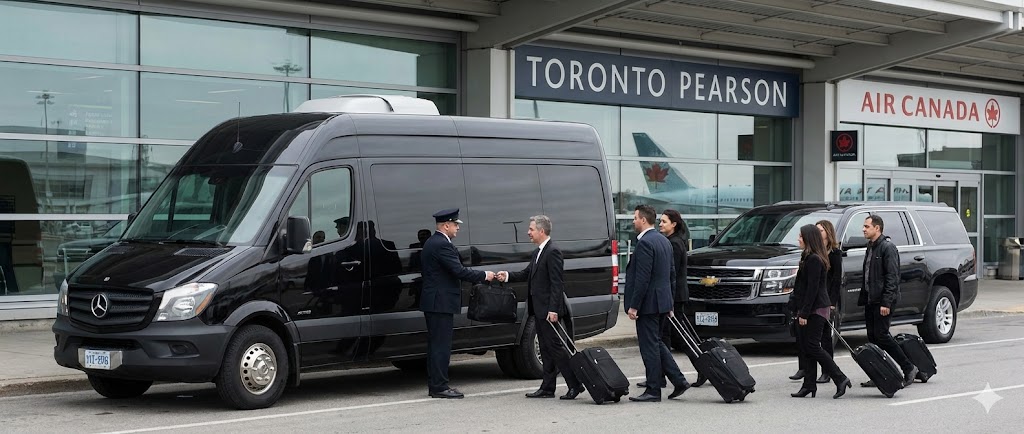
Synchronized Team Arrival and Departure Coordination
Consolidated departure management for business travel teams. Organizations deploying teams for client meetings, site visits, conferences, or business development activities require coordinated airport departure services ensuring synchronized terminal arrival supporting group check-in processing, consolidated luggage handling, and team cohesion maintenance versus fragmented individual arrivals creating coordination complexity. 14-passenger Sprinter deployment enables single-vehicle team consolidation (4-14 participants) optimizing departure efficiency through unified pickup sequencing, route optimization eliminating multiple stops, and terminal delivery timing precision. Service architecture accommodates distributed pickup requirements where team members originate from different Toronto locations (downtown office, suburban residences, hotel accommodations) requiring sequential coordination maintaining overall timeline integrity. Professional drivers execute pickup sequences designed for time-critical departure windows accounting for traffic pattern variability, terminal access conditions, and airline-specific check-in deadline requirements.
Arrival coordination and multi-destination deployment. Inbound corporate team arrivals demand coordinated reception services addressing flight tracking, baggage claim coordination, terminal pickup synchronization, and multi-destination deployment serving teams splitting between office locations, hotel check-ins, and direct-to-meeting transfers. Service parameters incorporate real-time flight monitoring enabling driver deployment timing adjustments responding to arrival delays, early landings, or gate assignment changes. Baggage claim coordination protocols establish designated meeting locations (typically pre-security arrivals area versus post-baggage pickup) optimizing team assembly efficiency while accommodating stragglers experiencing customs processing delays or lost luggage situations. Multi-destination capabilities support team splits where executives proceed directly to downtown client meetings while support staff transfer to hotel accommodations, requiring dual-vehicle deployment or sequential drop-off routing optimization.
International team coordination and customs clearance synchronization. International business travel introduces additional coordination complexity including customs processing variability, international terminal navigation, enhanced security protocols, and extended pre-departure timing requirements (3-hour check-in windows versus 90-minute domestic standards). Organizations deploying teams for international conferences, global client visits, or overseas facility tours require specialized coordination services addressing passport verification, visa documentation confirmation, customs declaration assistance, and arrival hall reception in foreign jurisdictions. Departure coordination incorporates buffer timing accommodating unpredictable customs processing durations, international terminal access protocols requiring commercial vehicle permits, and airline-specific international check-in requirements varying by carrier and destination. Return arrival coordination addresses customs clearance synchronization where team members experience processing duration variability based on declaration complexity, random inspection selection, or NEXUS/Global Entry enrollment status creating 15-45 minute arrival spread requiring flexible pickup coordination.
Executive team and support staff tiered coordination. Corporate travel programs frequently deploy hierarchical team structures including C-suite executives, senior management, support personnel, and administrative staff requiring tiered transportation coordination reflecting organizational protocols. Service deployment accommodates executive preference for dedicated sedan services providing privacy and flexibility separate from support staff utilizing consolidated group shuttles. Multi-vehicle coordination ensures synchronized terminal arrival maintaining team cohesion while respecting organizational hierarchy protocols. Example deployment: 12-person team comprising 2 executives, 4 managers, 6 support staff = 2 executive sedans + 1 Sprinter van, coordinated arrival ensuring unified check-in timing despite separate vehicle deployment. Organizations value discrete coordination maintaining professional appearance avoiding obviously stratified transportation suggesting organizational inequality while respecting practical executive scheduling flexibility requirements.
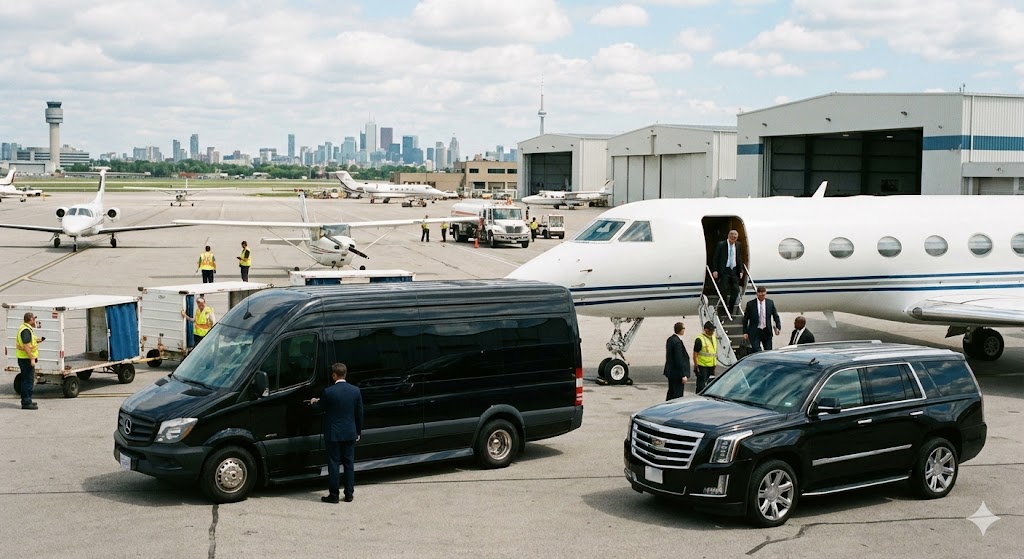
Group Check-In Timing Optimization and Deadline Management
Airline check-in window requirements and timing calculations. Commercial aviation operations establish check-in deadline protocols requiring passenger processing completion specific timeframes before scheduled departure: domestic flights typically mandate 60-90 minute advance check-in (airline-dependent), while international departures require 120-180 minute windows accommodating enhanced security screening and customs processing. Corporate airport shuttle coordination incorporates reverse-timing calculations establishing terminal arrival targets ensuring group check-in completion within airline requirements. Example scenario: 3:00 PM domestic departure = 1:30 PM recommended check-in deadline = 12:45 PM terminal arrival target (accounting for 45-minute group processing duration). Service deployment establishes pickup timing working backward from terminal arrival target incorporating route duration, traffic pattern variability, and pickup location sequencing where distributed team assembly occurs. Organizations experiencing historical tardiness challenges implement buffer enhancements establishing conservative arrival targets (2-hour domestic, 3.5-hour international) preventing deadline pressure and missed departure scenarios.
Group processing efficiency and airline coordination. Team travel coordination benefits from advance airline notification enabling group check-in processing optimization through dedicated counter allocation, consolidated boarding pass issuance, and coordinated seat assignment management. Organizations booking 10+ passengers access airline group desk services streamlining check-in procedures versus individual processing creating queue delays and separated seating assignments. Travel coordinator communication with airline group desks establishes expected arrival timing, special requirements (baggage quantity, equipment transport, wheelchair assistance), and documentation needs (international travel requiring passport verification). Some carriers provide dedicated group check-in zones (separate from general check-in queues) reducing processing duration from 45 minutes to 15-20 minutes for properly coordinated teams. Organizations lacking group desk coordination experience extended processing durations where 12-person teams processing through standard check-in lanes create 60-90 minute timelines versus 20-minute optimized scenarios.
Security screening coordination and NEXUS/TSA PreCheck optimization. Post-check-in security processing represents timing variability requiring buffer allocation within overall departure timeline management. Toronto Pearson operations experience security wait times ranging 5-15 minutes (off-peak periods) to 45-90 minutes (peak travel windows: 5-8 AM, 3-6 PM weekdays). Organizations deploying teams during peak periods implement enhanced buffer timing or leverage expedited screening programs (NEXUS for Canadian/US travel, TSA PreCheck for US-originating flights) reducing security processing to 5-10 minutes versus standard 30-60 minute timelines. Team coordination benefits from consolidated NEXUS enrollment where entire teams access expedited lanes versus mixed-credential scenarios creating processing splits. Companies supporting frequent business travelers implement NEXUS enrollment assistance (application fee reimbursement, interview scheduling coordination) generating operational efficiency through reduced airport processing durations enabling tighter departure scheduling and enhanced productivity.
Flight delay management and alternative departure coordination. Commercial aviation schedule reliability challenges require contingency planning addressing delay notifications, cancellation responses, and alternative flight rebooking coordination impacting ground transportation deployment. Service agreements establish delay response protocols including driver standby procedures (waiting without penalty during short delays), pickup time modifications (rescheduling for extended delays), and cancellation policies (fee structures for aborted trips). Real-time communication systems enable travel coordinator notification of transportation team regarding flight status changes allowing coordinated response versus individual employee confusion. Organizations experiencing flight cancellations benefit from professional driver assistance navigating rebooking options, alternative airport consideration (Hamilton Airport versus Pearson for certain destinations), and revised timing coordination. Request timing coordination consultation: 905-633-5804.
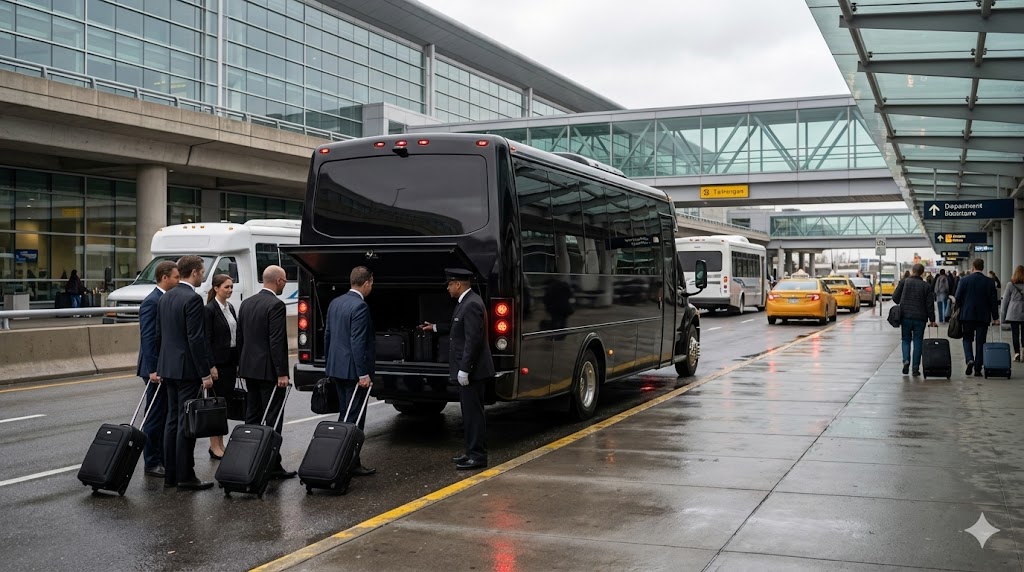
Airport Shuttle Staging Protocols and Terminal Access Management
Commercial vehicle terminal access and staging zone protocols. Toronto Pearson International Airport operates regulated commercial vehicle access systems requiring pre-arranged transportation providers maintain specific permits, insurance documentation, and operational compliance enabling designated staging area utilization. Pre-arranged lane access (versus general pickup zones) provides operational advantages including dedicated curb space allocation, extended waiting tolerance (15-minute windows versus 3-minute general pickup limits), and priority positioning during high-volume periods. Professional shuttle services maintain airport authority permits ensuring compliant terminal access, avoiding enforcement actions (citations, vehicle impoundment), and delivering reliable pickup coordination versus unauthorized operators experiencing access restrictions. Organizations value permitted operator engagement ensuring seamless terminal operations without passenger coordination disruption from regulatory compliance issues.
Driver communication and passenger coordination protocols. Effective airport pickup coordination requires established communication protocols enabling driver-passenger connection amid terminal complexity and passenger volume. Service deployment incorporates multiple coordination touchpoints: advance notification (24-hour confirmation with flight details, pickup location specification), departure monitoring (driver tracking team assembly timing), arrival communication (driver positioned notification sent to travel coordinator), and real-time assistance (driver mobile contact for coordination questions). Technology integration through mobile applications enables passenger visibility of driver location, vehicle identification details (license plate, vehicle description), and estimated arrival timing at designated pickup zones. Some services deploy passenger greeters (uniformed personnel stationed inside terminal) providing navigation assistance, luggage cart coordination, and escort services to vehicle staging locations—particularly valuable for international arrivals where passengers experience terminal disorientation or language barriers.
Terminal-specific staging procedures and facility navigation. Pearson YYZ operations span Terminal 1 (Air Canada, Star Alliance carriers) and Terminal 3 (WestJet, international carriers) requiring terminal-specific coordination addressing distinct pickup locations, access roadways, and passenger navigation patterns. Professional drivers maintain facility expertise understanding optimal staging positions for different airlines, peak congestion periods requiring alternative pickup zones, and terminal construction impacts affecting standard access routes. Service coordination incorporates terminal assignment verification (flight-specific terminal operations) preventing passenger confusion where teams assume incorrect terminal creating coordination delays and missed connections. Organizations deploying teams on connecting itineraries coordinate terminal transitions where domestic-to-international connections require inter-terminal navigation (10-15 minute LINK train transfer between T1-T3) impacting arrival timing calculations and pickup location specifications.
Weather contingency staging and operational flexibility. Winter weather conditions, construction impacts, and special event traffic create terminal access variability requiring operational flexibility and contingency protocols. Professional shuttle operators implement weather monitoring systems tracking storm predictions, airport delay notifications, and traffic pattern disruptions enabling proactive coordination adjustments. Severe weather scenarios require enhanced buffer timing (additional 30-60 minutes for significant snow events), alternative staging locations (cell phone lots versus curb-side pickup during heavy congestion), and passenger communication updates managing expectation regarding extended wait durations. Organizations value operator experience navigating weather challenges through established contingency protocols versus inexperienced providers creating service failures during challenging conditions when reliable coordination becomes most critical. Airport staging consultation: 905-633-5804.
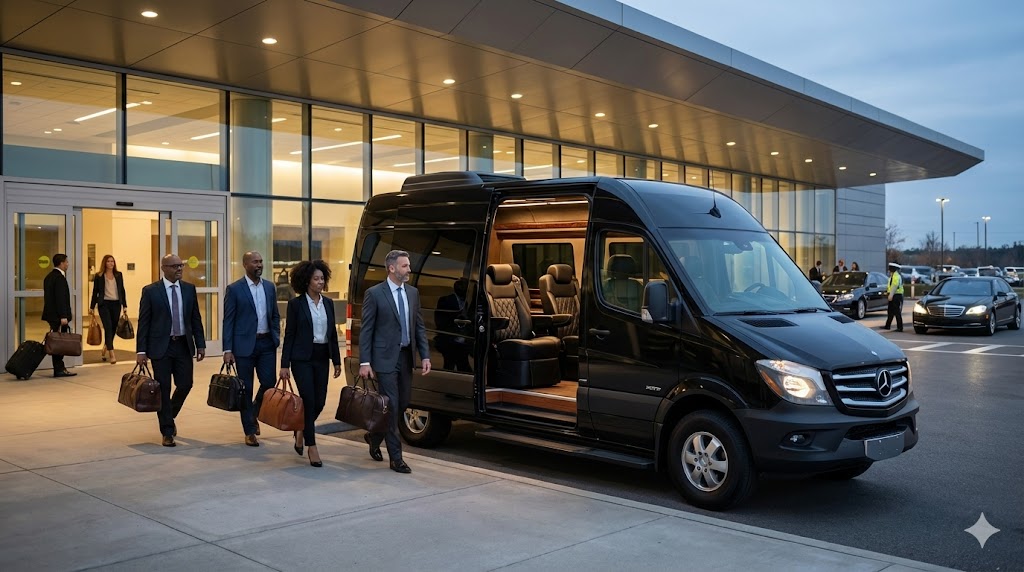
Multi-Team Coordination and Complex Deployment Management
Large-scale corporate deployment and conference team coordination. Organizations deploying multiple teams for conferences, trade shows, or large client events require coordinated multi-vehicle shuttle operations managing 20-50+ participants across distributed departure schedules, varied destination requirements, and hierarchical coordination protocols. Service architecture accommodates staggered departure timing where different teams travel on different flights (morning/afternoon/evening departures), require different destinations (some direct-to-venue, others via hotel check-in), or operate on different itineraries (multi-day versus day-trip programs). Fleet deployment utilizes multiple Sprinter vehicles operating synchronized schedules or sequential rotations depending on overall participant volume and timing distribution. Example: 40-person conference deployment = 3 Sprinters operating 2 departure waves (20 participants morning flight, 20 participants afternoon flight) requiring coordinated vehicle rotation and driver scheduling.
Multi-location pickup sequencing and route optimization. Corporate teams assembling from distributed Toronto area locations (downtown office, suburban facilities, residential neighborhoods, hotel accommodations) require sequential pickup coordination maintaining overall timeline integrity while minimizing individual wait durations. Service planning establishes optimal pickup sequences balancing route efficiency (minimizing backtracking) against participant convenience (avoiding 90-minute vehicle duration for first pickup awaiting final participant). Professional coordination incorporates traffic pattern analysis identifying optimal sequencing addressing rush hour impacts where Mississauga pickups before 8 AM avoid highway congestion versus post-8 AM timing adding 20-30 minutes. Organizations value coordination expertise optimizing complex pickup scenarios versus inexperienced providers creating inefficient routing extending total trip duration and increasing tardiness risk.
Return coordination and arrival reception management. Inbound team arrivals introduce coordination complexity addressing flight tracking across multiple inbound services (teams returning on different flights throughout day), baggage claim synchronization (international versus domestic claim timing variability), and multi-destination deployment (some to office, others to residences). Service deployment maintains flexible vehicle allocation responding to actual arrival timing versus scheduled estimates where flight delays create 30-60 minute variances. Technology integration enables dynamic coordination where driver deployment adjusts based on real-time flight tracking data rather than scheduled landing times. Organizations experiencing frequent international travel benefit from professional coordination managing customs processing variability where team members clear customs across 20-40 minute windows creating reception coordination challenges. Multi-team services incorporate passenger tracking systems confirming all team members successfully connected with transportation versus stragglers requiring follow-up coordination.
Cross-functional team coordination and departmental integration. Enterprise organizations deploying cross-functional teams (sales, engineering, operations, executive management) require coordination protocols addressing departmental preferences, hierarchical sensitivities, and varied itinerary requirements. Service deployment accommodates tiered coordination where senior executives access dedicated sedan services with flexible scheduling separate from support personnel utilizing fixed-schedule group shuttles. Organizations value discrete coordination maintaining professional coordination without highlighting organizational stratification through obviously separated transportation tiers. Communication protocols establish clear departmental contact points (executive assistants for C-suite coordination, operations managers for support staff logistics, travel coordinators for overall program management) enabling efficient coordination without creating confusion regarding appropriate authorization channels. Complex deployment consultation: 905-633-5804.
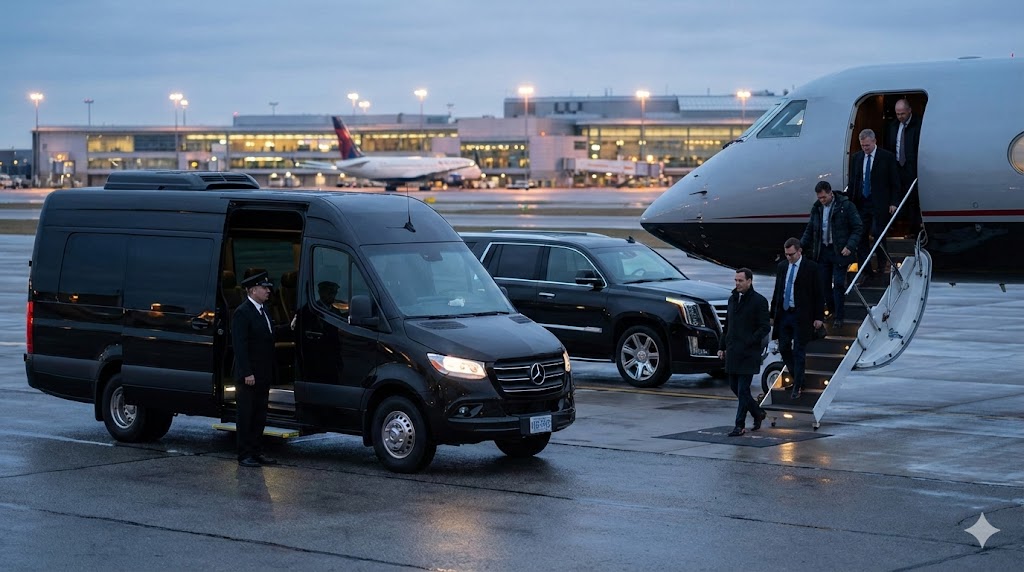
Airport Service Coverage and Pricing Structure
Distance-based pricing with hourly coordination. Sprinter airport shuttle services utilize hybrid pricing combining distance-based rates ($3.30/km) with minimum hourly charges ensuring cost predictability for corporate travel programs. Example calculations: Downtown Toronto to Pearson YYZ (25km) = $82.50 base + $150 hourly minimum (1-hour service) = $150 total. Mississauga to Pearson (15km) = $49.50 + $150 minimum = $150. Brampton to Pearson (30km) = $99 + $150 minimum = $150. Extended pickups requiring multi-location sequencing incur additional coordination time beyond base minimums. Per-passenger allocation for 10-person team: $150 ÷ 10 = $15/person versus individual rideshare $45-65 generating 66-76% cost savings through consolidated coordination.
Airport coordination inquiries: 905-633-5804 | [email protected]
Business travel coordination: 905-633-5804 | Airport logistics consultation
Corporate Airport Team Coordination Services
Business travel logistics: 905-633-5804
Email: [email protected]
Serving Toronto Pearson, Hamilton, Billy Bishop, and private aviation facilities with synchronized corporate team coordination.