

Corporate retreat transportation, run as a program, not a one-off booking.
A dedicated fleet and a fixed cadence for quarterly offsites, annual leadership retreats, and multi-day Muskoka programs, billed on one standing corporate contract instead of a fresh quote every single time.
Most corporate transportation gets booked trip by trip: a quote here, a driver there, a different invoice every single quarter. A retreat transportation program flips that: one contract, one dedicated account manager, and a fleet held on standby for your recurring dates, so the fifth offsite books as fast as an email instead of a fresh RFP. Everything below covers how that contract is structured, priced, and set up.
A Retreat Program Is Not the Same Booking as a One-Off Offsite
If your team runs one retreat this year, book it as a single trip: our corporate retreat transportation page and the team-building off-site Sprinter rental page both cover that booking directly, hourly or daily, no contract required.
A program is different math. It exists for teams that know they will need the same kind of transportation again: quarterly leadership offsites, an annual all-hands retreat, a recurring client-entertainment weekend, or a standing account that books 3, 4, or more trips a year. Instead of re-quoting and re-onboarding a driver every time, a program locks in a rate structure, a dedicated point of contact, and priority vehicle holds for your known dates, all under one standing corporate contract.
The trigger for moving from one-off to program is usually the second repeat booking. If HR or the executive office has already run the same offsite twice, the transportation should stop being a new RFP each time. That is the entire pitch of this page.
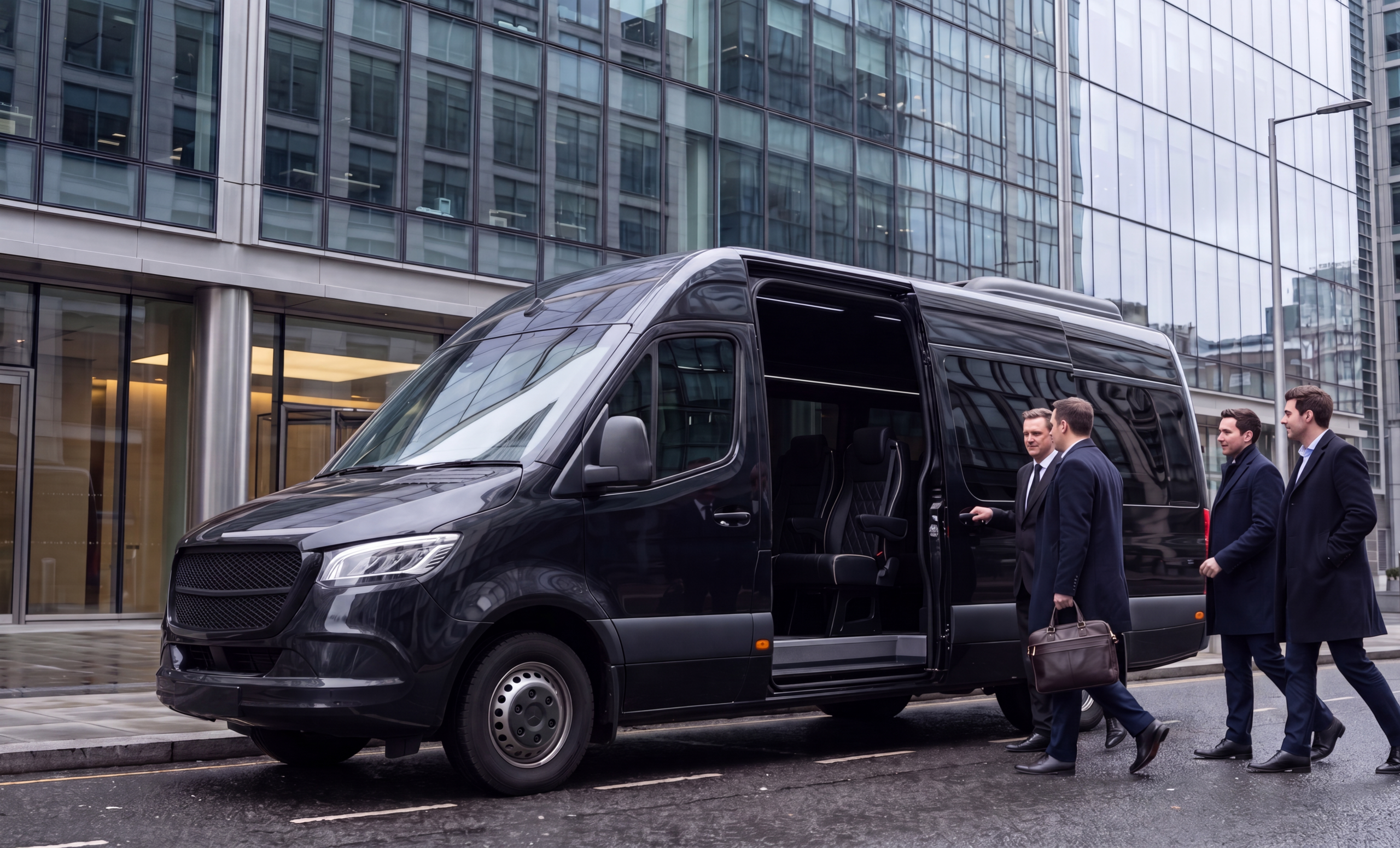
The math behind that trigger is straightforward: a one-off quote carries a small setup cost every time, a new intake call, a fresh vehicle check, a driver briefed cold on the route. Run that 3 or 4 times a year and the setup cost repeats every time, invisible on any single invoice but real across the calendar. A program collapses that repeated setup into one conversation at the start of the contract term, which is the actual source of the savings, not a discount on the hourly rate itself.

What a Retreat Transportation Program Actually Includes
A program bundles 4 things a one-off booking does not: a dedicated account manager, priority vehicle holds on your recurring dates, standing NET 30 invoicing, and a rate structure fixed for the contract term.
The account manager is the practical difference. Instead of a new intake call every quarter, one person owns your retreat calendar, knows your preferred pickup points, knows which executives need the Escalade and which departments are fine in the Sprinter, and confirms the whole run in one email thread. Vehicle holds matter just as much: retreat season (spring offsites, September all-hands, December leadership dinners) is exactly when demand spikes, and a program client is staged first.
Pricing runs as a program rate rather than a published tier table, because the number depends on vehicle mix, trip count per year, and how many days each retreat runs; the working anchor for a 14-passenger Sprinter program is $500 to $800 per day, plus HST 13% and gratuity 15 to 20 percent, with longer-term contracts trending toward the lower end. A planning call maps your actual retreat calendar and returns a program quote within 2 business days.
The rate structure being fixed for the contract term is the part most finance teams ask about first: a program locks the daily and hourly figures for the length of the agreement, so a rate increase mid-year on the general fleet does not touch a signed program account. That predictability is worth more to a finance department planning next year’s offsite budget than a marginal per-trip discount would be, which is why programs are priced as a package rather than as a percentage off the published rate card.
Seasonal demand is the other piece finance teams underestimate. Retreat season clusters hard around 3 windows, spring offsites, September all-hands, and December leadership dinners, and every operator in the market sees the same spike. A program client’s vehicles are held before that spike hits general demand; a one-off booking placed the same week as everyone else’s spring offsite is competing for whatever is left. That priority is worth more than it looks on paper the first time a quarter’s dates land during a busy stretch and the vehicle is simply there.
Multi-Day Muskoka & Cottage-Country Retreat Programs
Multi-day retreats need a 3-leg transportation plan, not a single quote: the Toronto-to-resort arrival, on-site shuttling between the lodge and activities, and the return leg, all staffed by drivers who know the route.
Cottage-country resorts (JW Marriott Muskoka, Deerhurst, Taboo) run 2 to 3 hours from downtown, and a standing program means the same drivers make that run every quarter and know the resort’s own driveway, loading dock, and check-in flow, not a driver seeing it cold. Our Muskoka corporate retreat transportation page details the resort-specific logistics; on a program, that same route books itself once the dates are on the calendar. See our Muskoka resorts overview for the venue side of the planning.
On-site, the vehicle mix usually splits: an Escalade or two for the executive team’s flexibility, a Sprinter or mini coach for the group activity block (golf shuttle, lake excursion, dinner venue), and one vehicle held on standby for the inevitable late-departure or early-flight exception. A program prices that whole 3-day footprint as one line, not five separate bookings.

The standby vehicle is the detail one-off bookings usually skip and programs build in by default. Multi-day retreats always produce at least one exception, an executive who has to leave a day early for a deal that will not wait, a flight moved up, a spouse joining for the last night, and a program contract prices that flexibility into the rate rather than treating it as a surprise add-on quoted under pressure at the resort. That standby coverage, more than any single discount, is what separates a program from a stack of individually booked trips.

Quarterly and Annual Offsite Cadence Planning
The most common program shape is quarterly leadership offsites plus one annual all-hands, and the contract is built around that calendar, not around a single trip.
A typical quarterly cadence: 8 to 12 executives, half-day or full-day, downtown-to-venue-and-back, same Escalade or Executive Sprinter pair each time. The annual all-hands scales up, often into the motorcoach or mini coach tier when headcount runs past 25, still under the same account. Team-building days that fall outside the standing dates still book through the team-building off-site page at the program’s contracted rate, not a fresh quote.
Programs also cover the airport leg when a retreat pulls in out-of-town leadership: a coordinated Pearson group pickup on the same manifest as the ground program, one invoice instead of two. Golf and activity blocks are part of the same cadence: the same chauffeur who ran last quarter’s boardroom pickup loads the golf bags this quarter without a separate briefing.
Cadence planning also means the calendar gets built once, not reconfirmed every quarter. Most program accounts settle into a rhythm within the first year: dates for the next 4 quarters get pencilled in during the annual planning call, and each individual trip only needs a short confirmation email 2 to 3 weeks out rather than a full re-quote. That rhythm is what a program buys beyond the rate itself, a calendar that runs on its own instead of one that needs to be rebuilt from scratch every time.
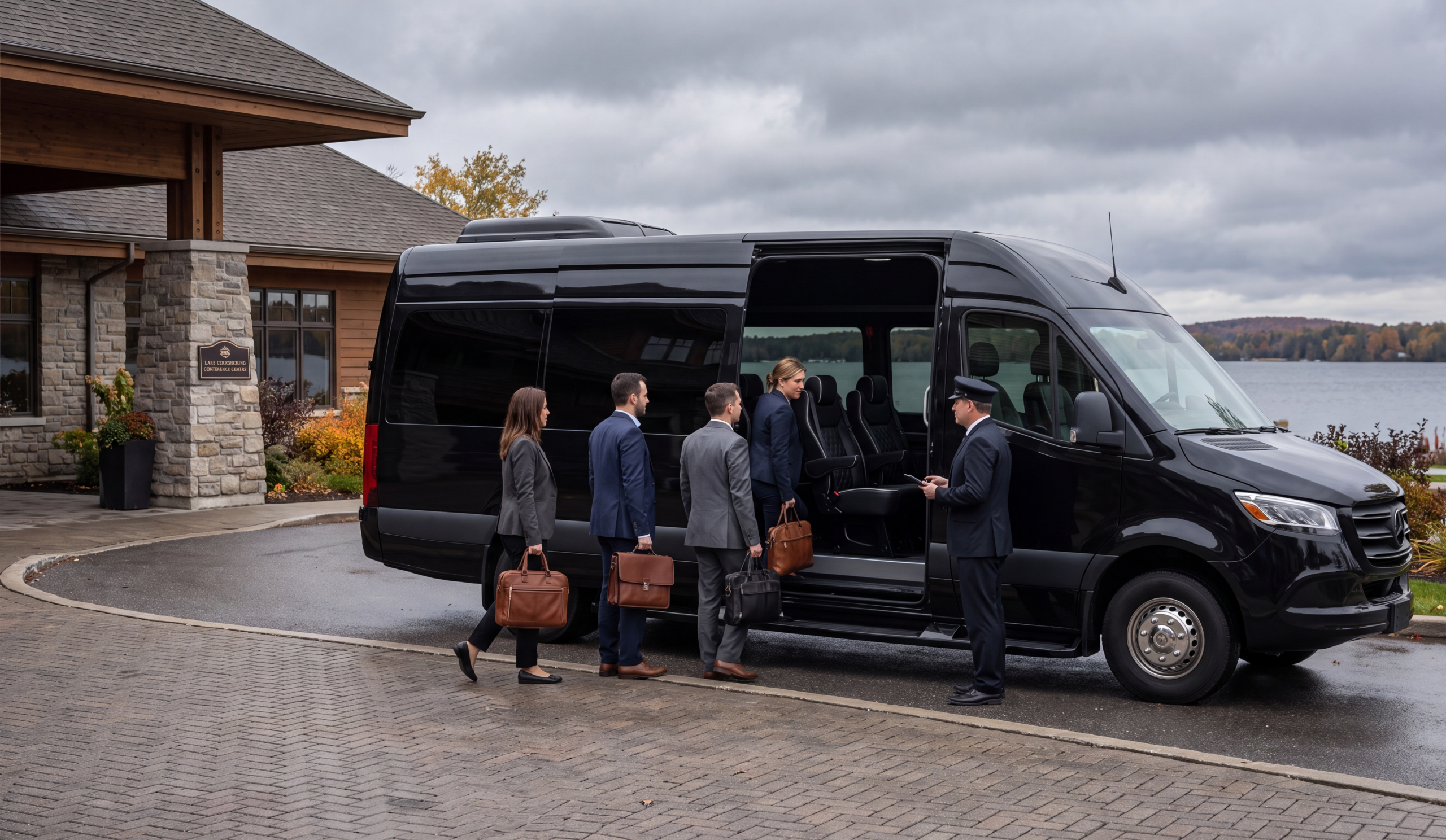
Which Companies Actually Run a Retreat Transportation Program
Standing retreat programs cluster around 4 client types: law firms, financial services, pharmaceutical and healthcare companies, and technology firms, all industries that run a predictable annual calendar of partner retreats, client-entertainment weekends, and all-hands offsites.
Law firms are the most consistent program clients: an annual partner retreat, quarterly practice-group offsites, and recurring Muskoka client weekends, often on the same NET 30 billing cycle as the firm’s other vendors. Our law firm corporate transportation page covers the Toronto-to-Muskoka route specifically; a program simply puts that route on standing rotation instead of re-booking it each trip. Financial services firms run a similar shape around quarterly board meetings and annual conferences, often layering an airport pickup leg for out-of-town partners onto the same manifest.

Pharmaceutical, healthcare, and technology companies tend to run larger, less predictable headcounts, which is exactly where the mixed-fleet contract earns its keep: a 14-person leadership offsite one quarter, a 60-person all-hands the next, both quoted under the same program rather than negotiated from zero each time. The common thread across every vertical is the same: once a company runs the same kind of trip twice, moving it onto a contract removes the repeated intake call and usually costs less than the sum of separate one-off bookings.

Fleet Options for a Retreat Program, by Group Size
Programs mix vehicles under one standing contract: the Escalade for executives, the Sprinter for the working group, and a mini coach or motorcoach once headcount passes 25.
| Vehicle | Seats | Best for | Rate basis |
|---|---|---|---|
| Cadillac Escalade | 6 | C-suite / small leadership group | $175/hr (one-off) or program rate |
| Executive Mercedes-Benz Sprinter | 14 | Standard department offsite | $500 to $800/day program anchor |
| 27-Seat Mini Coach | 27 | Mid-size all-hands, resort shuttle | $250/hr, from $3,000/day |
| 56-Seat Motorcoach | 56 | Full-company annual retreat | $325/hr, from $3,900/day |
Full one-off day rates and hourly figures are set by our published rate card; a program contract fixes the mix and the cadence and typically prices below the sum of separate one-off bookings across the year. Every rate above carries HST 13% and gratuity 15 to 20 percent on top.


Setting Up a Retreat Transportation Contract
Setting up a program takes one planning call: we map your known retreat dates, headcounts, and vehicle preferences, and return a contract quote within 2 business days.
The call covers 4 things: how many retreat events per year, typical headcount and whether it splits into sub-groups (executives vs. full team), preferred pickup points (office lobby, specific resort, airport), and invoicing preference (NET 30 is standard for contract accounts). From there we draft the program rate and hold your recurring dates as they are confirmed, usually inside the same 2-business-day window as the quote itself.

Mid-contract changes are normal; a retreat that grows from 14 to 30 people between quarters simply shifts the vehicle assigned that trip, billed at the program’s agreed basis rather than triggering a new negotiation. Our corporate chauffeur page covers the standing account mechanics if your program extends beyond retreats into daily executive car service, and the same account manager who runs your retreat calendar can fold that daily service into one combined contract on request.
“We booked a car service for a special evening out, and were not disappointed. The driver was professional and punctual. The car was comfortable. A great enhancement to our evening!”
“The response was swift and the service was great and the drivers are really good at what they. Am really glad I use your service.”
“The chauffeur service was great! The driver was on time, friendly and the car was clean and comfy. Definitely recommend”
Retreat Program FAQs
The questions finance and HR ask before signing a standing transportation contract.
How much does a corporate retreat transportation program cost?
A 14-passenger Sprinter program runs roughly $500 to $800 per day, plus HST 13% and gratuity 15 to 20 percent, with longer-term contracts trending toward the lower end. Full-team retreats that need a mini coach or motorcoach price separately within the same contract; a planning call maps your headcount and cadence into a fixed quote within 2 business days. Nothing on the program is a teaser rate; the number your account manager quotes is the number that lands on the invoice.
What is the difference between a program and a one-off retreat booking?
A one-off booking is 1 quote for a single trip, no contract required (see our one-off retreat booking page). A program is a standing contract covering multiple retreats a year, with a dedicated account manager, priority vehicle holds on your recurring dates, and NET 30 invoicing instead of a new RFP each time. Most companies start with a one-off booking and move to a program once the trip repeats.
How many retreats per year justify a program instead of one-off bookings?
2 or more repeat bookings is the usual trigger. If HR or the executive office has already run the same offsite twice, a program removes the repeated intake process and typically prices below the sum of separate one-off quotes across the year. Companies running 4 or more trips a year see the largest gap between program pricing and stacked one-off rates.
How far in advance should we book a multi-day Muskoka retreat program?
60 to 90 days for the initial program contract, then 2 to 3 weeks per individual retreat once the program is set up. Cottage-country resort season (spring and September) books fastest, and a program client holds vehicle priority ahead of one-off requests during that same window.
Can a program cover both downtown offsites and Muskoka or cottage-country retreats?
Yes, 1 contract can span both: a Sprinter or Escalade for downtown quarterly offsites and a coordinated multi-vehicle plan (arrival, on-site shuttle, return) for annual Muskoka retreats, all under the same account manager and invoicing. Mixing city and cottage-country legs under one contract is one of the more common program shapes we build.
What vehicles are available under a retreat transportation program?
4 tiers cover one contract: the 6-seat Cadillac Escalade for executives, the 14-seat Executive Sprinter for standard offsites, the 27-seat mini coach for mid-size all-hands, and the 56-seat motorcoach for full-company annual retreats. A single program can mix all 4 tiers across the year as headcount changes trip to trip.
Do you provide NET 30 invoicing for corporate retreat programs?
Yes, NET 30 invoicing is standard for contract accounts. Program invoicing consolidates each retreat into your existing billing cycle instead of a separate payment per trip, which is one of the reasons finance departments prefer the contract structure over repeated one-off charges.
How does pickup work for a multi-day resort retreat?
3 legs of the trip get one program driver: arrival, on-site shuttles, and return, staged at the resort’s own driveway or loading area. Program drivers repeat the same route each quarter, so they know the specific resort’s check-in flow rather than seeing it for the first time, which shortens the actual loading time at the curb.
Can we add an airport pickup to a retreat program for out-of-town executives?
1 manifest covers both: a Pearson or Billy Bishop pickup for out-of-town leadership runs on the same manifest as the ground retreat program, billed under the same contract instead of a separate airport quote. The account manager coordinates flight times against the resort or venue arrival so the whole group lands on one schedule.
What happens if our retreat headcount changes between bookings?
14 to 30 is a common swing: the Sprinter assigned to that trip shifts to a mini coach when headcount grows, billed at the program’s agreed rate basis rather than triggering a full renegotiation. Your account manager confirms the swap as soon as the new headcount is known.
Is a signed contract required to set up a retreat transportation program?
Yes, a program runs on 1 standing written contract that fixes the rate structure and invoicing terms for the term agreed, distinct from a one-off booking which needs no contract. The contract is what lets vehicles be held on priority for your recurring dates ahead of general demand.
Do program drivers stay consistent across our retreat dates?
1 driver or small pool covers your recurring dates on program accounts, since we prioritize driver continuity, which is the main practical benefit over booking a new driver for every one-off trip. A driver who has already run your route 3 times moves faster and needs less briefing than one seeing it cold.
What is included in the quarterly offsite cadence rate?
The quarterly rate covers 4 things: the vehicle, professional chauffeur, fuel, and commercial insurance for the agreed trip length, consistent with our published rate card plus HST and gratuity; it does not include venue costs or activities. Those stay separate line items handled directly with the resort or venue.
Can a retreat program include team-building day transportation separately from the main offsite?
1 step books it: team-building days that fall outside your standing retreat dates still go through the team-building off-site page, at your program’s contracted rate rather than a fresh one-off quote. Your account manager simply adds the date to the existing contract instead of starting a new intake.
How quickly can we get a quote for a new retreat program?
2 business days is the typical turnaround for a program quote once a planning call has your annual retreat calendar, headcounts, and vehicle preferences. Most calls run under 30 minutes since the questions are the same 4 every time: frequency, headcount, pickup points, and invoicing.
Do you serve retreats outside the Toronto and Muskoka corridor?
200 km is the standard service radius: program contracts extend to Niagara, Blue Mountain, and other Ontario retreat destinations within it, and the planning call maps your specific venues into the contract. Distance and drive time factor into the program rate the same way they would on a one-off quote.
What is the minimum contract length for a retreat transportation program?
Programs are typically structured around a 12-month cycle to match retreat planning calendars, though shorter pilot terms can be arranged for a first program before committing to a full year. A pilot term lets a new client test the account-manager model before signing a longer contract.
Can our finance department review program pricing before we commit?
1 written program quote is the planning call’s output, reviewable by your finance team against your retreat calendar before signing, with NET 30 terms clearly stated. Nothing is billed or held until the quote is approved on your side.
Do you provide a single point of contact for a retreat program?
Yes, every program account is assigned 1 dedicated account manager who owns your retreat calendar, preferred pickup points, and vehicle mix, replacing the new-intake-call-every-time model of one-off bookings. That same person handles date changes, headcount swings, and invoicing questions.
How does luggage and equipment get handled on a multi-day retreat?
The 27-seat mini coach and 56-seat motorcoach tiers include underbody luggage bays for full-group gear; Sprinter and Escalade bookings handle standard executive luggage in the cargo area, confirmed during the planning call for any oversized equipment. Golf bags, AV cases, and other bulky items are flagged upfront so the right vehicle is assigned.
What if our retreat dates change after the program contract is signed?
1 step covers it: program accounts get priority rescheduling within the contract term, and your account manager confirms the new date against vehicle availability, which is materially faster than re-quoting a one-off booking from scratch. Frequent date shifts are normal on a multi-year contract and do not affect the agreed rate.
Do program rates change if a retreat runs longer than planned?
An extra day bills at the program’s 1 agreed daily rate rather than a fresh one-off quote, plus HST 13% and gratuity 15 to 20 percent. Your account manager confirms the extra day as soon as the schedule change is known, usually same day.
Can a retreat program share vehicles across two divisions of the same company?
Yes, 1 contract can serve multiple divisions or subsidiaries under one master account, with separate cost-center invoicing if your finance team needs it split. This is common for holding companies running parallel retreat calendars across business units.
Put your retreat calendar on a standing contract.
One planning call, one dedicated account manager, a written program quote within 2 business days.