

April Team Building Retreats: Getting Your Entire Team There and Back
Picture this: Your team of 25 is scattered across downtown Toronto at 7:30 AM on a Friday morning in April, desperately trying to coordinate individual rides to your retreat venue in Muskoka. Half the group is stuck in traffic on the 404, three people missed their rideshare pickup, and your carefully planned team building schedule is already falling apart before anyone even arrives. This transportation nightmare doesn’t have to be your reality.
April presents unique opportunities for team retreats in Ontario. The weather is finally warming up, venues are emerging from winter hibernation with fresh programming, and your team is energized after shaking off the winter blues. But April also brings its own logistics challenges: unpredictable weather patterns, spring construction season disrupting major routes, and increased demand for group transportation as corporate events ramp up.
The difference between a retreat that builds genuine team cohesion and one that creates stress and frustration often comes down to a single factor: transportation logistics that hold up under pressure. When your team arrives together, relaxed and ready to engage, you’ve already won half the battle. When they arrive frazzled, late, and scattered, you’re fighting an uphill battle from minute one.

April Venue Logistics: Where Toronto Teams Actually Go
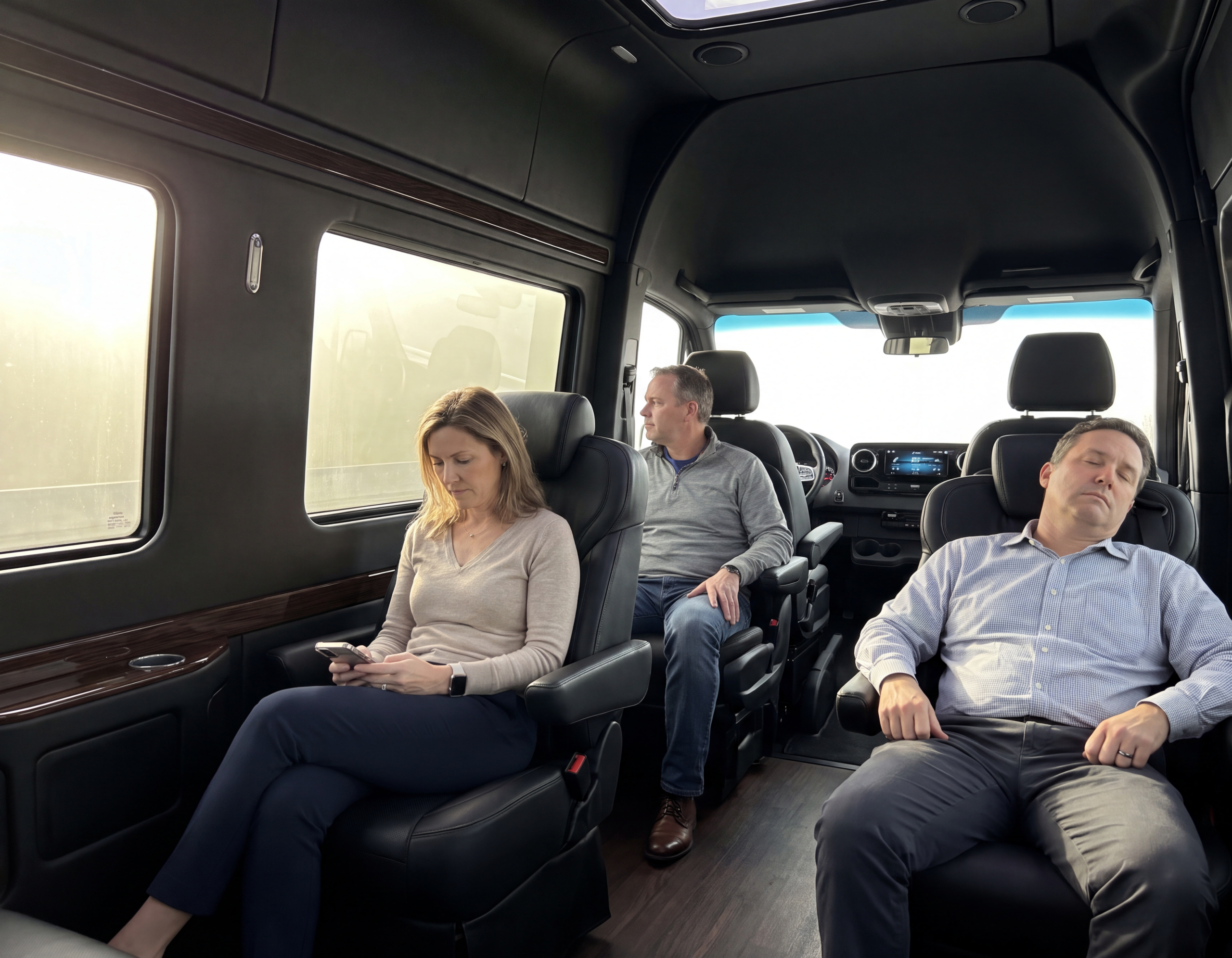
Toronto’s corporate retreat landscape transforms dramatically in April. Venues that were booked solid for holiday parties and winter conferences suddenly have availability, while outdoor locations begin accepting bookings again. Understanding the logistics implications of different venue types is crucial for transportation planning.
Muskoka Resort Properties
120-180 minute drive depending on traffic and weather. Limited cell coverage on some routes requires advance coordination. Peak demand pricing starts mid-April.
Blue Mountain Venues
90-120 minute journey with potential ski season traffic overlap. Multiple route options via Highway 400 or scenic routes through Caledon.
Niagara Region Properties
75-90 minute drive via QEW. Spring construction on Burlington Skyway can add 30+ minutes. Wine country venues particularly popular for April team events.
Prince Edward County
2.5-3 hour journey requiring bathroom breaks and refreshment stops. Rural roads can be challenging in April weather conditions.
The key insight most Toronto companies miss is that venue selection directly impacts transportation complexity. A beautiful lakefront property in Muskoka might look perfect online, but if it requires 45 minutes of rural driving after leaving Highway 400, you’re adding stress and risk to your group transportation logistics. Consider venues like Niagara region properties that offer direct highway access right up to the venue entrance.
Book venue site visits via professional chauffeur service in March. Your decision-makers can experience the actual transportation logistics firsthand, including road conditions, cell coverage, and arrival/departure accessibility. This 2-hour investment can save thousands in retreat day complications.
Team Size Mathematics: The 14-Person Rule
Here’s where most Toronto companies make their biggest transportation mistake: they think about team transportation the same way they think about commuting. Individual solutions for individual people. But group dynamics change everything, especially when you’re dealing with teams larger than 8 people.
The magic number is 14. A single Mercedes Sprinter accommodates exactly 14 people comfortably with luggage space for overnight retreats. Once you cross 15 people, you’re looking at multiple vehicles, which exponentially increases coordination complexity. Understanding this mathematics is crucial for both planning and budgeting.
The moment you split a team across multiple vehicles, you’re no longer running one logistics operation. You’re running multiple simultaneous operations, each with its own potential failure points.
Team Transportation Mathematics
From $2,100 per day (up to 10 hours)
From $4,200 coordinated
From $3,000 daily
Plus HST (13% tax) & Gratuity (15%)
For teams of 15-28 people, you face a critical decision point. Two Mercedes Sprinter vehicles offer flexibility and comfort, but require coordination between drivers and potential convoy logistics. A single 27-passenger mini-coach keeps everyone together but limits flexibility for multiple stops or varied return schedules.
The hidden cost of multi-vehicle coordination isn’t just financial. It’s the mental overhead of managing multiple departure times, multiple drivers, multiple potential delay points. When your team is split across two Sprinters and one breaks down on Highway 400, you’re managing a crisis that affects half your team while the other half continues to the venue.
April Weather Variables: The Planning Factor Nobody Talks About

April in Ontario is meteorologically schizophrenic. You can have a 25-degree sunny morning that turns into a 5-degree snowstorm by afternoon. For team retreat logistics, this weather variability requires specific contingency planning that most companies completely overlook.
Weather-Specific Logistics Considerations
- Morning Frost (Common until mid-April): Vehicles require 15-20 minutes additional warm-up time. Factor this into pickup schedules.
- Afternoon Thunderstorms: Highway visibility can drop to dangerous levels. Professional drivers monitor weather radar and adjust routes proactively.
- Temperature Swings: 20-degree daily variations mean layered clothing requirements affect luggage space calculations.
- Construction Season Overlap: Ministry of Transportation typically begins major projects in mid-April, adding unpredictable delays to standard routes.
The professional transportation advantage becomes most apparent during weather disruptions. When Environment Canada issues a weather warning for the Muskoka region at 2 PM and your team retreat is scheduled to return to Toronto at 4 PM, professional chauffeur services are already monitoring conditions and planning route alternatives.
Individual drivers in personal vehicles or rideshare apps don’t have this intelligence network. They’re making moment-by-moment decisions based on limited information. Your professional chauffeur has real-time communication with dispatch, alternative route knowledge, and experience with Ontario’s spring weather patterns.
The Hidden Cost Calculator: Why DIY Transportation Fails

Most Toronto companies approach team retreat transportation with a simple calculation: multiply the number of people by the cost of individual transportation. This fundamental misunderstanding leads to budget overruns, logistics failures, and team frustration that undermines the entire retreat investment.
The real cost of DIY transportation isn’t visible until things go wrong. And in April, with weather variability and construction season beginning, things go wrong more frequently than any other time of year.
True Cost Analysis: 20-Person Team to Muskoka
DIY Individual Transportation
- 20 individual rideshare rides: $3,200
- Parking fees at venue: $400
- Coordination time cost: $800
- Late arrival productivity loss: $1,200
- Weather delay complications: $600
Professional Group Transportation
- Two Mercedes Sprinters: $4,200
- Weather monitoring included: $0
- Professional coordination: $0
- Guaranteed on-time arrival: $0
- Backup vehicle availability: $0
*Plus HST & Gratuity
The math becomes even more compelling when you factor in the opportunity cost of management time. How many hours does your leadership team spend coordinating individual transportation logistics instead of focusing on retreat content and team development objectives?
Professional group transportation eliminates the coordination overhead entirely. One point of contact, one pickup location, one arrival time, one return schedule. Your team can focus on what matters: building relationships and achieving retreat objectives.
“We received transportation to and from the airport (party of 6). Punctual, professional, polite, respectful, efficient and friendly staff. Reasonable price for service provided. Great communication from staff. Clean, comfortable, high end vehicles. Water provided to customers. Safe drivers. Drivers assisted with customers getting in/out of vehicles as required and managed the loading/unloading of bags/suitcases. Highly recommended. Will call upon them for transportation in the future.Judy L., Google review
Pickup Strategy: The Downtown Toronto Challenge

Toronto’s downtown core presents unique challenges for group transportation pickups that most companies discover too late. Unlike airport transportation where you have designated pickup zones and predictable traffic patterns, downtown group pickups require strategic planning around construction, traffic flow, and accessibility limitations.
The amateur approach is to tell everyone to meet at Union Station or outside the office building. The professional approach recognizes that different pickup locations serve different strategic purposes and that timing coordination becomes critical when you’re collecting 15-20 people from various downtown locations.
Financial District Strategy
King Street construction limits. Pickup at Royal York Hotel or Fairmont eliminates traffic delays and provides weather protection for team gathering.
Entertainment District
CN Tower area offers accessible vehicle positioning but weekend traffic complications. Consider Ripley’s Aquarium pickup zone for better access.
North Toronto Consolidation
Yorkdale or North York Centre eliminate downtown navigation entirely. Teams drive to consolidation point, then group transport to venue.
The consolidation strategy is particularly effective for April retreats. Instead of navigating downtown traffic and construction, teams meet at a suburban hub with accessible parking and easy highway access. This approach reduces urban driving time and allows for more predictable departure scheduling.
Professional black car services understand Toronto’s traffic patterns and can recommend optimal pickup locations based on your team’s distribution across the GTA. They also provide backup logistics if primary pickup locations become inaccessible due to construction or events.
Return Journey Logistics: Managing the Energy Drop

The return journey from your April team retreat presents entirely different logistics challenges than the outbound trip. Your team is tired, potentially emotional from intensive team building activities, and dealing with the natural energy crash that follows high-engagement events. These psychological factors have real implications for transportation logistics.
Outbound, your team is energized and excited. Small delays or minor inconveniences roll off their backs. Return journey tolerance for disruption is near zero. Professional transportation providers understand this dynamic and plan accordingly.
Schedule return departure 30 minutes earlier than your initial estimate. Tired teams move slower, need more bathroom breaks, and require additional loading time. This buffer prevents the cascade of delays that turns a successful retreat into a frustrating conclusion.
April weather adds complexity to return journey planning. Spring storms often develop in late afternoon, exactly when most retreats are concluding. Professional drivers monitor weather radar throughout your event and can proactively adjust departure timing to avoid dangerous driving conditions.
The return journey is also when luggage logistics become critical. Outbound, people pack light and efficiently. Return journey, they’re carrying retreat materials, gifts, additional layers from temperature changes, and often souvenirs from venue gift shops. Your transportation provider needs to account for 25-30% more luggage volume on return trips.
Technology Integration: Real-Time Coordination

Modern team retreat logistics require real-time communication and coordination capabilities that individual transportation solutions simply cannot provide. When you’re managing 20+ people across multiple locations with varying schedules, technology integration becomes mission-critical.
Professional group transportation services provide real-time GPS tracking, allowing retreat organizers to monitor vehicle locations and provide accurate arrival estimates to venue coordinators. This visibility is crucial when your retreat schedule includes time-sensitive activities or catered meals with specific service windows.
The technology advantage extends to payment processing and expense management. Instead of processing 20 individual expense reports for transportation costs, your accounting team deals with a single invoice from your corporate transportation service. This simplification alone can justify the professional service cost for larger organizations.
Multi-Day Retreat Considerations
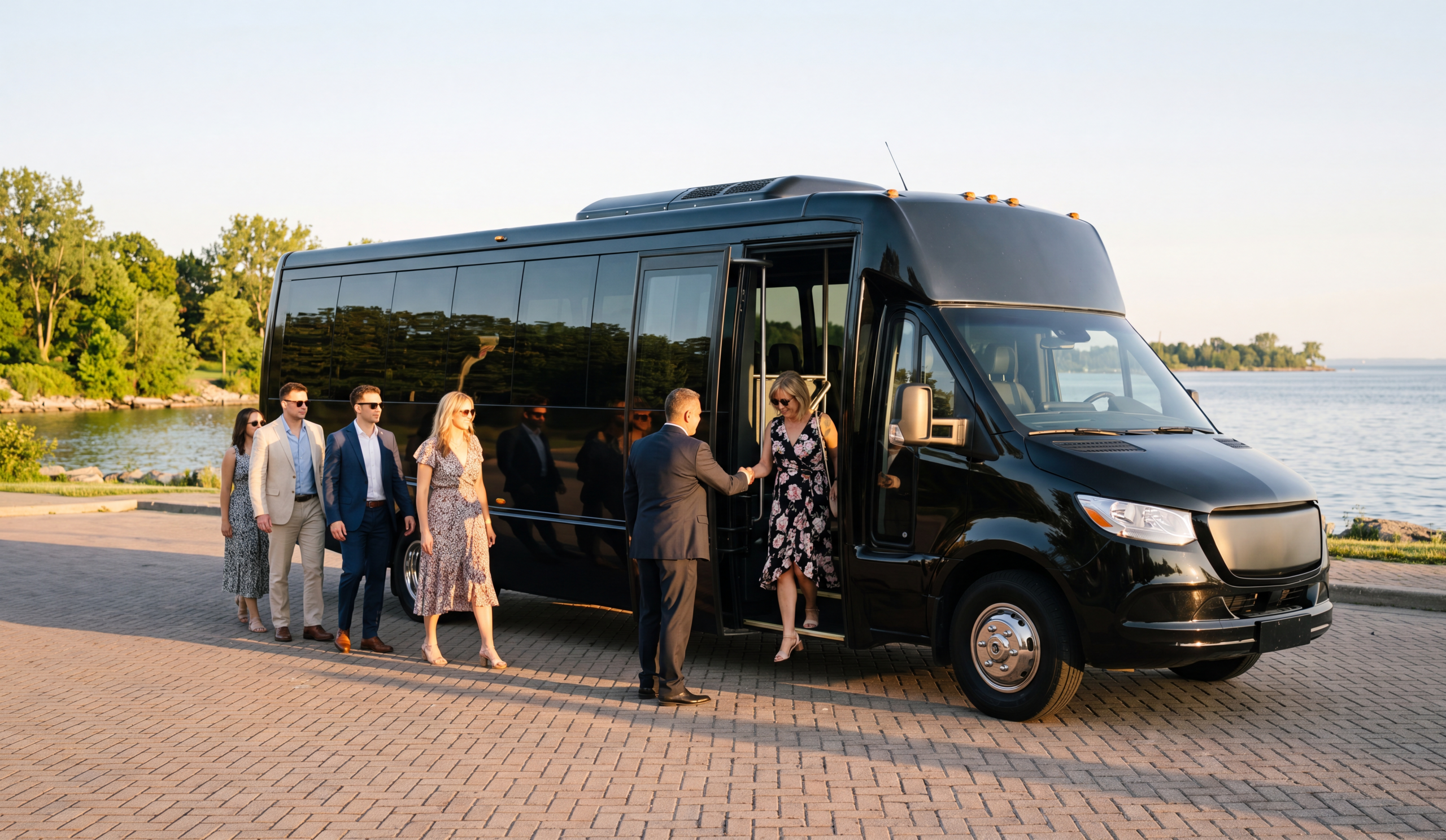
April team retreats often extend to multiple days, taking advantage of improved weather and venue availability. Multi-day logistics introduce entirely new complexity levels that require professional coordination to execute successfully.
For overnight retreats, your transportation provider needs to coordinate not just arrival and departure, but potentially mid-retreat transportation for dining, activities, or emergency situations. This requires local area knowledge and on-call availability that individual transportation solutions cannot provide.
The logistics of multi-day retreats also include equipment and material transportation. Presentation materials, team building supplies, promotional items, and employee recognition awards all require secure transportation and storage coordination.
Multi-Day Transportation Package
Toronto to Muskoka/Niagara
- Outbound transportation with luggage
- On-call availability during retreat
- Return transportation coordination
- Equipment and material transport
- Emergency backup vehicle access
Plus HST (13% tax) & Gratuity (15%)
Professional coordination becomes essential when your retreat includes activities requiring transportation between multiple locations. Wine tours in Niagara, team challenges across different venues in Blue Mountain, or dining experiences that require travel from your accommodation all benefit from having dedicated transportation coordination rather than relying on individual solutions.
Booking Your April Retreat Transportation

Once you have settled on a venue and a headcount, the transportation booking itself is the easy part, provided you start early enough. April is one of the busiest months for corporate group transportation in the GTA, since it is the first full month after winter when both venues and vehicles open back up for retreat-scale bookings. Companies that wait until the week of the retreat to book transportation are the ones who end up splitting a 20-person team across 3 separate rideshare accounts on the morning of departure.
How Far in Advance to Book
2 to 3 weeks is the safe window for a standard April retreat booking of 8 to 28 people. Companies moving 29 or more people, or booking a multi-day charter that ties up a Sprinter or mini coach for 2 or more consecutive days, should confirm 4 to 6 weeks out. Peak Friday and Monday retreat-travel days in the back half of April fill first, since they overlap with weekend leisure bookings to the same Muskoka and Niagara venues.
Sprinter, Two Sprinters, or Mini Coach: Making the Call
The 14-person rule from earlier in this guide is the starting point, but the real decision usually comes down to whether your team needs to split for different activities during the retreat itself. A single Sprinter keeps everyone on one schedule for the whole trip. Two Sprinters cost roughly double but let half the team leave early for a flight or a second venue. Past 28 confirmed attendees, the 27-seat mini coach is almost always the better per-head cost, and it removes the multi-vehicle coordination risk entirely by putting the whole group on one driver and one departure time.
Corporate Billing and Repeat Bookings
Companies running more than one retreat a year set up a standing corporate account rather than booking each trip individually. This gets you consolidated invoice billing on net-30 terms, a single point of contact for scheduling, and priority access during the April and September peak retreat windows. If your team building program runs quarterly, this is worth setting up before your first April booking rather than after your third one.
For the vehicle itself, our corporate Sprinter van rental page covers the full executive retreat fleet in detail, including cabin configurations for working sessions during longer drives. Teams that want a more elevated in-transit experience, useful when the drive itself doubles as a kickoff session, should look at the VIP Sprinter van option, which reconfigures the cabin around a conference-style layout. And for the full picture of how corporate retreat transportation is priced and structured across the year, not just in April, our corporate retreat transportation guide is the hub page this article sits under.
What a Confirmed Booking Includes
Every confirmed April retreat booking includes a named driver assigned before the trip, a fixed hourly or daily rate confirmed in writing, and a single dispatcher contact for day-of changes. Nothing about the price changes because of traffic, a weather delay, or a pickup running 20 minutes behind, the rate quoted at booking is the rate on the invoice.

April Retreat Transportation FAQ
How much does April team retreat transportation cost for a 20-person group?
From $4,200 covers two Mercedes Sprinters (from $2,100 per Sprinter per day, up to 10 hours) for a full-day charter to Muskoka or Niagara, the standard setup for a 20-person team, plus HST 13% and gratuity 15-20%. A single 27-seat mini coach runs from $3,000 daily and is usually the better per-head rate once the group passes 28 people.
What is the minimum group size for a dedicated Sprinter charter?
8 people is the practical minimum for booking a dedicated Sprinter rather than individual transportation, since it is the point where per-person cost drops below rideshare pricing. Below 8, most companies still book a Sprinter anyway for the coordination benefit, even though the per-head math is closer.
How many people fit in a single Mercedes Sprinter for a retreat?
14 people fit comfortably in a single Sprinter with luggage space for an overnight retreat. This is the number that decides whether your team needs one vehicle or two, and it is the reference point used throughout this guide’s team size planning section.
At what headcount should we switch from two Sprinters to a mini coach?
29 people is the point where a single 27-seat mini coach usually beats two Sprinters on cost, since two Sprinters top out around 28 seats combined. The mini coach also removes the two-driver coordination risk entirely.
How far in advance should we book April retreat transportation?
2 to 3 weeks is the standard lead time for an 8 to 28 person April retreat booking. Larger groups of 29 or more, or multi-day charters, should confirm 4 to 6 weeks out since peak April Friday and Monday retreat-travel days book first.
Do you provide backup vehicles if one breaks down during a retreat?
Yes, backup vehicle access is included in professional group transportation coordination, unlike individual rideshare or personal vehicles where a breakdown becomes each rider’s own problem. A backup Sprinter can be dispatched to the affected group without disrupting the rest of the team’s schedule.
Can transportation be coordinated across multiple vehicles for a large team?
Yes, fleet coordination keeps 2 or more vehicles on a single dispatch schedule with one point of contact for the retreat organizer. This is the core difference between professional group transportation and asking 20 people to each book their own ride.
What happens if weather affects our April retreat transportation?
Professional drivers monitor weather radar throughout the retreat and adjust routes and departure timing proactively, which matters most in April when a 25-degree morning can turn into a snowstorm by afternoon. Individual rideshare drivers have no equivalent weather-monitoring or rerouting capability.
Do you offer corporate accounts for companies running quarterly retreats?
Yes, corporate accounts include consolidated net-30 invoice billing, a dedicated scheduling contact, and priority booking access during the April and September peak retreat windows. Companies running more than one retreat a year typically set this up rather than booking each trip individually.
How much luggage space is available on a Sprinter for an overnight retreat?
A single Sprinter seating 14 passengers still carries full luggage for an overnight trip, and return-trip capacity should be planned for 25 to 30 percent more volume than the outbound leg once retreat materials and gifts are added.
Can we book transportation for a multi-day retreat with on-call availability?
Yes, the full-day charter rate of from $2,100 per Sprinter includes on-call availability during the retreat itself, not just outbound and return transportation, covering mid-retreat trips for dining, activities, or unplanned needs.
What is included in the price of a group retreat transportation booking?
The quoted rate includes the vehicle, the chauffeur, fuel, and weather and route monitoring for the full booking window, plus HST 13% and gratuity 15-20% on top. There is no per-mile surcharge or dynamic pricing added after booking.
Do you coordinate pickup from multiple downtown Toronto locations?
Yes, multi-stop downtown pickups are coordinated on one schedule, though a single consolidation point, such as a suburban hub with highway access, is usually faster than collecting a large group from scattered downtown addresses.
How does return-trip transportation differ from the outbound retreat trip?
Return departures are scheduled roughly 30 minutes earlier than the outbound estimate to account for slower loading, more bathroom stops, and post-retreat fatigue. Return trips also carry more luggage volume than the outbound leg.
Can we get an invoice instead of paying per individual employee?
Yes, one consolidated invoice covers the full group booking rather than 20 separate expense reports, which is one of the main reasons companies move from individual rideshare reimbursement to professional group transportation.
Is professional group transportation cheaper than individual rideshare for a 20-person team?
Yes, in most cases: 20 individual rideshare trips to a Muskoka or Niagara venue typically total $3,200 or more before parking and coordination time are added, versus from $4,200 for two coordinated Sprinters covering the same group.
Do drivers have commercial licensing for winter or spring weather driving?
Yes, every driver holds a commercial license and has spring-weather driving training, relevant in April when morning frost, afternoon storms, and 20-degree daily temperature swings are all common on the same retreat day.
Can transportation be booked for team building activities that require multiple stops?
Yes, retreats that include wine tours, multi-venue challenges, or off-site dining during the trip can book dedicated transportation coordination between each stop rather than relying on a single point-to-point transfer.
What is the cancellation policy for a corporate retreat transportation booking?
Cancellation terms are confirmed in writing at booking and vary by lead time and vehicle type; contact our team when booking to confirm the specific window for your retreat date, since peak-season bookings carry different terms than off-peak ones.
How do we get a quote for our specific team size and venue?
Send your headcount, pickup location, and destination venue to get a fixed-rate quote confirmed before booking. Groups of 8 to 14 quote as a single Sprinter, 15 to 28 as two Sprinters, and 29 or more as a mini coach.
Ready to Transform Your April Team Retreat?
Stop managing transportation chaos. Start building team cohesion from the moment your retreat begins.
Get Your Team Transportation Quote Book Now
Professional group coordination • Real-time tracking • Weather contingency planning
Chauffeuropolis Editorial Team
Our editorial team combines decades of Toronto transportation logistics experience with deep insights into corporate event planning. We analyze real booking data and client feedback to provide actionable guidance for group transportation decisions across the Greater Toronto Area.