

Sprinter van contract & corporate account rates in Toronto
A dedicated Sprinter, a dedicated driver where possible, and one invoice a month: standing transportation programs from $500 to $800 per day, built around your calendar instead of a one-off booking.
Most companies that call us already know what a single Sprinter ride costs. What they do not know is how a standing account works: one dedicated vehicle, one point of contact, and one monthly invoice instead of a new booking every time someone needs a ride. That program prices differently from a one-off hire, and this page is the plain explanation of how it works and what it costs.
Sprinter Contract vs. Hourly Sprinter Hire
A Sprinter contract is a standing reservation, not a one-off booking: the same 14-passenger van (or a small fleet of them) held against your calendar for a set run of weeks or months, billed as one account instead of a receipt per trip.
If your need is a single event, an airport run, or an occasional group night out, our Sprinter hire with driver page covers that at the published hourly rate: $175 an hour for the Regular tier, with Executive and LUX tiers above it. A contract program is the opposite shape of problem: the same kind of trip happening several times a week, for months at a time, where a coordinator would rather sign one agreement than submit a new request every Tuesday. US coach operators running Ontario legs face a parallel decision, standing up their own vehicle here or contracting a local one; our page on own bus or hire local in Ontario covers the rules that shape that call.
It is also a different animal from a daily crew shuttle. Our employee shuttle service page is built for shift-worker and warehouse routes on a fixed schedule; a corporate account here is built for an executive team, a legal practice, a production office, or a relocation program that needs a reserved vehicle on a flexible, business-hours cadence. Both are contract billing under the hood, but the routes and the riders look nothing alike.
The test we use with a new caller is simple: if the trip has a single date on it, it is an hourly booking; if the trip has a recurring pattern, most weekdays, twice a week, every Monday and Thursday, it is a contract candidate. Companies sometimes start on the hourly rate card, notice the same booking repeating every week for a month, and switch to an account once the pattern is obvious. Either starting point is fine; the account exists to match the pricing to the actual shape of the demand.

How Corporate Account Setup Works
Setup is 1 planning call and a quote back within 2 business days: we ask about ridership, pickup points, and days per week, and price the account around the actual pattern instead of a generic rate card.
There is no published tier table for this program, deliberately, because the number that matters is what your company actually needs: a single Sprinter running weekday mornings prices differently from 2 vans covering a rotating executive schedule. Longer commitments and steadier weekly volume earn the lower end of the $500 to $800 per day range for a 14-passenger Sprinter; shorter or lighter-volume terms sit nearer the top.
Once the shape is agreed, onboarding is short: we confirm pickup addresses, name a primary contact on your side, and assign a driver where the schedule allows so your team sees a familiar face. The account goes live on the date you choose, and changes to the route or the calendar are a message to your coordinator, not a new contract.


Fleet Options and Scaling a Standing Program
Most accounts run on 1 to 3 Sprinters, but the program scales up cleanly the moment headcount does: our 27-seat mini coach and 56-seat coach both bill on the same account-and-invoice model.
The base vehicle is the 14-passenger Sprinter in Regular, Executive, or LUX trim, chosen by how the seats will actually be used: a Regular van for a straightforward point-to-point account, an Executive or LUX cabin for client-facing work where the ride itself is part of the impression. That is doubly true on a client day across the border, where a Bills game becomes the meeting and the two hours each way are the part you actually control. Multi-vehicle accounts mix tiers freely, so a company running both a daily executive car and a weekly all-hands shuttle can hold both on one invoice.
When an account grows past van capacity, the same contract logic carries over to the mini coach and the 56-seat coach: a company offsite that used to book 3 Sprinters separately can consolidate into 1 coach charter under the same account manager. Nothing about the billing relationship changes, only the vehicle.

NET 30 Invoicing and Account Management
Every corporate account runs on NET 30 terms with 1 consolidated monthly invoice, itemized by day and by vehicle, plus HST 13% and gratuity of 15 to 20 percent shown separately.
Procurement teams get what they actually want from a vendor: a single line in the accounting system instead of a folder of one-off receipts, a named account manager who already knows the route and the riders, and a quote that does not move once it is approved. There is no setup fee to open an account, and no surprise fuel or parking surcharge layered on afterward.
Accounts that also need the occasional off-schedule trip, an airport run, a client dinner, a same-week ad hoc booking, use the published hourly Sprinter rate for that single trip, itemized on the same monthly statement rather than a separate invoice. 1 vendor, 1 statement, however the month actually unfolds.
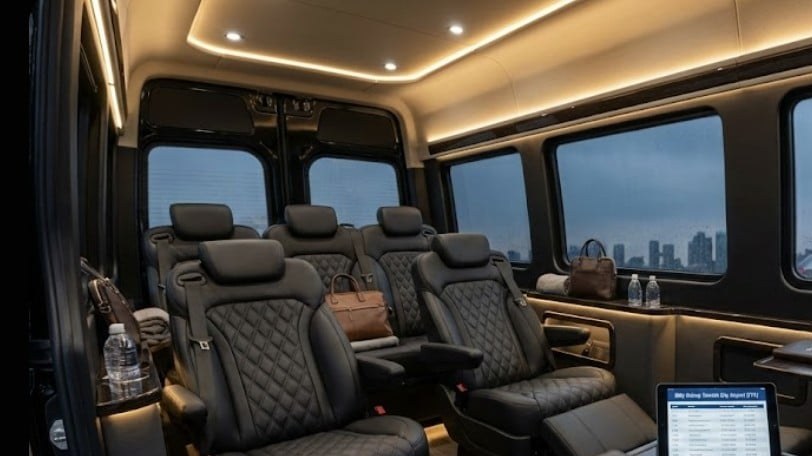
Law Firms and Professional Services Accounts
Legal and professional-services firms are a core account type: a standing Sprinter or executive car for court appearances, client meetings, and multi-lawyer roadshows around the University Avenue courthouse corridor and the Bay Street financial core.
The pattern is usually a small number of partners and associates who need predictable, presentable transportation on short notice, court schedules move, client meetings get added same-day, and a firm with a standing account calls its coordinator instead of hunting for a car. Multi-city roadshows for litigation or deal teams book as extended charters under the same account, with the vehicle staged at each stop.
Confidentiality is built into the arrangement by default: no signage, no branding, and a driver who treats a quiet cabin as part of the job. Firms that also run occasional client dinners or partner events add those trips to the same monthly statement rather than opening a second vendor relationship.

Production Crews, Relocation Programs, and Multi-Office Teams
3 more account types show up constantly: film and TV production crews on standing daily calls, corporate relocation programs moving new hires and families, and companies with multiple GTA offices running one shared shuttle account.
Production accounts are booked by the shoot day, not the hour, gear, cast, and crew moving between a soundstage and a location on a schedule that can shift with the light. Relocation programs use the account to move new hires and their families from the airport or the hotel to their new home, then keep the same Sprinter on call for the first week of appointments; our corporate relocation transportation page covers the household side of that same service in more detail.
Multi-office companies, meanwhile, use one account to cover several addresses across the GTA under a single monthly bill: a downtown headquarters, a Mississauga or Vaughan satellite office, and a client site all draw from the same fleet and the same coordinator. Conference and offsite days that need a larger group move plug into our conference shuttle service without opening a second account.

How to Open a Sprinter Contract Account
Send 3 things to start: expected ridership, the pickup pattern, and how many days a week the account runs. A fixed quote follows within 2 business days, with HST and gratuity itemized before anything is signed.
There is no minimum contract length enforced up front, though longer commitments earn the lower end of the daily range. Most accounts start with a 1-vehicle pilot for 2 to 4 weeks, confirm the pattern actually holds, then extend or add vehicles once the schedule is proven. Changes after that go through the account manager by message, not a new procurement cycle.
The pilot period exists for both sides to check the assumptions: does the pickup window actually work with morning traffic, does the driver need a second contact for building access, does the group need 1 van or 2 on the busiest day. Companies that skip straight to a 6 or 12-month term still get the same onboarding call; they simply lock the rate for the full term at signing instead of reviewing it after the pilot.


“Great service and communication! Highly recommend!”
“Worked with me in a pinch to arrange for a late-friend-who’d-suffered-GO-travel mishaps, and had ended up passing the station-local-to-me, through no-fault-of-their-own; and, Chauffeuropolis had a lovely operator who’d confirmed a Maybach for my friend, to give comfort. Stupidly silly-to-me, it later-then-had-become-known, that, my friend had arranged for some kind of ride back, my still uncertain-to-this-day, how he arranged for that, exactingly. And, so; I had told this to the Chauffeuropolis-operator, with much-, personal-regret. We had a nice-chat; I receive all their lovely holiday-themed E mails, now; I mentioned what an interesting-industry it is, in which they work; what a fantastic-company, have they; and, if they might be interested in any new hires, to give me a shout. All of this, with true-customer-support-, and-, empathy-for-my personally bungled-of-situation; and I cannot recommend a harder-working-, nor more amicable-, professional-, and non-judgmental-company-, in-this-industry-, than-Chauffeuropolis. A true-“huzzah”, and, I write this review, here, as my unique-pleasure, for this classy-as-anything-, company, and to the amazing-worker I’d received that day. It was a little while ago; I cannot check any of my records, for exactly the date. But this company had a remarkable-worker doing a shift for it anyway, it’d been, this-past-summer. You truly all deserve commendation. Within literal minutes, you had had my vehicle; and, on such-short-notice, become, available–and then, I even–very embarrassingly, had to go and cancel the trip; but, knowing the exclusivity-of-the-industry; I had paid for the price involved and wanted to give extra for the trouble involved that I gave to you guys; and I’m not sure I was able to do that part, technically; but I just wanted to say thanks for helping me through a stressful day and for the chat we had and for the amazing car and Service that you were willing to provide and that you did provide. God Bless. Forever remembering the more-than tokens, which I was given, that day, by your company; and by the worker who’d helped me so fully and completely.”
“Seth was on time and was very accommodating and a safe driver. I would definitely use their service again.”
Sprinter Van Contract & Corporate Account FAQ
The billing, scheduling, and setup questions Toronto companies actually ask before opening a standing Sprinter account.
How much does a Sprinter van contract cost per day in Toronto?
$500 to $800 per day covers a 14-passenger Sprinter on a standing corporate account, plus HST 13% and gratuity of 15 to 20 percent. Longer commitments and steadier weekly volume land nearer the $500 end; shorter or lighter terms sit closer to $800. The exact number comes back on a fixed quote within 2 business days of the planning call.
What is the difference between a Sprinter contract and hourly Sprinter hire?
A contract is a standing reservation billed monthly; hourly hire is a single booking at the published $175-per-hour Regular Sprinter rate. Accounts suit a ride pattern repeating several times a week for months; hourly hire suits a one-off event, airport run, or night out. Many accounts use both, contract days plus occasional hourly trips, on 1 combined statement.
Is there a minimum contract length for a standing Sprinter account?
No fixed minimum is enforced up front, though most accounts start as a 2 to 4 week pilot on 1 vehicle before extending. Longer commitments earn pricing nearer the $500 end of the daily range. The pilot period exists to confirm the ridership pattern actually holds before scaling up.
Do you offer NET 30 invoicing for corporate accounts?
Yes, every corporate account runs on NET 30 terms with 1 consolidated monthly invoice itemized by day and vehicle, plus HST and gratuity shown separately. There is no setup fee to open the account and no surprise fuel or parking surcharge added afterward. Procurement gets a single line item instead of a folder of receipts.
Can we get the same driver every day on a contract account?
Yes, wherever scheduling allows, 1 driver is assigned to the account so your team sees a familiar face daily. Multi-vehicle accounts assign a lead driver per vehicle where possible. Route and schedule changes go through your account manager rather than resetting the assignment.
What happens if our regular driver is sick or on vacation?
1 qualified backup driver covers the shift from our standing fleet, briefed on your pickup points and any account-specific notes beforehand. The vehicle and the schedule stay exactly as booked; only the name behind the wheel changes for that day. Continuity of the ride matters more than continuity of any 1 individual.
Can we scale from a single Sprinter to a mini coach or full coach mid-contract?
Yes, the same account and invoice model carries straight over to the 27-seat mini coach and the 56-seat coach the moment headcount outgrows van capacity. A team that used to book 3 separate Sprinters for an offsite can consolidate into 1 coach charter under the same account manager. Nothing about the billing relationship changes, only the vehicle.
Is there a setup fee to open a corporate account?
No, there is 0 fee to open a standing account: the planning call, the pilot period, and the first invoice all run at the quoted day rate with no onboarding charge. The only numbers on the invoice are the agreed day rate, HST 13%, and gratuity of 15 to 20 percent. Nothing is added after the fact.
How is contract pricing different from the published hourly rate card?
The hourly rate card ($175 for Regular Sprinter hire) prices a single trip; contract pricing ($500 to $800 per day) prices a reserved vehicle held against your calendar for weeks or months. A contract day typically covers several trips across the day rather than 1 clocked hourly run. Accounts mixing both bill the ad hoc hourly trips on the same monthly statement.
Can law firms book a standing Sprinter account for court appearances and roadshows?
Yes, 1 of the most common account types: a standing car for court appearances around the University Avenue courthouse corridor, client meetings, and multi-lawyer roadshows. Multi-city litigation or deal-team trips book as extended charters under the same account. No signage or branding appears on the vehicle, keeping the ride discreet.
Do you provide standing transportation for film and TV production crews?
Yes, 1 account covers the full shoot: booked by the day rather than the hour, moving gear, cast, and crew between a soundstage and location as the schedule shifts with the light. The account holds a vehicle on call for the length of the shoot. Multi-week productions run the same account for the full schedule.
Can corporate relocation programs use a contract Sprinter account?
Yes, 1 standing account moves new hires and their families from the airport or hotel to their new home, then keeps the same Sprinter on call for the first week of appointments. Our corporate relocation transportation page covers the household-move side of the same service. The account can run as short as 1 week or extend through a multi-month onboarding period.
Do you serve multiple office locations under one account?
Yes, 1 account can cover several GTA addresses under a single monthly bill, a downtown headquarters, a Mississauga or Vaughan satellite office, and a client site all draw from the same fleet and coordinator. Route stops are set at onboarding and adjusted by message as offices change. Billing stays consolidated regardless of how many addresses are served.
How many vehicles can be dedicated to one corporate account?
Most accounts run 1 to 3 Sprinters, though larger programs add more or step up to a mini coach or full coach as headcount grows. Each vehicle on a multi-van account can carry its own assigned driver where scheduling allows. The account manager coordinates all vehicles under 1 invoice regardless of fleet size.
What is included in the daily contract rate?
The daily rate covers the vehicle, a professional driver, fuel, and standard commercial insurance for the agreed hours of coverage; HST 13% and gratuity of 15 to 20 percent are itemized on top. Multiple trips across the business day are included within the contracted hours, not billed per trip. Extended hours beyond the agreed window are quoted before they are used, never added silently.
How quickly can we get a contract quote?
Within 2 business days of a short planning call covering ridership, pickup pattern, and days per week. The quote itemizes the day rate, HST, and gratuity before anything is signed. Most companies move from first call to a live account within 1 to 2 weeks.
Can we switch between a daily contract and occasional hourly bookings on the same account?
Yes, contract days and ad hoc hourly trips both land on the same monthly NET 30 statement once an account is open. The hourly trips price at the published $175-per-hour Regular Sprinter rate (higher for Executive or LUX). There is no need to open a second vendor relationship for the occasional extra trip.
Is there a dedicated account manager for contract clients?
Yes, every corporate account gets 1 named point of contact who already knows the route, the riders, and any standing instructions. Schedule changes, added stops, or extra trips go through that 1 person by message. Procurement deals with a single relationship instead of a rotating dispatch line.
How does billing work for a multi-month standing program?
1 consolidated invoice arrives monthly, itemized by day and vehicle, on NET 30 terms with HST and gratuity shown separately. Multi-month programs can lock a rate for the full term at signing rather than repricing each month. Procurement receives the same invoice format every cycle for easy reconciliation.
Can we cancel or change a standing Sprinter contract?
Yes, most accounts run without a long lock-in: changes to the route, the days, or the vehicle count go through your account manager, and pilots can end after the initial 2 to 4 week period if the pattern does not hold. Longer-term rate locks are a choice made at signing, not a requirement. The goal is a program that flexes with your actual calendar.
What vehicle sizes are available for corporate account programs?
The base tier is the 14-passenger Sprinter in Regular, Executive, or LUX trim, scaling up to the 27-seat mini coach and the 56-seat coach for larger standing programs. Multi-vehicle accounts mix tiers on 1 invoice. The vehicle is matched to how the seats are actually used, not a default size.
Do contract accounts get priority scheduling during busy seasons?
Yes, 1 confirmed account holds its vehicle and driver assignment through the calendar regardless of seasonal demand spikes elsewhere in the fleet. December corporate season and major event weeks do not bump an existing account’s confirmed schedule. New accounts opened during peak weeks may see a longer onboarding window.
Can we add a second vehicle to an existing account mid-term?
Yes, adding a vehicle takes 1 message to your account manager, not a new contract: the added van bills at the same day-rate structure and lands on the same monthly invoice. Multi-vehicle pricing accounts for the combined volume rather than pricing each van in isolation. Most additions go live within a few business days.
Is gratuity included in the daily contract rate?
No, HST 13% and gratuity of 15 to 20 percent are itemized separately from the day rate on every invoice. The quoted day rate covers the vehicle, driver, fuel, and insurance only. Nothing changes on the statement after the account is set up.
Do you require a minimum number of days per week for a contract?
No fixed minimum, though pricing improves with steadier weekly volume: an account running most weekdays typically lands nearer the $500 end of the daily range than one running just 1 or 2 days. The planning call sets the actual cadence before quoting. Lighter, less frequent patterns still qualify for an account, just at a different point on the range.
How does a corporate account differ from the daily employee shuttle program?
2 different rider profiles: the employee shuttle program is built for shift-worker and warehouse crew routes on a fixed schedule, while a corporate account here is built for executive teams, legal practices, production offices, and relocation programs on a flexible business-hours cadence. Both bill through a similar contract-and-invoice structure, but the routes and riders look different. A company needing both can run them as 2 coordinated accounts under 1 point of contact.
Can professional services firms use a Sprinter account for client transportation?
Yes, accounting, consulting, and advisory firms run the same 1-account model for partner travel, client pickups, and multi-city engagement teams. The unbranded vehicle and quiet cabin suit client-facing work as well as internal use. Firms with irregular but frequent client-facing trips are exactly the profile a standing account is built for.
What documentation do we need to open a corporate account?
Just the basics: a company name and billing contact for NET 30 setup, the pickup addresses, and the ridership pattern discussed on the planning call. No deposit or setup paperwork is required beyond that. The signed quote is the service agreement.
One account. Every ride covered.
Send your ridership, pickup pattern, and days per week. A fixed contract quote comes back within 2 business days.