

Event transportation in Toronto: the right vehicle for the venue, staged before the crowd.
From a single Escalade for 2 to a 56-seat motorcoach for the whole office: private chauffeured transportation to every concert, game, and downtown venue, priced from $185 and staged where the crowd cannot follow. Artist-specific runs like Ed Sheeran concert transportation, BTS in Toronto, and Bruno Mars book through this hub.
Every event transportation booking in Toronto answers 2 questions: how many people are riding, and how does the vehicle get in and out of the venue crowd without becoming part of it. This page is the general playbook, covering group size, vehicle choice, and staging for concerts, sports, and downtown venues citywide; the venue pages linked throughout carry the address-specific detail for Scotiabank Arena, Rogers Centre, the CNE grounds, and beyond. Read it once and the logic applies to whichever venue the calendar sends you to next. Game-day team moves like the Blue Jays home opener use the same coordination.
All figures are approximate starting points and include the chauffeur, fuel and insurance. HST 13% and gratuity 15 to 20 percent are added to every quote. The first five vehicles are priced by the trip, a flat fare per leg within the GTA set by distance, with no hours and no minimum. The last three are booked as a whole, with the minimum shown. Outside the GTA a vehicle is booked as a full day.
Event Transportation Vehicles by Group Size
The vehicle question has one real input: how many people are actually riding. Everything else, venue, event type, time of night, is staging detail layered on top of that number.
| Group size | Vehicle | Rate |
|---|---|---|
| 1 to 4 | Sedan or SUV | from $185 per leg |
| 5 to 6 | Cadillac Escalade ESV | $175 / hr |
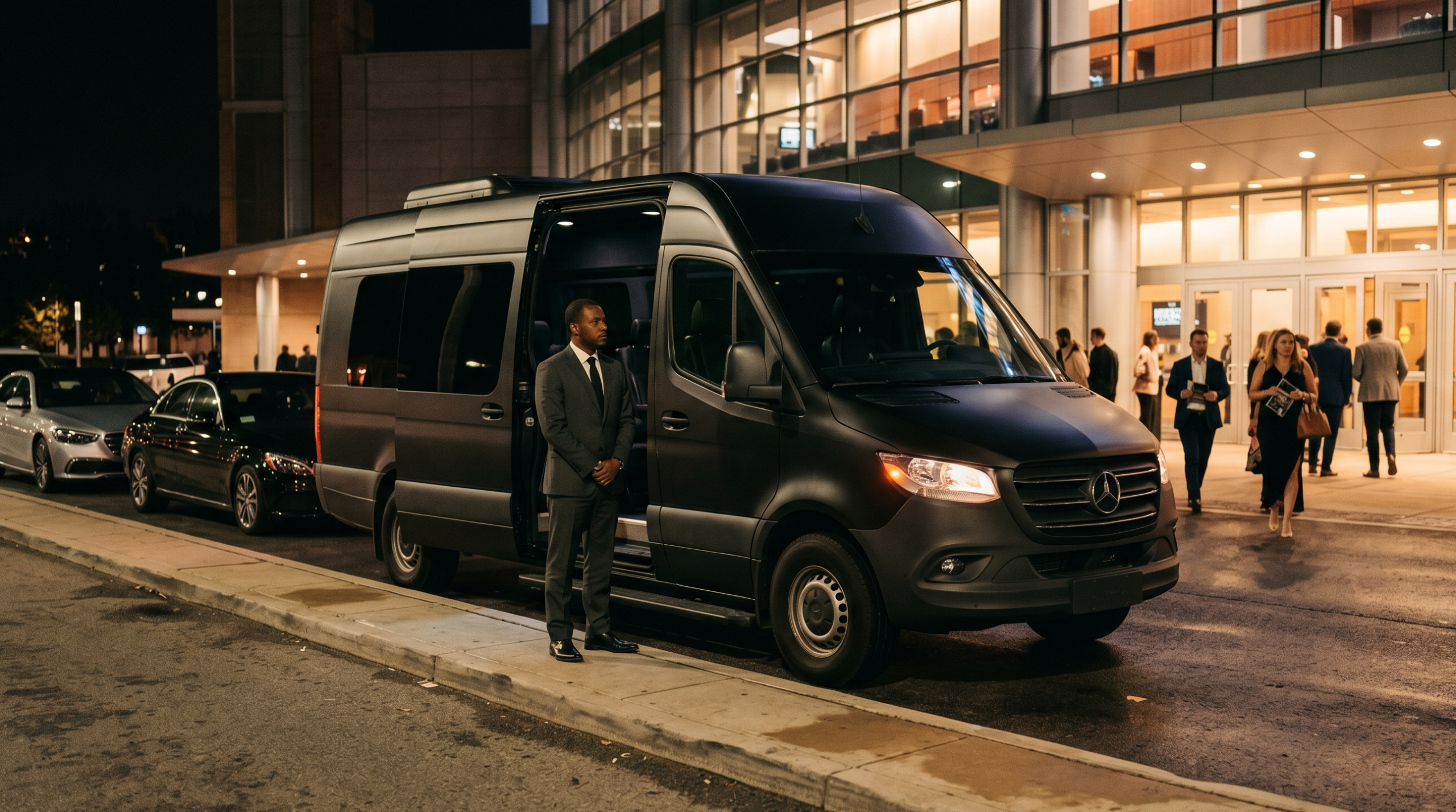
| 7 to 14 | Mercedes-Benz Sprinter | $175 / hr |
| 15 to 27 | 27-seat mini coach | $250 / hr |
| 20 to 35 | 35-seat limousine bus | $250 / hr |
| 36 to 56 | 56-seat motorcoach | $300 / hr |
Two people going to a game book a sedan and skip the parking lot entirely; a 12-person office outing books the 14-passenger Sprinter; a 40-person client night books the 56-seat motorcoach and arrives as one group instead of a scavenger hunt for parking spots. The party-tier vehicles exist for groups that want the ride itself to be part of the celebration, licensed for on-board drinks where Ontario rules allow it.
The size break between tiers is rarely a hard wall. A group of 16 fits the mini coach comfortably but also splits cleanly into an Escalade and a Sprinter if the wedding party and the guest list need to arrive separately; a 30-person office outing usually books the 35-seat limousine bus rather than 2 Sprinters, since one vehicle at $250 per hour beats 2 vehicles at $175 each once the combined capacity is close. The quote should always show the next tier up and down so the decision is a number comparison, not a guess.
Per-head cost is the argument that settles most borderline calls: a full 14-seat Sprinter on a 5-hour night runs about $12.50 a person before tax and gratuity, a full 35-seat limousine bus on the same booking runs about $6.30 a person, and a full 56-seat motorcoach runs about $6.70 a person once the group clears 45. The vehicle that looks more expensive on the hourly line is often the cheaper one per rider once the seats are actually filled.
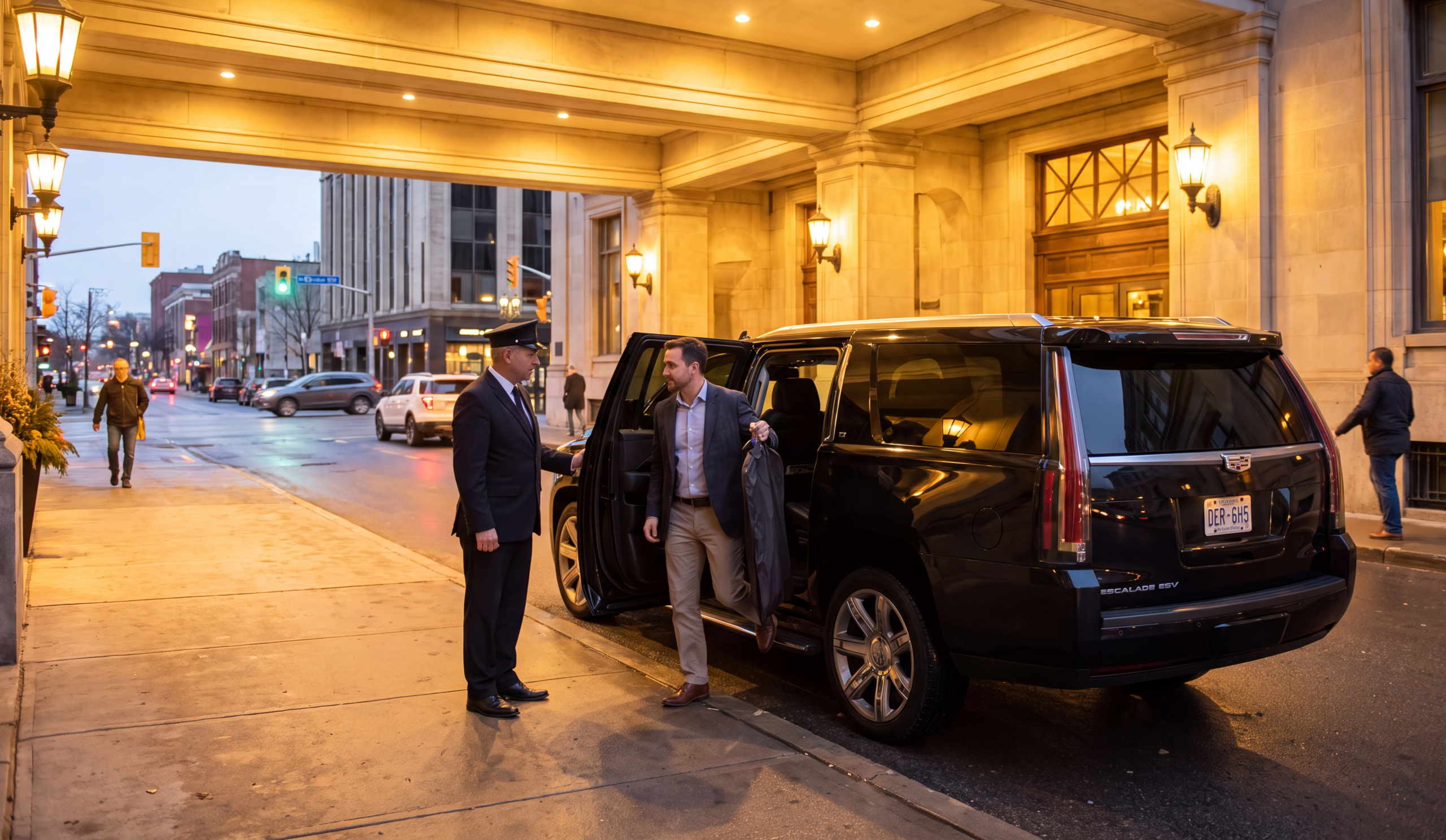
Concert Transportation: Downtown Venues to Cottage Country
Concert nights turn one intersection into a bottleneck for 3 hours, and a staged vehicle beats a rideshare surge every single time: one pickup point in, one staged exit out.
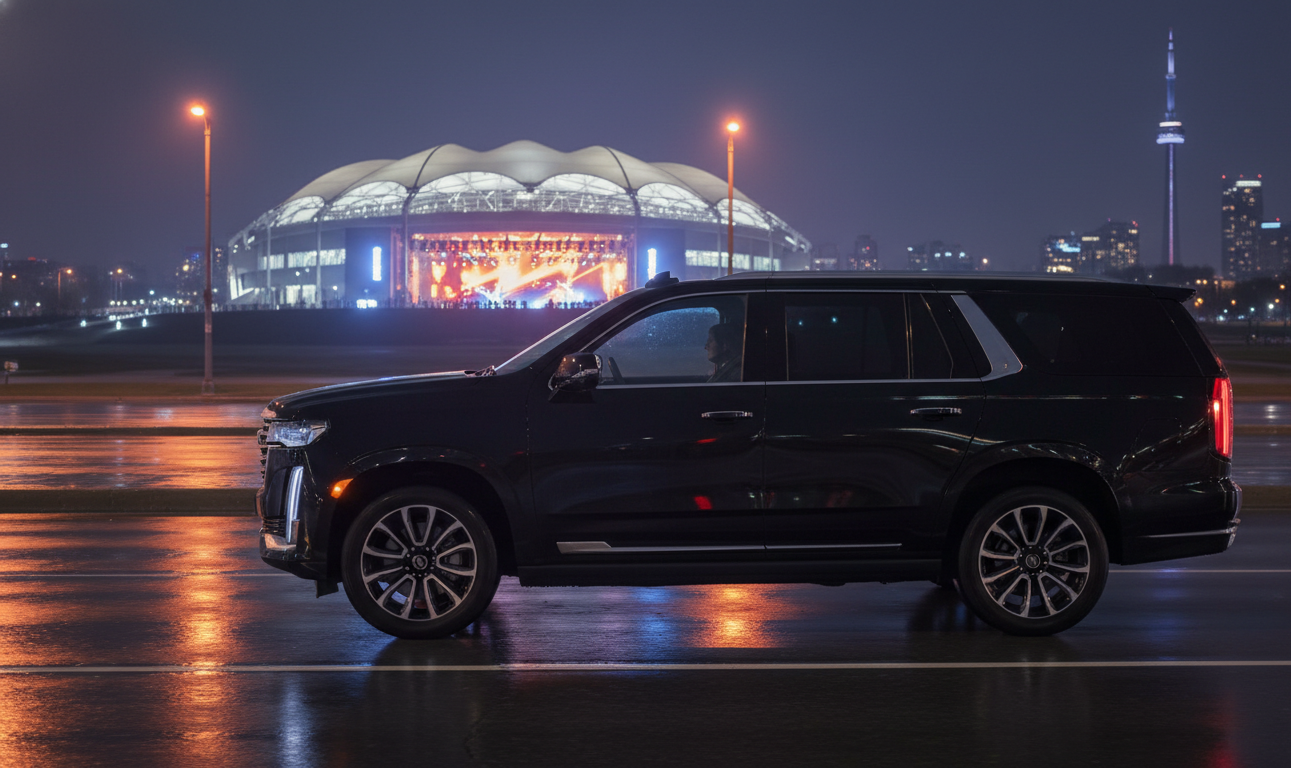
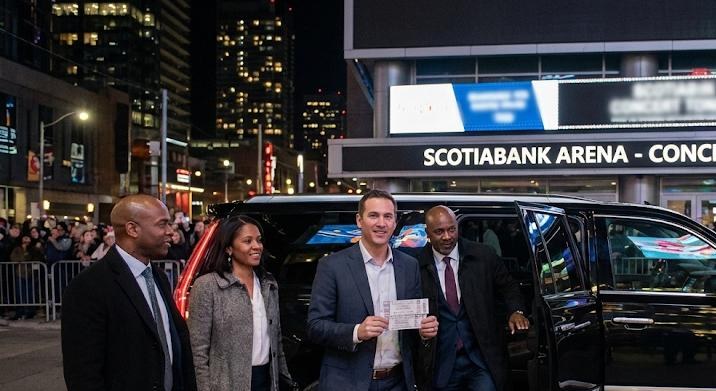
Downtown arena shows run the classic play: the vehicle drops at a legal staging lane before doors, then re-stages at a pre-agreed spot after the last encore rather than fighting the exiting crowd for a curb. Our Scotiabank Arena car service page covers that venue’s specific drop lanes and post-show staging point. Out-of-town shows work the same logic at longer range: our Kee to Bala concert transportation page covers the cottage-country venue circuit north of the city.
Surge pricing is the quiet argument for booking ahead: a rideshare home from a sold-out show can run 4 to 6 times its normal fare in the 20 minutes after the encore, while a booked vehicle at $175 to $250 per hour is the same number whether the show ends on time or runs long. The driver tracks the actual ending, not the printed set time.
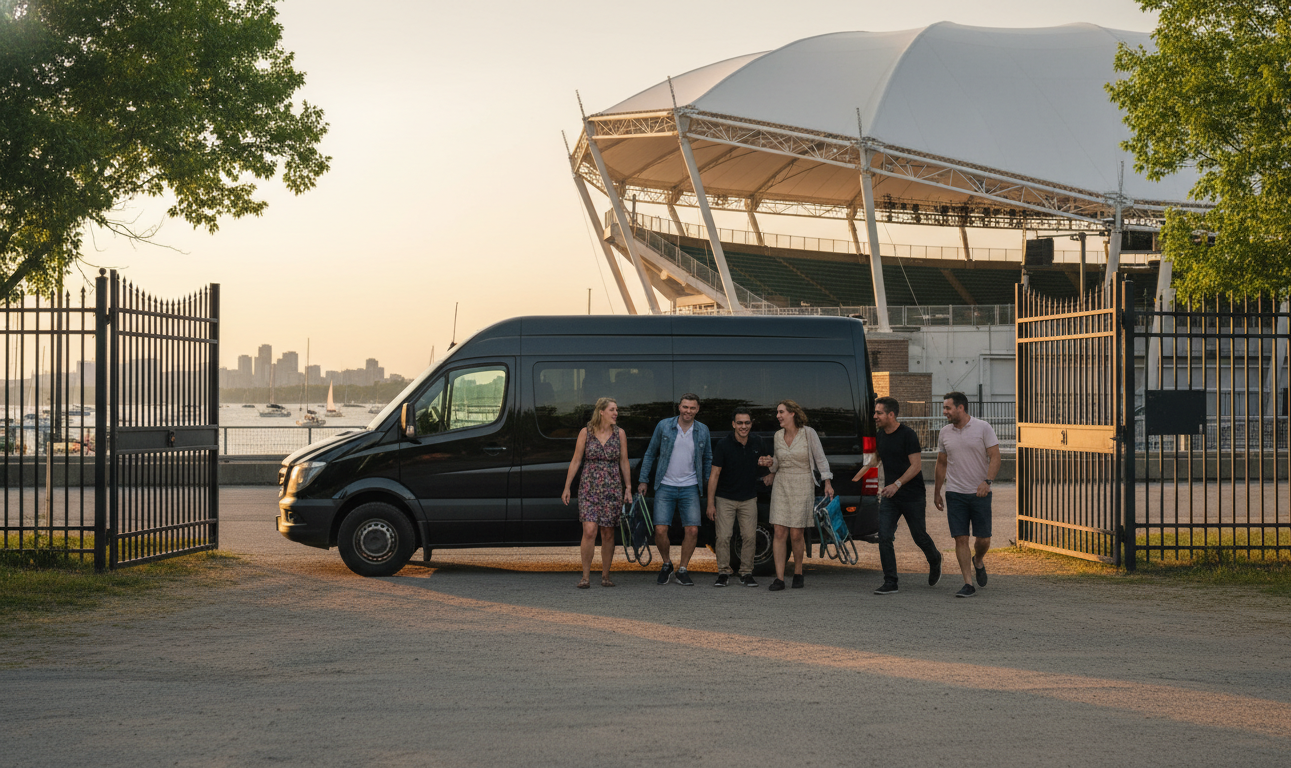
Game Day Transportation: Staged Exits, Not Rideshare Surges
Game nights are the same staging problem at bigger scale: thousands of fans leaving one building at once, and a private vehicle staged nearby skips the entire exit crush.
Corporate season-ticket groups book the pattern most often: a Sprinter or limousine bus for the group, staged at the same spot before puck-drop or first pitch and waiting at the players’ exit lane after. Standing charters lock the same driver for a season-long schedule where possible. The full motorcoach tier handles office-wide playoff outings; the coach bus rental page covers the same fleet from the bus-charter angle.
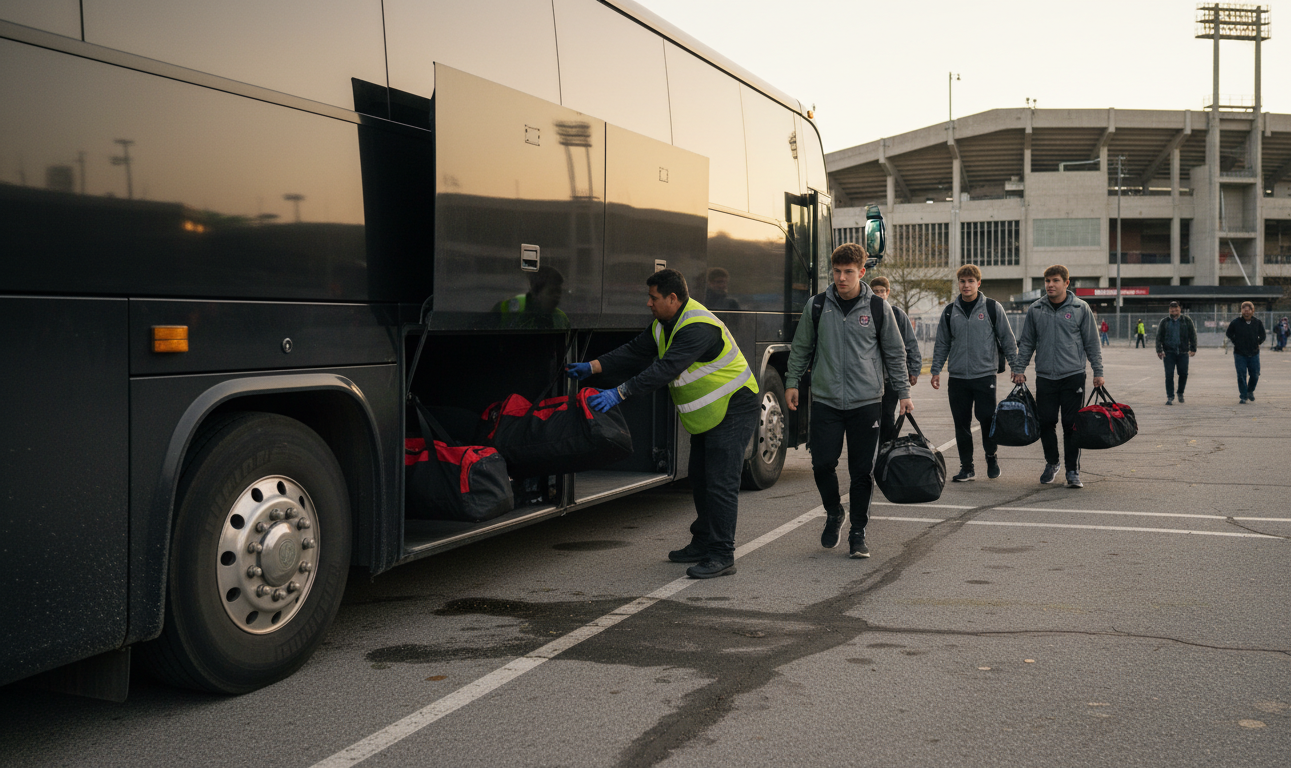
Youth and community sports travel is the other half of the pattern: a weekend tournament team riding a mini coach with gear loaded in the underbody bay, a headcount check at the door, and one vehicle both ways rather than a convoy of parent cars splitting up between hotel, rink, and restaurant. Coaches and team managers get the same standing-charter option corporate accounts use, with the schedule locked for the tournament weekend and adjusted by text if game times shift. A single point of contact for the whole weekend replaces a group chat full of “who’s driving” messages, and the roster travels with the driver rather than living in someone’s memory.
Corporate Event Transportation: Conferences, Client Nights, and Offsites
Corporate event work is the least dramatic, most repeated booking type: hotel to venue, venue to dinner, dinner back to hotel, on a published schedule a coordinator does not have to babysit.
Conference delegations move on a loop cadence between two or three points; client appreciation nights book a single Sprinter or Escalade for VIP guests while a limousine bus covers the broader invite list. NET 30 invoicing and one point of contact are standard for corporate accounts. Our corporate event transportation and event shuttle & conference transportation pages cover the account-level detail; this page is the group-size math that feeds both.
A client appreciation night at a Leafs or Raptors game is the pattern that shows up most on a corporate calendar: a small VIP group (2 to 6 clients) rides the Escalade with the account executive, while a wider invite list of 15 to 30 staff and guests rides the limousine bus on a separate but coordinated schedule. Both vehicles stage at the same pickup point and both return to the same drop, so the event reads as one coordinated outing even though 2 vehicles are running it.
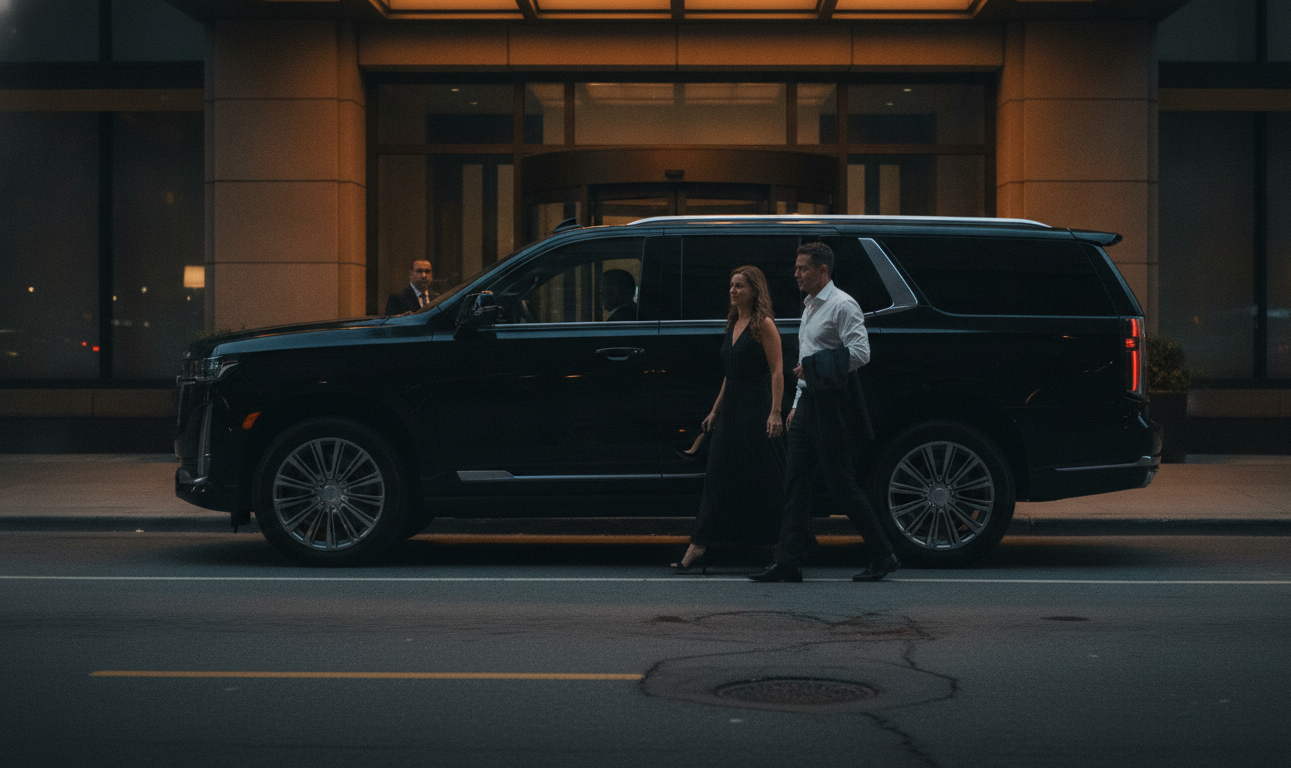
Award galas, product launches, and holiday parties add a wrinkle standard game-night transport does not: a dress code that makes 20 minutes standing at a rideshare pickup spot genuinely uncomfortable in January, and a venue that often does not have its own dedicated drop lane. The driver treats these the same as any other staged pickup, confirming the exact door with the venue or the event planner ahead of time rather than guessing on the night.
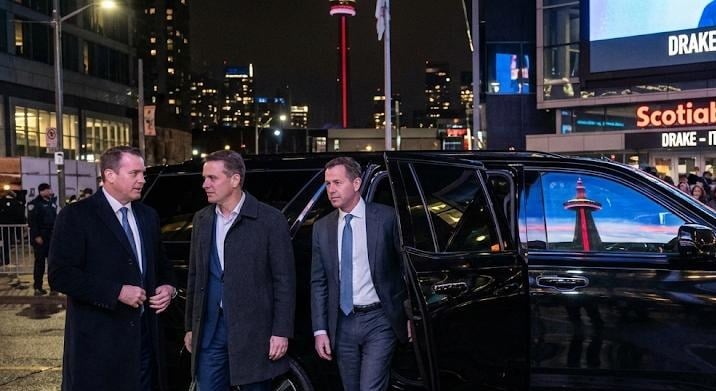
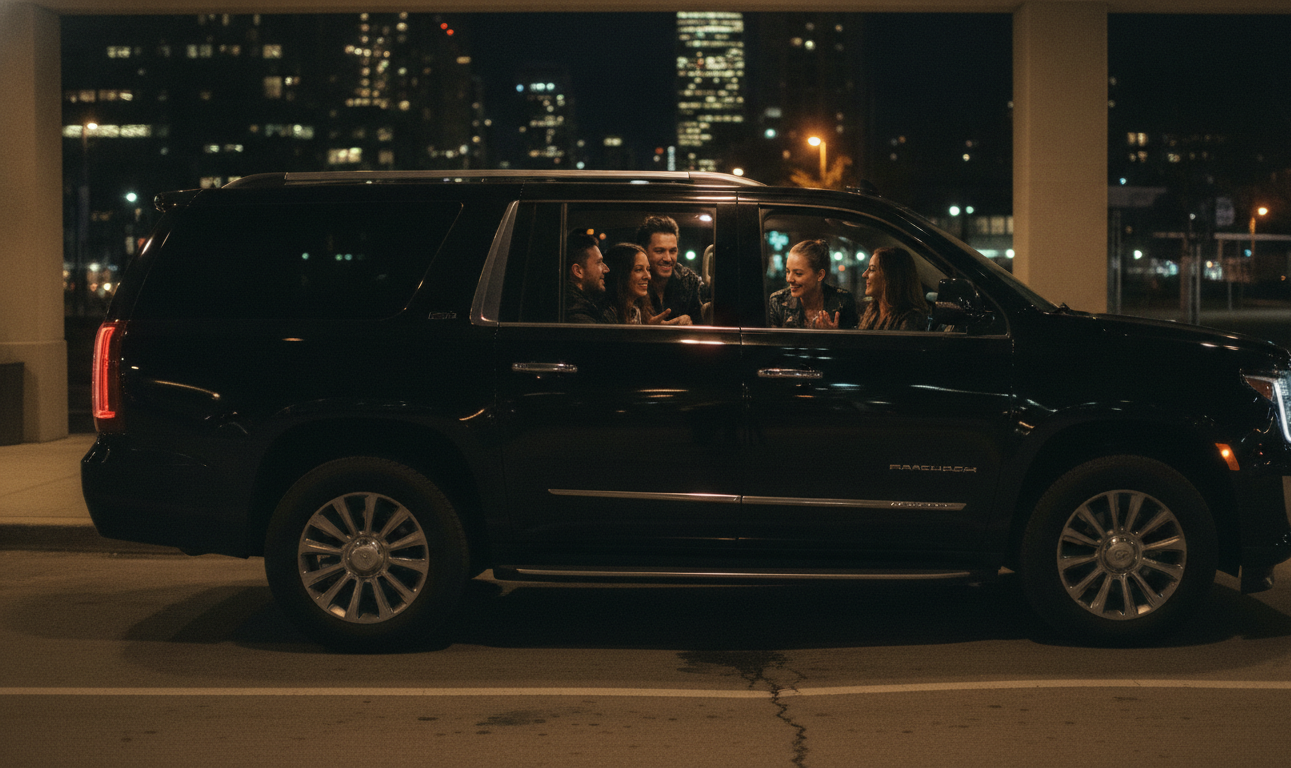
How Venue Staging Actually Works
Every venue has a legal spot for a private vehicle to load and unload, and the driver knows it before your group arrives, because staging wrong is the single biggest source of a bad pickup.
Downtown arenas and stadiums publish designated pickup lanes that shift block by block depending on the event; hotels use their portico; venues without a formal lane get a pre-agreed side street the driver scouts ahead of the booking. The vehicle is never mid-road, never blocking a live lane, and never guessing, the same standard held across every Chauffeuropolis fleet tier.
Multi-stop nights (dinner, then the venue, then the after-party) run on the same hourly clock rather than separate fares, and the driver adjusts the staging spot by text as the plan shifts. A hotel-block group with an out-of-town guest list gets one pickup, one drop, and a return that starts the moment the group is ready rather than the moment a driver happens to be nearby.
Winter events add their own staging math: snow-narrowed lanes near an arena or a stadium shrink the number of legal spots a driver can actually pull into, so a booking through December and January builds in a slightly wider staging radius and a text update if the confirmed spot has to move a block. Summer festival weekends work the opposite problem, closed streets and shifting barricades around the CNE grounds or a downtown street festival, and the driver scouts the current road closures the same day rather than relying on last month’s map.
Corporate accounts with a recurring event calendar (a law firm’s season tickets, an agency’s client-night schedule) get the staging spot memorized after the first booking, so repeat visits to the same venue skip the scouting step entirely and go straight to a confirmed pickup point sent the morning of the event.
Event Transportation Rates in Toronto
Every tier prices the same way: an hourly rate with the professional driver included, plus HST 13% and gratuity of 15 to 20 percent, straight from our rate card.
| Vehicle | Capacity | Hourly | Minimum |
|---|---|---|---|
| Sedan (point-to-point) | 1 to 3 | from $185 / leg | n/a |
| Cadillac Escalade ESV | 1 to 6 | $175 / hr | $525 |
| Mercedes-Benz Sprinter | 7 to 14 | $175 / hr | $525 |
| 27-seat mini coach | 15 to 27 | $250 / hr | $1,000 |
| 35-seat limousine bus | 20 to 35 | $250 / hr | $1,000 |
| 56-seat motorcoach | 36 to 56 | $300 / hr | $1,800 |
Full-day charters run the hourly rate times a 12-hour day: a full motorcoach day starts from $3,600. Single point-to-point transfers (arena drop, no wait, no return) quote as a flat fare instead of the hourly clock. The number on the quote is the number on the invoice, with no fuel surcharge, no surge multiplier, and no fee that was not itemized before the vehicle was booked.
Round-trip bookings, drop the group and wait for the return, price as one continuous hourly booking rather than 2 separate fares, which is almost always cheaper than booking a drop and a separate return car. A 3-hour concert with a 30-minute drop and a 30-minute return still runs on the same 5-hour minimum on most tiers, so the wait time in between rarely adds cost once the minimum is already met.
How to Book Event Transportation in Toronto
Send 4 things: the date and event, the headcount, the pickup and drop points, and whether the vehicle should wait or make a single run. A fixed quote comes back within the hour with HST and gratuity itemized.
Book 1 to 2 weeks out for a normal weeknight game or show; book 3 to 4 weeks out for a marquee concert, a playoff run, or a Saturday night in festival season, since staging lanes and standing charters fill first. Weekday corporate bookings often confirm same-week. If the headcount sits near a size break in the table above, ask for both quotes side by side.
Confirmation follows the same pattern across every tier: the quote is itemized with HST and gratuity shown separately, a deposit secures the date on higher-demand nights, and the balance settles closer to the event. Changes to headcount, pickup point, or timing are handled by a quick text right up until the day of the event, and the driver’s contact goes out the morning of the booking so there is a direct line if plans shift at the last minute.
“We received transportation to and from the airport (party of 6). Punctual, professional, polite, respectful, efficient and friendly staff. Reasonable price for service provided. Great communication from staff. Clean, comfortable, high end vehicles. Water provided to customers. Safe drivers. Drivers assisted with customers getting in/out of vehicles as required and managed the loading/unloading of bags/suitcases. Highly recommended. Will call upon them for transportation in the future.”
“Friendly , excellent service, thank you”
“I would like to appreciate David and his team of professionals for giving such an amazing service of picking up my family from their home in Mississauga and dropping them off at Pearson Airport, Toronto. Back and forth communication through email with David made my life easy as he thoroughly explained all the related expenses and detail of vehicles readily available to choose from. Their executive sprinter van was so big and comfortable which adjusted as many as 13 big bags and 5 travelling passengers. The passengers had a very good experience to the airport. I highly appreciate their professional team in terms of arriving on time, vehicle professionally driven. Keep up with the good work. Looking forward using this service very soon. Thanks”
Toronto Event Transportation FAQ
The vehicle-choice and staging questions Toronto groups ask most before a concert, game, or downtown event.
How much does event transportation cost in Toronto?
$185 covers a sedan point-to-point transfer, and hourly rates start at $175 for the Escalade or 14-passenger Sprinter, $250 for the 27-seat mini coach or 35-seat limousine bus, and $300 for the 56-seat motorcoach, plus HST 13% and gratuity of 15 to 20 percent. The tier depends entirely on group size. A fixed quote is confirmed before pickup, never adjusted after.
What vehicle should I book for a concert or game?
1 to 6 people book the Escalade at $175 per hour; 7 to 14 book the Sprinter at the same rate; groups past 20 step up to the 35-seat limousine bus or the 56-seat motorcoach. The group-size table on this page maps every tier. Staging and pricing work the same whichever event you are headed to.
Is a private car cheaper than a rideshare after a concert or game?
Often yes once the exit crowd hits: rideshare surge pricing can run 4 to 6 times normal for 15 to 20 minutes after a sold-out show ends, while a booked vehicle at $175 to $250 per hour is the same number regardless of how the crowd behaves. The driver also tracks the actual ending time, not the printed schedule. Booking ahead locks the rate before the surge starts.
How does the driver know where to pick us up at a busy venue?
1 legal staging lane, scouted before the booking: every major Toronto venue has one, never a mid-road guess or a live traffic lane. Arenas and stadiums publish designated pickup zones that shift block by block by event; hotels use their portico. The pickup spot is confirmed by text before doors open.
Can you handle post-game or post-concert exits when the crowd is heaviest?
Yes, 1 pre-agreed spot away from the main exit crush is exactly how private staging solves it, with the driver tracking the real ending time, not the printed one. Groups leaving early for a staged pickup skip the worst 20 minutes entirely. Text updates adjust the meeting point if the plan shifts.
Do you serve Scotiabank Arena and Rogers Centre?
Yes, 2 dedicated venue pages cover it: Scotiabank Arena car service for that venue’s specific drop lanes, and the motorcoach and coach bus pages for Rogers Centre group charters. Staging details are venue-specific; the vehicle-choice math on this page applies to either building. Pickup can originate anywhere in the GTA.
How many people fit in a Sprinter van for an event?
14 passengers in one closed cabin at $175 per hour, the standard tier for an office outing, a bachelor or bachelorette group, or a mid-size friend group headed to a show. Below 7, the Escalade is usually the better fit on comfort. Above 14, the 27-seat mini coach or 35-seat limousine bus takes over.
Can a corporate group book standing event transportation for a whole season?
Yes, standing charters lock a season-ticket group’s schedule with the same driver where possible: 1 coordinator, 1 calendar, adjusted by text as game dates shift. NET 30 invoicing applies to corporate accounts. Playoff and marquee-game dates book earliest, so a standing charter should be set before the season starts.
What is the minimum booking for event transportation?
5 hours on the hourly tiers (Escalade through motorcoach), which covers a typical arrival-to-return window for a concert or game; single-leg drops quote as flat point-to-point fares instead. Corporate day-long conference shuttles quote as a package. The quote states the shape before you approve it.
Can the vehicle make multiple stops in one night?
Yes, 3-stop nights, dinner, then the venue, then an after-party, are the standard pattern: one hourly clock rather than separate fares, and the driver adjusts the staging spot by text as the plan shifts. This covers a full night out rather than a single transfer. Extra stops do not add a surcharge on hourly bookings.
Do you provide transportation to the CNE?
Yes, 1 dedicated CNE group transportation page covers gate-specific staging for the summer fair season. Family groups, school trips, and corporate outings all book the same fleet. Peak weekends and closing-weekend fireworks nights book out first.
How far in advance should I book for a big concert or playoff game?
3 to 4 weeks ahead for marquee shows, playoff runs, or any Saturday night in festival season, since staging lanes and standing charters fill first; a normal weeknight game or show often confirms 1 to 2 weeks out. The quote holds once approved, so booking early costs nothing extra.
Is the driver included in every rate?
Yes, 100 percent of bookings include a professional, commercially licensed driver plus fuel and insurance; there is no self-drive option on any tier. HST 13% and gratuity of 15 to 20 percent are itemized separately on the quote. One number covers the vehicle and the person running it.
What happens if the event runs late?
0 problems: hourly bookings absorb the extension at the same rate and the driver tracks the actual ending, not the scheduled one. 1 text adjusts the pickup spot or time. Post-event traffic and staging around the crowd are the driver’s problem to manage, not yours.
Can we book transportation to a venue outside downtown Toronto, like Kee to Bala?
Yes, 1 dedicated Kee to Bala concert transportation page covers that specific cottage-country route and drive time, on the same booking logic at longer range. Multi-hour drives include driver-hours planning so the schedule stays legal. Pickup can originate anywhere in the GTA.
How much does it cost per person for a group event ride?
It drops fast as the vehicle fills: a full 14-seat Sprinter on a 5-hour booking runs about $12.50 a head before tax and gratuity, and a full 56-seat motorcoach on the same booking runs about $6.70 a head. Half-empty vehicles should size down a tier for better per-head value. The group-size table on this page shows every break point.
Do you offer party-bus style vehicles for events?
Yes, 2 distinct fleets exist: the licensed party tiers for groups that want on-board music and drinks where Ontario rules allow it, and the standard Sprinter and limousine bus tiers for straightforward transfers. See our party bus rental Toronto page for that fleet specifically. Both tiers share the same staging discipline at the venue.
Can out-of-town clients or guests be picked up from the airport before an event?
Yes, 1 combined booking covers both legs: the same vehicle or a paired Sprinter and Escalade runs the airport pickup first and the event leg after. Pearson pickups add a per-passenger pre-arrangement fee on arrival legs. Ask for the combined quote rather than booking each leg separately.
How does invoicing work for corporate event accounts?
1 itemized invoice per booking with HST shown separately, NET 30 terms available for corporate accounts, and one coordinator across every booking on the account. Standing season charters bill on the same schedule. Procurement gets a single vendor instead of a folder of receipts.
Can we see the vehicle before the event?
Yes, 2 ways: current photos of the exact vehicle class on request, or a scheduled viewing when timing allows. Every vehicle arrives detailed regardless of which tier is booked. What is shown is what pulls up on the night.
What size group needs the 56-seat motorcoach for an event?
36 to 56 people: an office-wide playoff outing, a full conference delegation, or a large wedding-adjacent event group all fit the motorcoach at $300 per hour, with an on-board washroom for longer waits between staging and the venue. Below 36, the 35-seat limousine bus usually costs less for a similar seat count. The size break is the first question the quote asks.
One venue. The right vehicle, staged.
Send the event, the headcount, and the pickup point. A fixed quote comes back within the hour, ready before the calendar reminder even goes off.