

CHAUFFEUROPOLIS / ONTARIO JOURNAL
The Rosemount Inn: arranging your Toronto departure
Toronto and Pearson departures to The Rosemount Inn, with the return planned around your stay.
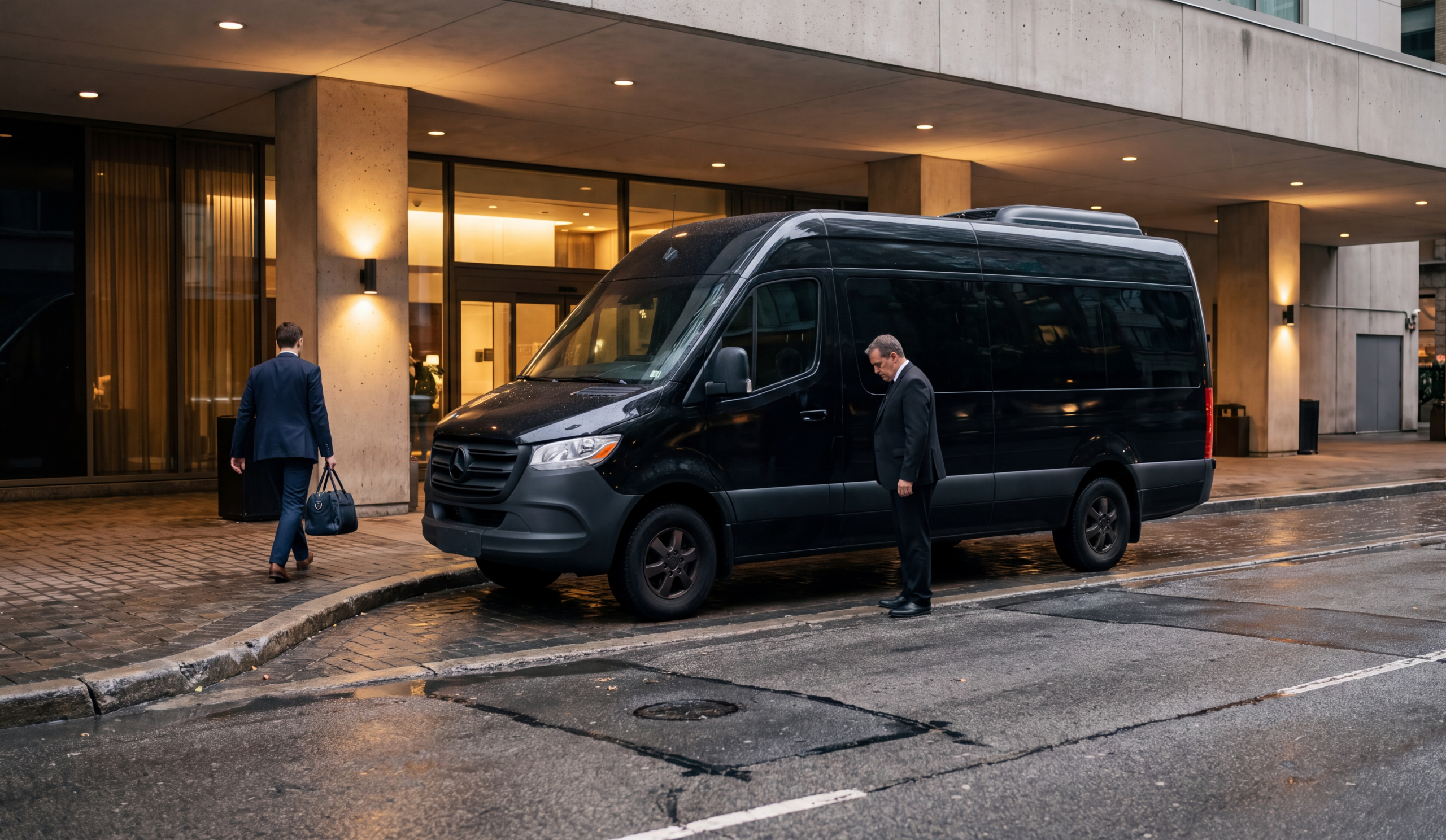
What to budget for the transfer
Start with these approximate one-way budgets, then book online using your pickup, travel date and passenger details. If the vehicle or itinerary is not offered online, contact us for that arrangement.
| Vehicle | Passenger capacity | From YYZ, one way | From downtown Toronto, one way |
|---|---|---|---|
| Sedan | 2 to 3 passengers | Approx. $425 to $600 | Approx. $400 to $575 |
| SUV | Up to 6 passengers | Approx. $675 to $925 | Approx. $650 to $900 |
| Cadillac Escalade | Up to 6 passengers | Approx. $925 to $1,275 | Approx. $900 to $1,250 |
| Sprinter | Up to 14 passengers | Approx. $1,175 to $1,600 | Approx. $1,125 to $1,550 |
All amounts are CAD, plus 13% HST and 15% to 20% gratuity. Luggage, stops, waiting, tolls and vehicle selection can affect the total. Passenger capacity does not override property occupancy or access limits.
The YYZ ranges are planning estimates based on our published Prince Edward County / Picton rates and the approximate road-distance difference. Downtown Toronto ranges are estimates using Union Station as the reference pickup, not published flat fares. Allowance ranges are not a guarantee of the final price. See our current rates.
Google Maps puts the driving distance at approximately 270 km from YYZ and 265 km from Union Station to the destination. Distances depend on the route selected; some routes use toll roads. Enter the exact address for your booking.
For larger groups, the published out-of-town starting price for a 27-passenger mini bus is $1,000, plus tax and gratuity. This is a fleet starting price, not a fare for this destination. Check the price for your dates and route; larger coaches are priced for the itinerary.
The table covers one outward journey. Add the return when booking if you need both directions; these amounts do not include a driver staying with you or local trips during your visit.
A group transfer from Toronto or Toronto Pearson to The Rosemount Inn should be planned around the inn’s agreed arrival arrangements, the passengers’ luggage and a confirmed unloading point. The destination is an eleven-room boutique property in downtown Kingston’s Old Stones district, not a large conference hotel. Book the return to Toronto or YYZ as a separate, dated movement within the itinerary rather than assuming the vehicle will remain available during your stay.
The Rosemount’s official website describes a house dating to 1850 and eleven individually designed guest rooms. Those details make a difference to the journey. A group can travel together without occupying the whole inn, and a vehicle’s seating capacity says nothing about how many guests the property has agreed to host. Settle the accommodation plan first, then match transportation to the people actually travelling.
For this out-of-town journey, request a distance-based itinerary quote. Give the operator the Toronto pickup address or Pearson flight details, passenger and bag counts, any stops and the return destination. No route fare or fixed driving time is quoted here: both need assessment against the actual booking. Chauffeuropolis transportation and Rosemount accommodation are separate reservations; this article does not imply an affiliation with the inn.
On this page
- Choosing a vehicle and journey arrangement
- Why the inn’s scale changes the arrival plan
- Toronto departures and Pearson arrivals
- Luggage, access and the final handover
- A workable overnight itinerary
- The return to Toronto or YYZ
- Quote details and common questions
Choose the journey before choosing the vehicle
The useful first choice is whether everyone needs the same departure. A small party leaving one Toronto hotel has a different problem from guests landing at Pearson on separate flights. Start with a passenger list for each direction. Only then compare vehicles, because the largest outward party may not be the largest returning party.
| Arrangement | When to consider it | Luggage and access checks | Quote basis |
|---|---|---|---|
| Private car or SUV | A smaller party with a shared pickup and destination | Confirm the actual passenger and bag fit, boarding needs and inn unloading instructions | Distance-based Toronto or YYZ itinerary with any agreed stops |
| Sprinter-style passenger vehicle | Guests who want to travel together with their overnight luggage | Confirm cabin configuration and storage separately; obtain approval for the final unloading point | Quote the outward and return movements, with dates and stops stated |
| Mini bus or coach assessment | A larger travelling party whose accommodation arrangements are already approved | Vehicle capacity does not prove inn capacity; do not assume parking, turning space or coach access | Bespoke itinerary quote only after the vehicle and handover are assessed |
| Separate airport arrivals | Flights that do not support one sensible meeting time | Allocate luggage and a reachable contact to each party | Each arrival movement should appear explicitly in the quote |
| Separate outward and return bookings | An overnight stay without a need for a vehicle on standby | Confirm the return vehicle, collection point and new passenger count | Dated distance-based movements; waiting or extra service must be stated |
A vehicle category is a starting point, not a reservation. The operator still needs to confirm the assigned vehicle and what fits safely. Empty seats are not a substitute for suitable baggage storage. If the party includes a folding mobility aid, formal clothing or equipment, describe those items before accepting a vehicle recommendation.
There is also no reason to choose a large vehicle simply because several rooms have been booked. Some guests may drive independently or stay in Toronto longer. Ask each traveller which journeys they need rather than counting everyone invited to the occasion. That small piece of administration can prevent a much larger mismatch on departure morning.
Why this arrival differs from a large hotel transfer
The Rosemount places itself in Kingston’s Old Stones district and describes its heritage house alongside modern guest rooms. Its appeal is the scale of a small property. That same scale means an organizer should not import assumptions from a hotel with a coach bay, porter desk and large lobby.
Use the inn’s guest information and your reservation confirmation to settle access before travel. Ask where the proposed vehicle should stop, whether guests can enter at the planned time and who receives a message if the arrival changes. A map pin can identify the destination without explaining any of those details.
The inn’s published information describes limited parking entered from Sydenham Street on the north side of the house. Treat this as orientation for the property, not permission for a hired vehicle to enter or wait. Parking availability does not establish clearance, turning room or a suitable place for a group to stand while cases are unloaded.
A practical handover is specific. The driver has a confirmed stopping instruction; a travelling guest has the inn’s access instructions; everyone knows which bags belong to them. If those three pieces are missing, the group can reach the right building and still have an awkward arrival. Resolve them while there is time to ask questions, not from the vehicle outside.
The inn’s room count is useful context, but it is not an event-capacity statement. Ask the property to approve the room arrangement and any gathering associated with your stay. Do not promise other guests that booking enough seats also secures permission for a celebration or exclusive use of common areas.
Confirm the room plan before inviting a larger party
The inn’s published group policy is more specific than its eleven-room total. It says it accommodates groups of up to four rooms, or eight guests, and that groups needing five or more rooms, or ten or more guests, require a full property booking. Its stated full-booking season is November 1 to May 31. Check your particular dates and arrangement directly with the inn before committing to transportation.
For a Toronto group, confirm the room arrangements with the inn. A reunion involving a few couples may fit an ordinary small-group stay, while adding another household can change the accommodation conversation. Do not divide a connected party into separate reservations to assume the policy no longer applies. Tell the inn what you are organizing and obtain its agreement to the actual plan.
A larger vehicle can still be considered for a party with substantial luggage or passengers staying elsewhere, but explain that arrangement. Who is staying at The Rosemount, who only needs to be dropped off elsewhere and which stops belong to the intercity journey? A coach inquiry should follow those answers, not precede them. The comparison table is a way to assess possibilities, not a claim that the property accepts coach groups.
Where guests sleep can also affect what they bring. The inn distinguishes its Coach House from the Main House in its dog and bicycle rules. It says bicycles are allowed in the Coach House rooms but not the Main House and that it does not provide secure bicycle storage. If cycling forms part of the visit, confirm both the booked room’s rules and suitable vehicle storage before bringing a bicycle to the Toronto pickup.
For a dog, obtain approval from the inn for the specific room and animal, then separately from the transport operator. Property permission does not establish permission in a vehicle, and the transport booking does not change the accommodation rules. Send any special-item or animal requirements with the first enquiry so neither provider is being asked to solve a surprise on arrival.
Start a Toronto departure at a usable meeting point
For a Toronto pickup, provide the complete address and the entrance where passengers will actually assemble. A hotel can have several doors. An office tower may have a loading restriction. The operator needs the collection point that suits the proposed vehicle, rather than an instruction to find the group somewhere near the building.
Choose an assembly time before the booked departure. Guests should have checked out of their Toronto rooms, retrieved stored luggage and used the washroom before the vehicle is expected to leave. This is especially helpful when several rooms are involved: one late bag can hold up people who were ready on time.
Multiple pickups deserve a deliberate decision. Collecting friends at separate addresses may be convenient for each household but introduces more loading events before the intercity journey. Compare that plan with one shared pickup. If several stops are necessary, submit every address at the quote stage and keep the agreed order in the passenger instructions.
For a birthday weekend or reunion, it is tempting to describe the departure as informal. Keep the social part informal, but make the transport instructions exact. One organizer should hold the final list, confirm that everyone is present and communicate changes to the operator. Guests should not independently send conflicting pickup times.
Add a meal or comfort stop only when it is part of the agreed plan. A restaurant reservation needs enough allowance for the road journey and a place the vehicle can use. If the purpose of the trip is a relaxed night at The Rosemount, a direct arrival with fewer timed commitments may be preferable to a crowded first afternoon.
Pearson arrivals need a flight plan, not just a pickup time
Landing at YYZ and being ready for a road transfer are different moments. Passengers still need to leave the aircraft, complete any applicable arrival formalities, collect luggage and follow the confirmed pickup instructions. Send the flight number and date, not merely an estimated time copied into a group chat.
The operator should issue the collection procedure for the confirmed booking. Do not assume an indoor nameboard meeting, a particular airport door or permission for the vehicle to wait beside the terminal. Keep the instructions available to the travelling contact and ask how to communicate once the party is ready.
When guests arrive on different flights, decide who waits for whom. A single vehicle works only if the group accepts the planned waiting arrangement. Early arrivals may prefer their own transfer rather than waiting for another flight whose baggage collection is still uncertain. Separate journeys can also protect an agreed arrival time at the inn.
Agree what happens if one flight is substantially delayed. The choice might be to move the shared pickup, let the ready party depart or request an additional movement, subject to availability and the booking terms. No option should be treated as automatically included. Discuss the decision before someone is standing at the airport trying to reach the organizer.
Notify the inn separately if the revised journey changes the expected arrival window. A transport provider updating its pickup time does not update a hotel reservation. The person managing the rooms and the person travelling should both understand who will contact the property and where the latest access instructions are stored.
Plan around check-in without assuming early access
The inn’s guest information publishes check-in from 4 p.m. to 9 p.m., with alternative arrangements to be discussed for arrivals outside that period. Reconfirm the details for your stay. A room booked for the night does not establish permission to enter early or to arrive late without notice.
For an early Toronto departure, choose what happens if the group reaches Kingston before its rooms are ready. Ask the inn whether luggage can be left and where. If storage is not confirmed, do not send passengers off to lunch expecting their cases to have been accepted. A planned stop may be possible, but it needs to be agreed with the transport operator as well.
Late arrivals require the opposite discipline: reduce uncertainty before setting off. Keep access instructions on a phone travelling with the group, not only in an assistant’s inbox. The inn describes a text concierge rather than a conventional concierge desk. An after-hours arrival should follow the property’s specific instructions, not an assumption that someone will be waiting in reception.
Avoid making the evening depend on the earliest conceivable arrival. A prepaid dinner or other appointment immediately after an airport transfer adds a second deadline to an already variable journey. If the reservation cannot move, tell the operator about it during planning and ask whether the proposed flight and collection arrangement are sensible.
Count luggage and check the route to the room
Ask for a bag count from each passenger. Distinguish large cases from carry-ons and mention items that cannot be stacked, folded or put underneath other luggage. “Weekend bags” can mean very different loads to different people, particularly when some guests are arriving from a longer overseas trip.
Send that inventory with the passenger count. A comfortable cabin photograph is not proof of baggage space. If a passenger adds a large case or equipment after the vehicle has been chosen, ask the operator to confirm the revised fit rather than assuming it will be absorbed.
The journey does not end when the engine stops. Guests need to move from the unloading point to the entrance and then to their rooms. Check who can carry their own bags and what assistance is actually available. Driver assistance, property assistance and access through the building are separate questions.
The Rosemount’s guest information describes entry steps, heavy doors and a staircase, and states that there are no elevators. Anyone who may find those features difficult should discuss the complete route to their specific room before confirming the stay. A room amenity such as a walk-in shower does not establish step-free access to it.
Vehicle requirements need their own confirmation. Explain boarding needs and the type of mobility aid. If a guest must remain in a wheelchair during travel, say so explicitly and obtain confirmation of a suitable transport arrangement. A private transfer can remove a connection, but it cannot remove the inn’s architectural barriers.
A workable overnight itinerary
For a group already in Toronto, the simplest outline is one agreed collection, the intercity transfer and an arrival within the inn’s confirmed window. Leave the first evening with enough flexibility to settle into rooms. This is an example of planning structure, not a promised schedule or a package offered by the inn.
Before the outward departure, circulate a short message containing the assembly address, ready time, luggage instructions and the travelling contact. Keep room access codes or private guest instructions out of broadly forwarded messages. Each guest needs the information relevant to their own room and the common transport plan, not everyone else’s reservation details.
At the inn, allow the organizer to finish the transport handover before the group disperses. Check bags and personal belongings, confirm that everyone has access instructions and know how to report a problem. There is less chance of leaving a phone or jacket behind when someone takes responsibility for the final check.
For the following morning, start with the return requirement. The inn publishes breakfast from 7:30 a.m. to 9:30 a.m. and checkout at 11 a.m.; confirm current arrangements with the property. These are useful reference points for a leisurely Toronto return, but they do not determine a safe departure time for a flight at Pearson.
If the airport schedule requires an early start, pack and settle departure tasks the night before. Ask the inn about any breakfast needs rather than delaying the vehicle to fit normal service. A traveller can choose a later return to Toronto, but a flight-bound party cannot treat the airline’s reporting requirement as flexible.
A later pickup after checkout also needs a plan for bags and the meeting point. Ask about storage instead of assuming it is available. If the party will meet the vehicle somewhere other than the inn, give the operator the revised location and obtain confirmation before telling guests where to wait.
Build the return from the destination backwards
For a return to Toronto, state the final address. A city-centre hotel, residence and onward station are not interchangeable destinations. If passengers split between addresses, list each stop in the requested order so the quote and schedule reflect the whole journey.
For a return to YYZ, start with the flight date, number and the airline’s current airport reporting guidance. Ask the operator to assess a collection time that allows for the road journey, loading, planned stops and a suitable margin. Do not work backwards from departure time alone or rely on a generic drive-time estimate from a search result.
Give the group an earlier ready time than the vehicle’s scheduled departure. Rooms should be vacated as required, bags collected and any property departure instructions completed. The driver arriving outside is not the signal to begin packing. A group that is ready together gives the return plan a much better starting point.
Confirm the passenger list again. One guest may stay another night while another joins the return only. Luggage can change too, particularly after shopping or a special occasion. Pass the revised count to the operator early enough to assess whether the confirmed vehicle remains suitable.
A round-trip reservation does not mean the same driver or vehicle stays nearby throughout the visit. If you need a vehicle retained, ask for that arrangement explicitly, including waiting location and the duration of service. Otherwise, treat the return as its own confirmed collection with a contact procedure.
Keep this stay separate from regional service planning
This article concerns a Toronto or YYZ journey to a particular small inn and the return. Its useful details are the room plan, check-in arrangements, unloading uncertainty and historic-building access. It is not a proposal for short rides around Kingston or a replacement for a regional transport service page.
For the wider corridor, the existing Toronto to Kingston Sprinter van hire page addresses vehicle-service enquiries. For broader airport planning, see Kingston Pearson airport transportation. Neither page establishes a price or property-access approval for your Rosemount booking.
Local dining and sightseeing plans should remain separate unless a specific stop is included in the intercity itinerary. The inn presents Kingston and the Thousand Islands as reasons to visit, but that does not make an attraction reservation or an excursion part of your transport booking. Reserve what you intend to use and confirm the responsibilities of each provider.
Send a quote request that can be assessed
A useful enquiry includes the outward date, exact Toronto origin or flight details, destination, passenger count, luggage inventory and agreed inn arrival window. Add any stops, boarding needs and the information already obtained about unloading. For the return, give a separate date, passenger count and Toronto address or YYZ flight.
Ask for a distance-based quote for this out-of-town itinerary, with waiting, additional movements and any requested retained service stated clearly. Review what the quoted total includes and which terms apply to changes or delays. An hourly figure from another service is not a substitute for a quote covering this journey.
Before accepting, compare the written itinerary with the guest instructions. The addresses, dates and party sizes should match. Check who receives pickup updates and who can authorize a change. This is more useful than comparing headline prices attached to different assumptions about stops or waiting.
book your transfer online once the room arrangement and core journey details are settled. Supply both directions together if known; if the return is undecided, say so rather than leaving it implied.
Frequently asked questions
Can a group travel from Toronto to The Rosemount Inn together?
Yes, subject to a suitable vehicle, luggage fit and confirmed property arrival arrangements. Have the inn approve the accommodation plan separately. Its eleven rooms are not a statement of permitted group or event capacity.
Can we start the transfer at Toronto Pearson?
Request a YYZ pickup using the flight number, arrival date, passenger count and luggage details. Follow the collection instructions issued for the confirmed booking. Landing time is not the time everyone will be ready to board.
What if we arrive outside check-in hours?
Arrange access directly with the inn before travelling. Its published check-in window is 4 p.m. to 9 p.m. Notify both the inn and the transport operator if a flight delay changes that plan.
Can a coach enter the inn’s parking area?
Coach access is not verified here. The inn’s limited parking information does not establish turning room, clearance or permission for a large vehicle. Obtain a suitable unloading plan before confirming that vehicle arrangement.
Is the inn step-free?
Do not assume step-free access. The inn describes steps, heavy doors and a staircase, and says it has no elevators. Discuss the route to the booked room with the property and check vehicle boarding requirements separately.
Does the vehicle remain available during our stay?
Only if retained service has been explicitly arranged. A transfer and a later return collection do not establish vehicle availability between those journeys. Any waiting or additional movements need written confirmation.
How should we choose a return time for Pearson?
Use the flight details and airline reporting guidance, then have the operator assess the road journey and suitable allowance. Complete packing and room departure tasks before the agreed collection. Breakfast and checkout times must not dictate an unsafe airport schedule.
Is Chauffeuropolis the inn’s transport partner?
No partnership is claimed. Accommodation and transportation are separate bookings. Confirm the inn’s arrangements with the property and the transfer details with the transport provider.
Is there a fixed fare for this trip?
Use the approximate one-way budgets above to plan the trip, then book online with your actual pickup, destination, date, passengers and luggage. Add the return if needed. The selected vehicle and itinerary determine the final price; a GTA hourly rate is not the price of an out-of-town transfer.