

US Group Coach in Ontario: Bring Your Own Bus or Hire Local
An honest read of the rules for a visiting motorcoach, and the Ontario legs a visiting coach cannot cover on its own.
Rates and Fleet
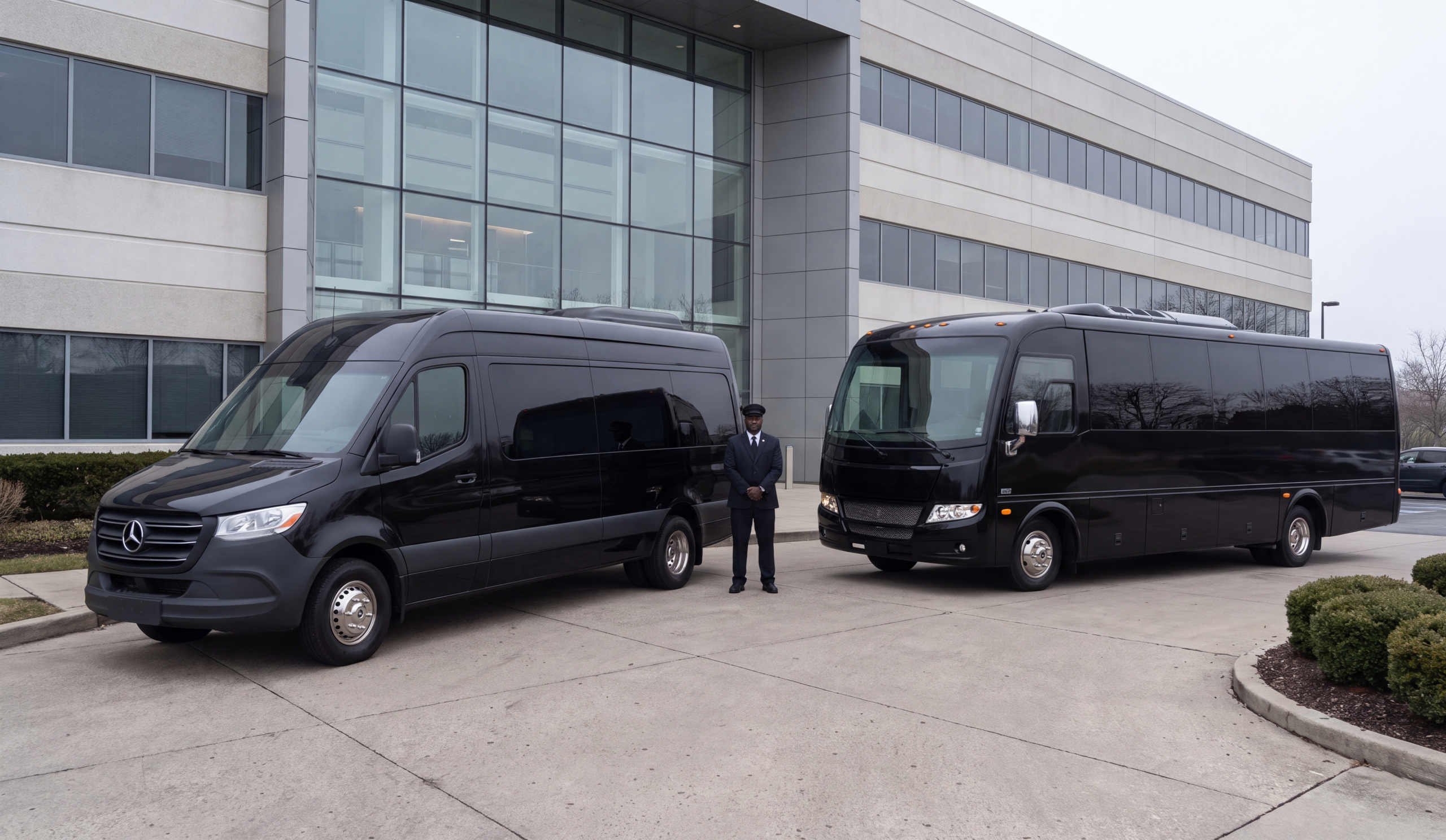
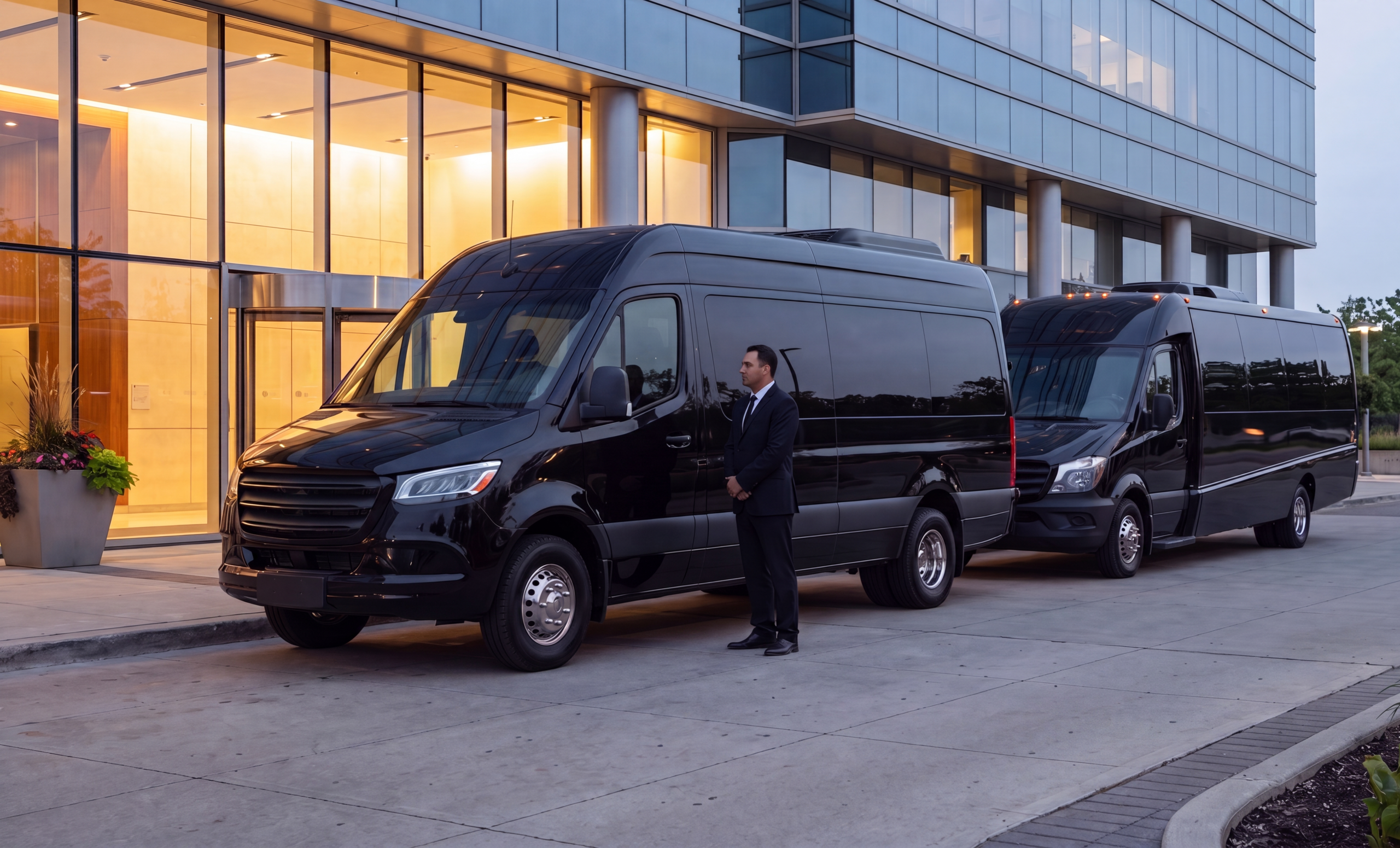
These are the support vehicles a visiting operator actually books here: the breakaway party, the evening leg, the airport run and the overflow. Every booking has a four hour minimum. We are not pitching you a full coach. You brought one.
Regular Mercedes-Benz Sprinter
Up to 14 passengers
4 HR MINIMUM
$175 / hr
Executive Mercedes-Benz Sprinter
Up to 14 passengers
4 HR MINIMUM
$195 / hr
27-Seat Mini Coach
Up to 27 passengers
4 HR MINIMUM
$250 / hr
Rates shown are the within-Greater-Toronto-Area hourly card with a four hour minimum, plus HST 13 percent and gratuity 15 to 20 percent. Multi day and out of town legs are priced by route and distance. Your exact figure is a fixed quote confirmed in writing before you travel.
Ontario Ended Its Bus Licensing System in 2021
Ontario ended its economic licensing system for charter and intercity bus routes on July 1, 2021. The province repealed the Ontario Highway Transport Board Act and the Public Vehicles Act on that date. A bus company no longer needs Ontario Highway Transport Board approval to run a charter route here. That approval process is gone. It does not exist anymore.
This change is specific to the economic permit system. It does not speak to vehicle safety registration. A visiting operator must confirm its own safety registration requirements separately. That is a different layer, and it is not covered by the 2021 repeal. We do not advise on that process. You should verify it with the appropriate authority before you cross the border.
If you last brought a group into Ontario years ago, the old paperwork you remember is no longer part of the picture. The application, the waiting period, and the route approval are all gone. What remains is the practical side of moving people. A US motorcoach can bring its own pre-booked group into Ontario and carry that same group for the whole trip. It cannot sell new rides or pick up separate paying passengers for point-to-point trips inside Canada. That cabotage rule is unchanged and is enforced by CBSA at the border.
For a planner, this means the barrier that once existed for a single charter is simply not there. The time you used to budget for provincial approval can be spent on logistics instead. Border crossing still requires the right documents. For a group entering Canada by land, CBSA recommends a passport but accepts a birth certificate as proof of identity and citizenship for US citizens of any age. Canadian citizens never need a passport for land entry. Air travel into or out of Canada requires a passport regardless of age. Consent letters for minors are not legally required by Canada, but officials can ask for one, and not having it can cause delays. We recommend carrying one as a precaution.
Immigration admissibility, such as a past DUI, is a separate question. We do not advise on that. Route that question to a licensed professional. Do not assume an outcome.
In practice, the 2021 change makes Ontario a simpler place to operate a charter than it was before. The licensing gate is closed. The border rules and vehicle safety registration remain the real checkpoints. If you have a 54-seat coach and a full group, you can bring it here and run your trip. When your group splits, or you need an evening leg, an airport transfer, or step-on service in Toronto, that is where our fleet fits. We run a 27-seat mini coach, a 35-seat limousine bus, a 56-seat coach bus, and 14-passenger Sprinters. We do not replace your coach. We cover the parts of the itinerary your coach cannot.
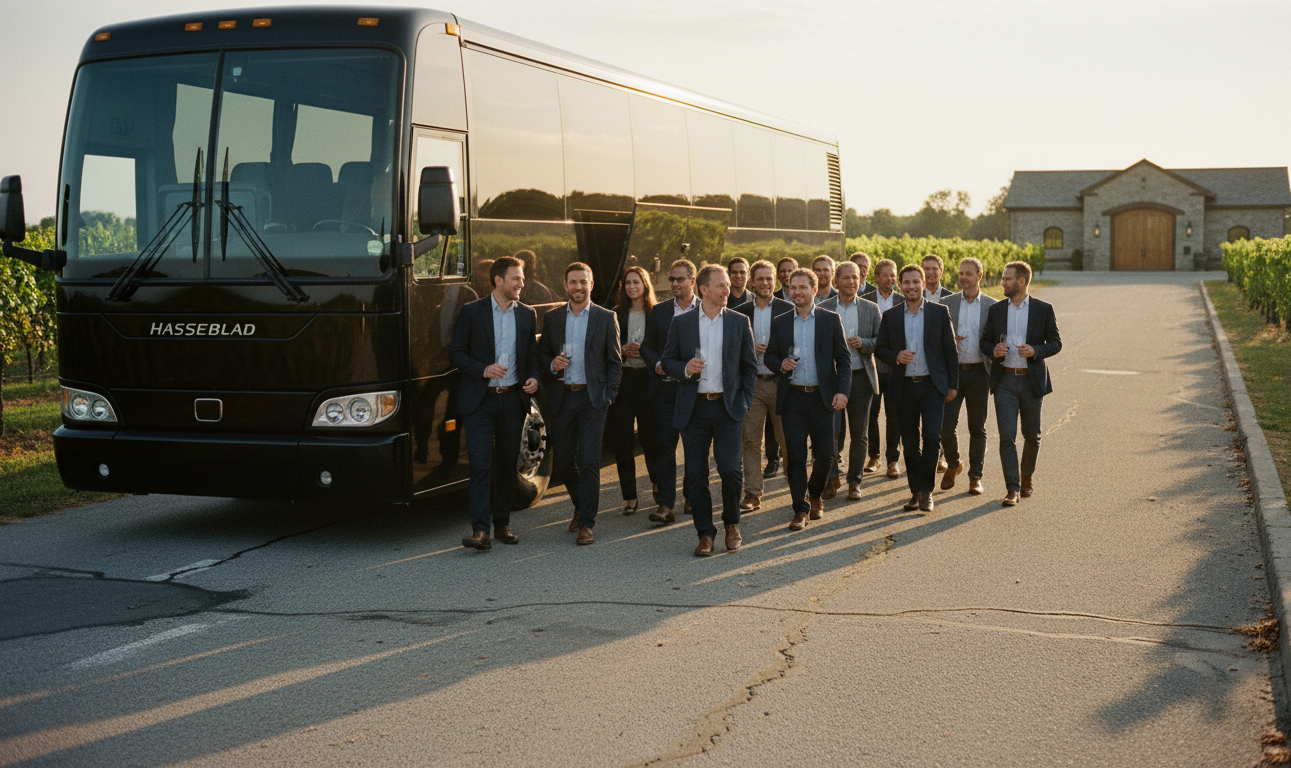
Check availability and book online, or request a written quote if you would rather we price it first.
The Cabotage Line: Your Group Yes, New Passengers No
Ontario ended its provincial licensing system for charter buses on July 1, 2021. That change removed a layer of red tape, but it did not touch the federal border. Canada Border Services Agency rules still govern how a foreign vehicle can operate once it crosses into the country. Those rules draw a clear line: your group, yes. New passengers, no.
A US motorcoach can bring its own pre-booked group into Ontario and carry that same group for the whole trip. The group that boarded in Buffalo stays the group that gets off in Niagara-on-the-Lake, Toronto, or Ottawa. You can run the entire itinerary, from the airport pickup to the hotel to the dinner reservation and back, without involving a Canadian carrier. That is legal and straightforward.
The line is crossed the moment you sell a ride to someone who was not on the original manifest. A few local passengers who want a lift from downtown Toronto to Pearson Airport are separate paying passengers. Picking them up for a point-to-point trip inside Canada is cabotage, and it is not allowed. The same applies to a group that books you for a Toronto-to-Kingston run and then asks you to take a different group back to Toronto the next day. That second group is a new ride.
Filling empty seats is the exact trap. A 56-seat coach with 41 passengers looks like it has room to spare. Adding three local riders to cover fuel costs is not a favor. It is a separate commercial transaction inside Canada, and it puts the entire trip at risk. CBSA officers know this pattern. They look for it.
Where the line gets practical is in split-group and overflow work. Your 54-seat coach may be the right fit for the main party, but the evening leg splits into three different hotels. Our 27-seat mini coaches and 14-passenger Sprinters can handle those separate runs. Or your group arrives at Pearson in waves, and you need a 35-seat limousine bus to cover the early arrivals while the coach waits for the last flight. Those are your passengers, moving on your itinerary, and we are the local operator handling the overflow. That arrangement does not cross the cabotage line because we are the Canadian carrier providing the service.
Airport legs are another common split. Your coach drops the group at the convention center, but the flight out is at 6 a.m. and the coach is parked 40 minutes away. A local pickup at the hotel, with your group on board, is a separate service provided by a Canadian company. Step-on service works the same way. You bring the coach, we bring a local host who knows the Gardiner Expressway at 5 p.m. and the construction on the 401 near Pickering. The host is our contribution, not a new passenger.
Consent letters for minors are worth mentioning here. Canada does not legally require them, but CBSA officers can ask. A school group with players under 19 should carry letters anyway. Delays at the border are avoidable.
If anyone in your group has a past DUI or another admissibility question, route that to a licensed immigration professional. We do not guess on admissibility outcomes. The border rules are federal, and they are enforced at the crossing, not at the hotel.
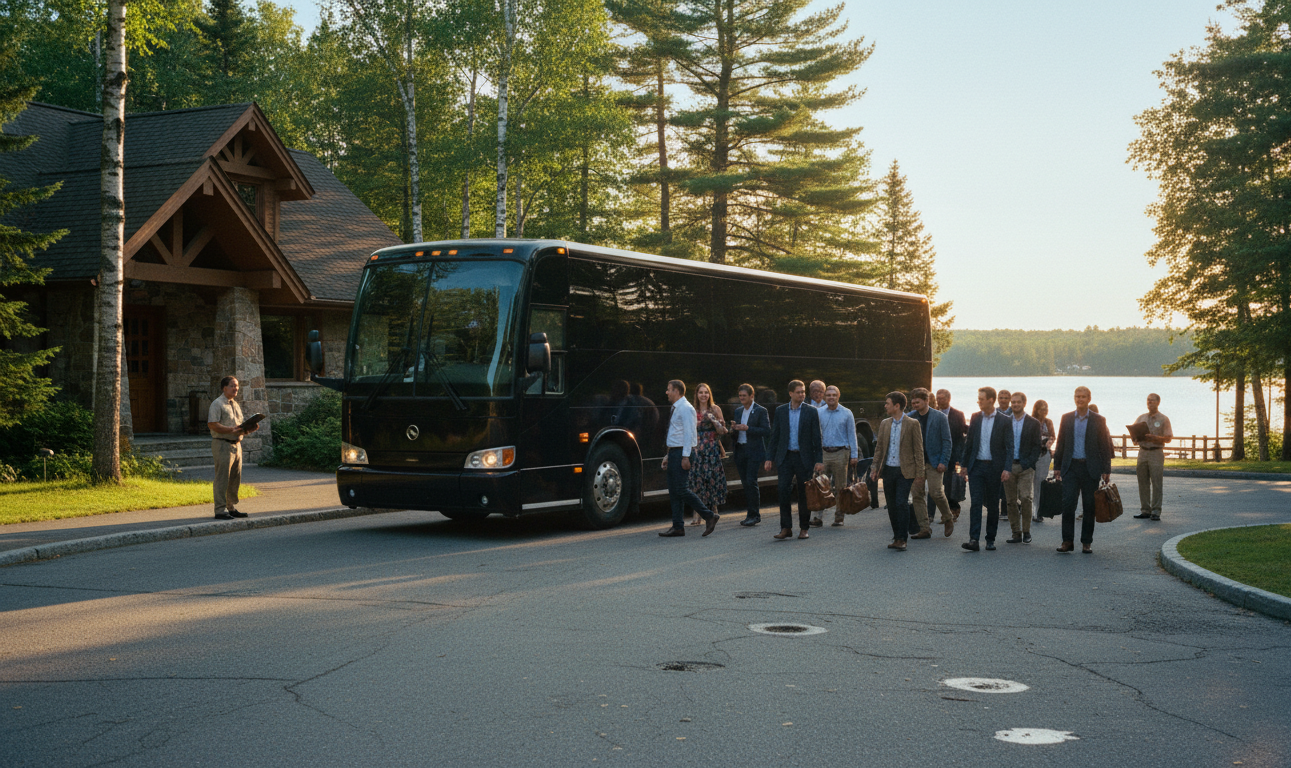
Split Group and Overflow Service
Your motorcoach is one vehicle. It holds one group, on one route, at one time. That works until it does not.
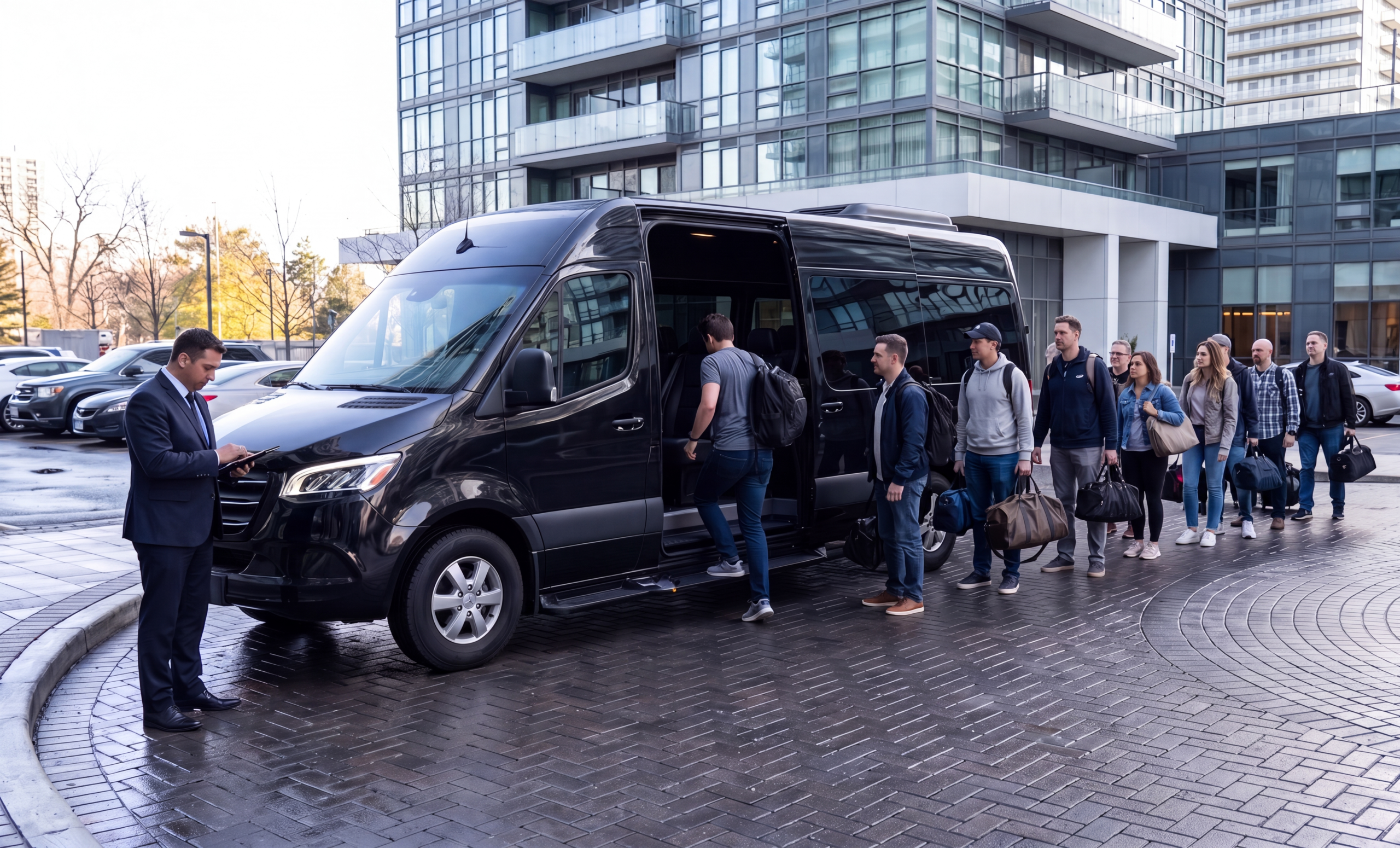
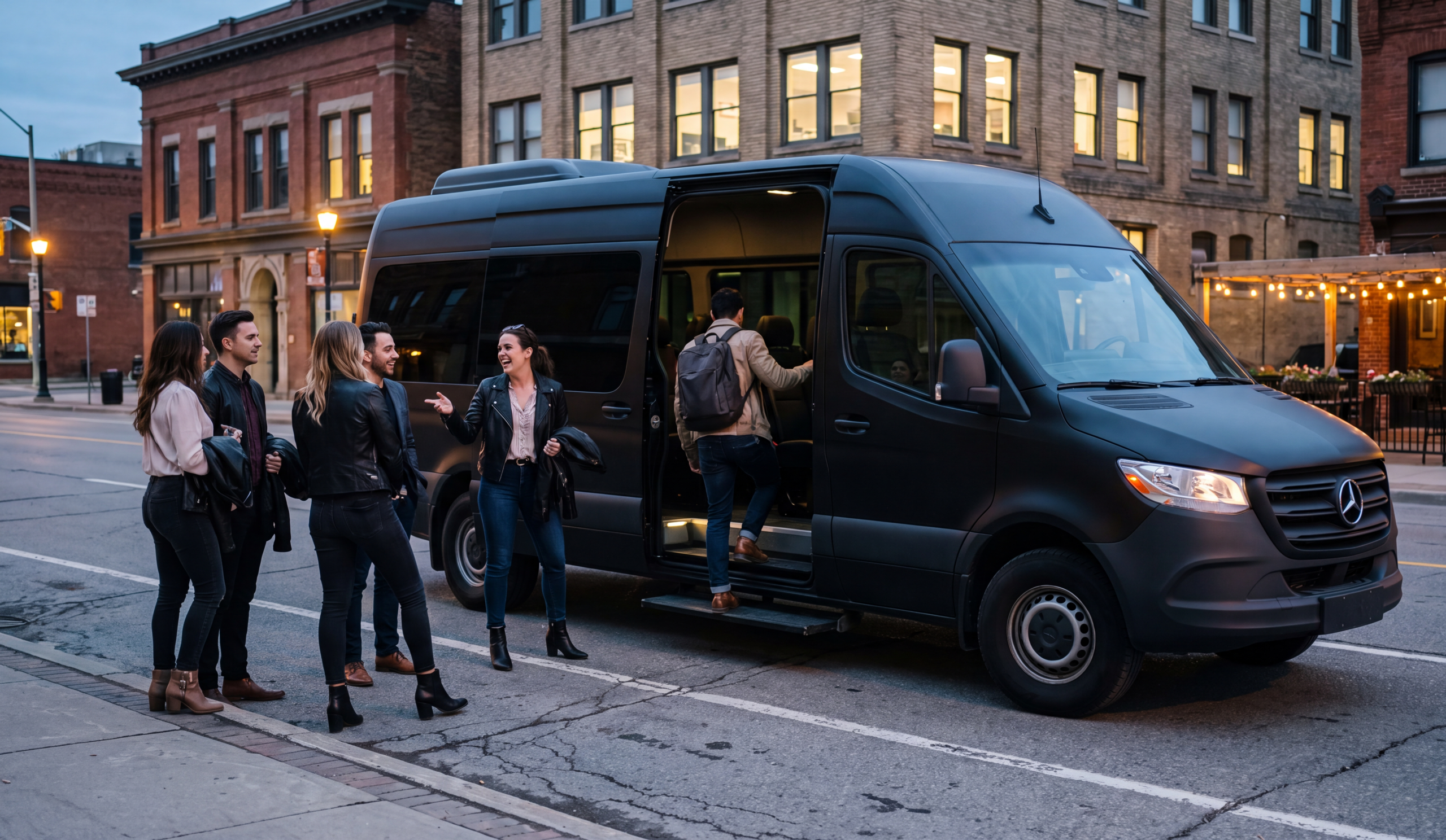
Consider the day your group splits. Half wants the winery tour in Niagara-on-the-Lake. Half wants the afternoon at the Eaton Centre. Your coach can only be in one place. The answer is not a second full-size coach. It is a local vehicle sized to the breakaway group. A 14-passenger Sprinter covers the small party. A 27-seat mini coach handles a substantial second group. Your driver keeps the main party on the big coach. The overflow runs on its own schedule, on its own route.
The same logic applies when the manifest grows. You have 54 seats filled and two more travellers confirm. Your operator does not have a 56-seat coach sitting idle in Mississauga. We do. The overflow moves in a 27-seat mini coach or a 14-passenger Sprinter, depending on the number. Your coach stays with the core group. No one waits, no one is turned away, and your margin holds because you are not replacing your asset, you are adding a smaller one.
Airport arrivals create the third case. Your group lands at Pearson on two flights, a day apart. The first flight has 40 people. The second has 12. You do not run a 56-seat coach twice. The main coach takes the first arrival. A Sprinter meets the second flight the next day. Same hotel, same luggage handling, no idle driver hours.
Step-on service fills the quieter gaps. Your coach is parked for the evening. Your driver is off duty. A small group wants dinner in Yorkville or a show at the Princess of Wales Theatre. A local Sprinter handles that run. Your coach stays parked, your driver stays rested, and the group still moves.
This is not a replacement for your coach. It is a supplement. You keep the main group, the main route, and the main revenue. We provide the local vehicle for the difference, whether that difference is 6 passengers or 27. Your operator keeps control of the core trip. We handle the edges.
The practical detail matters. A 14-passenger Sprinter fits down narrow laneways and into hotel loading zones. It is the same vehicle we size for a small group heading to a Bills game. A 27-seat mini coach clears the Detroit-Windsor Tunnel at 12 feet 8 inches if you need to cross. The 56-seat coach stays with the main group. You decide the split, we provide the vehicle, and the group never notices the logistics.
Evening and Airport Legs a Visiting Coach Cannot Cover
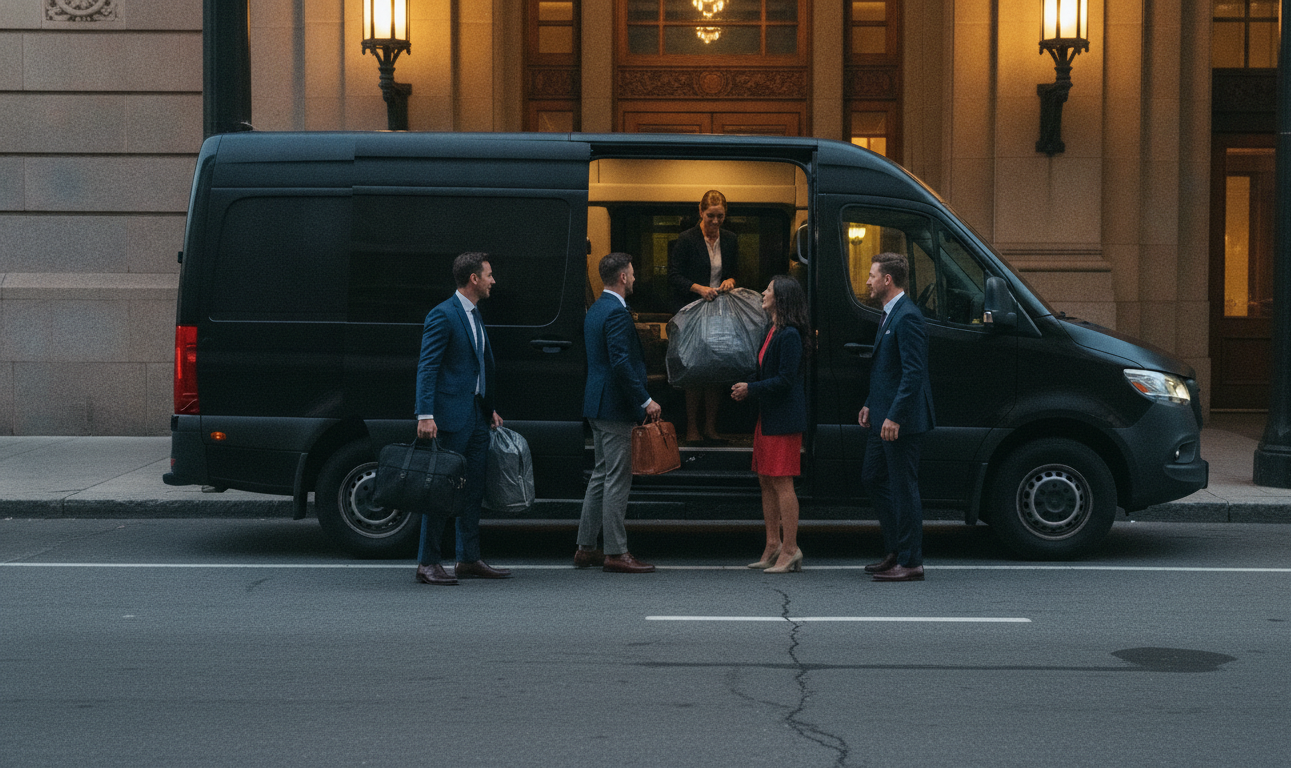
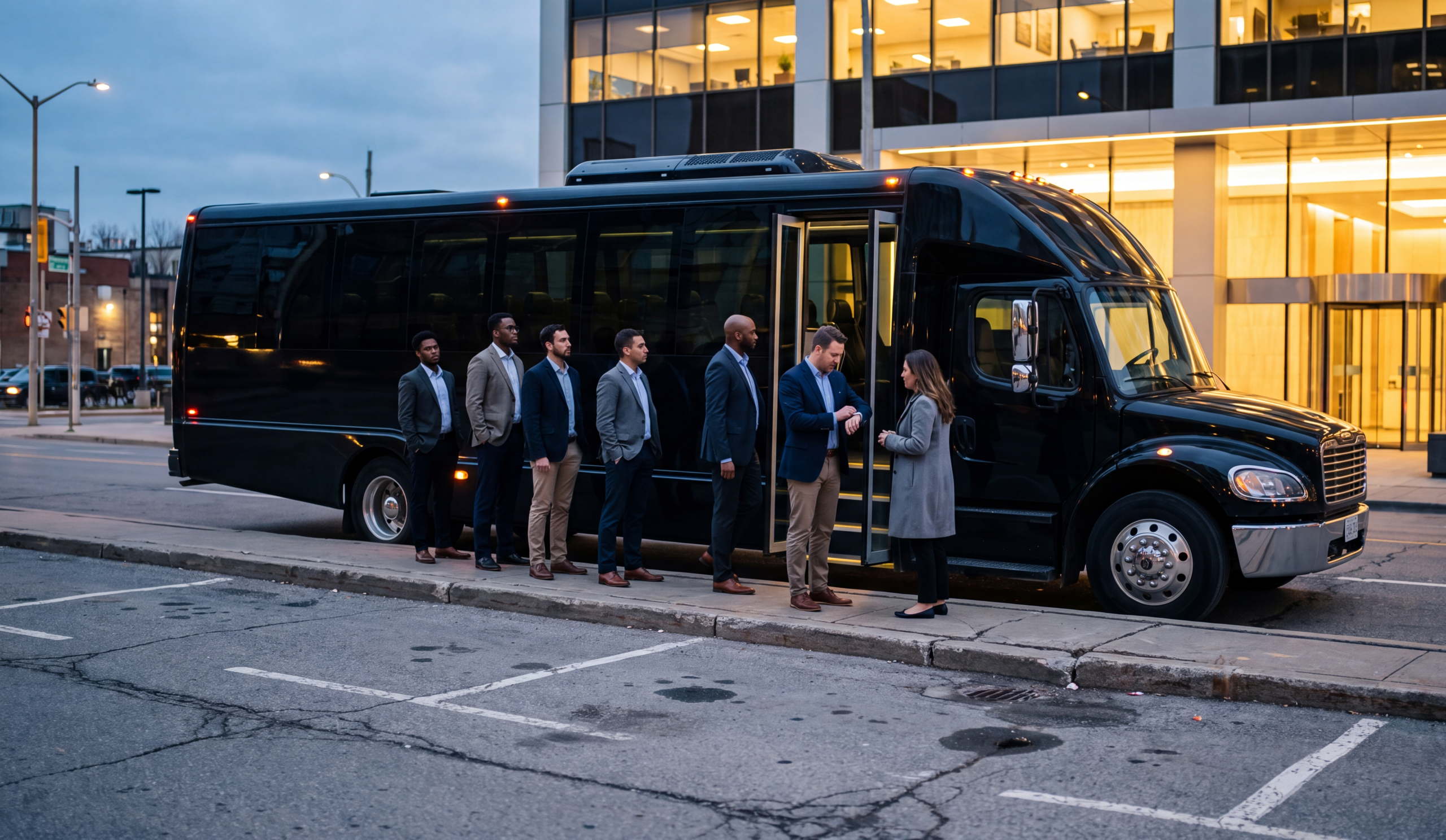
A touring day in Ontario often starts before eight in the morning and runs past six in the evening. The driver of a visiting 56-seat coach is governed by hours-of-service rules that do not pause for a dinner reservation. If that driver has already completed a full day of scheduled movement, a late-evening return from a restaurant in Niagara-on-the-Lake or a pre-dawn transfer to Toronto Pearson is not a legal option. The coach stays parked. The group needs another way to move.
Even when hours are available, the vehicle is often the wrong tool. A 56-seat coach carrying six people to a nine o’clock dinner in Yorkville is a logistics mismatch. It needs a wide turning radius, a dedicated parking spot, and a driver who must stay with the vehicle. A 14-passenger Sprinter fits the lane, uses a standard parking space, and drops the group at the door. The same logic applies to airport work. A group of 40 arrives on four different flights spread across an afternoon. One coach cannot sit at Pearson for five hours waiting for the last arrival. It would need to leave and return, burning driver hours and fuel for each leg. Multiple Sprinters or a 27-seat mini coach can run individual trips as flights land, matching the vehicle to the number of passengers on each arrival.
This is where a local operator slots in without touching the main touring contract. Your US coach and its driver remain responsible for the core itinerary, the daytime moves, the scheduled sightseeing. The overflow, the late dinner, and the airport legs go to Chauffeuropolis. We run a 27-seat mini coach, a 35-seat limousine bus, a 56-seat coach bus, and 14-passenger Sprinters. We pick up at the hotel, handle the evening leg, and return the group. The next morning, your coach starts fresh for the day’s route.
This split is practical, not theoretical. It keeps your driver within hours-of-service limits. It uses the correct vehicle for each passenger count. And it keeps your group moving on time, whether that means a 6:00 a.m. run to the airport or a 10:00 p.m. return from a show. The main contract stays intact. The local legs are covered by a team that knows the roads, the timing, and the border logistics. For a US operator bringing a group into Ontario, this is the difference between a rigid plan and one that works around real travel patterns.
Step On Service in Toronto and Niagara
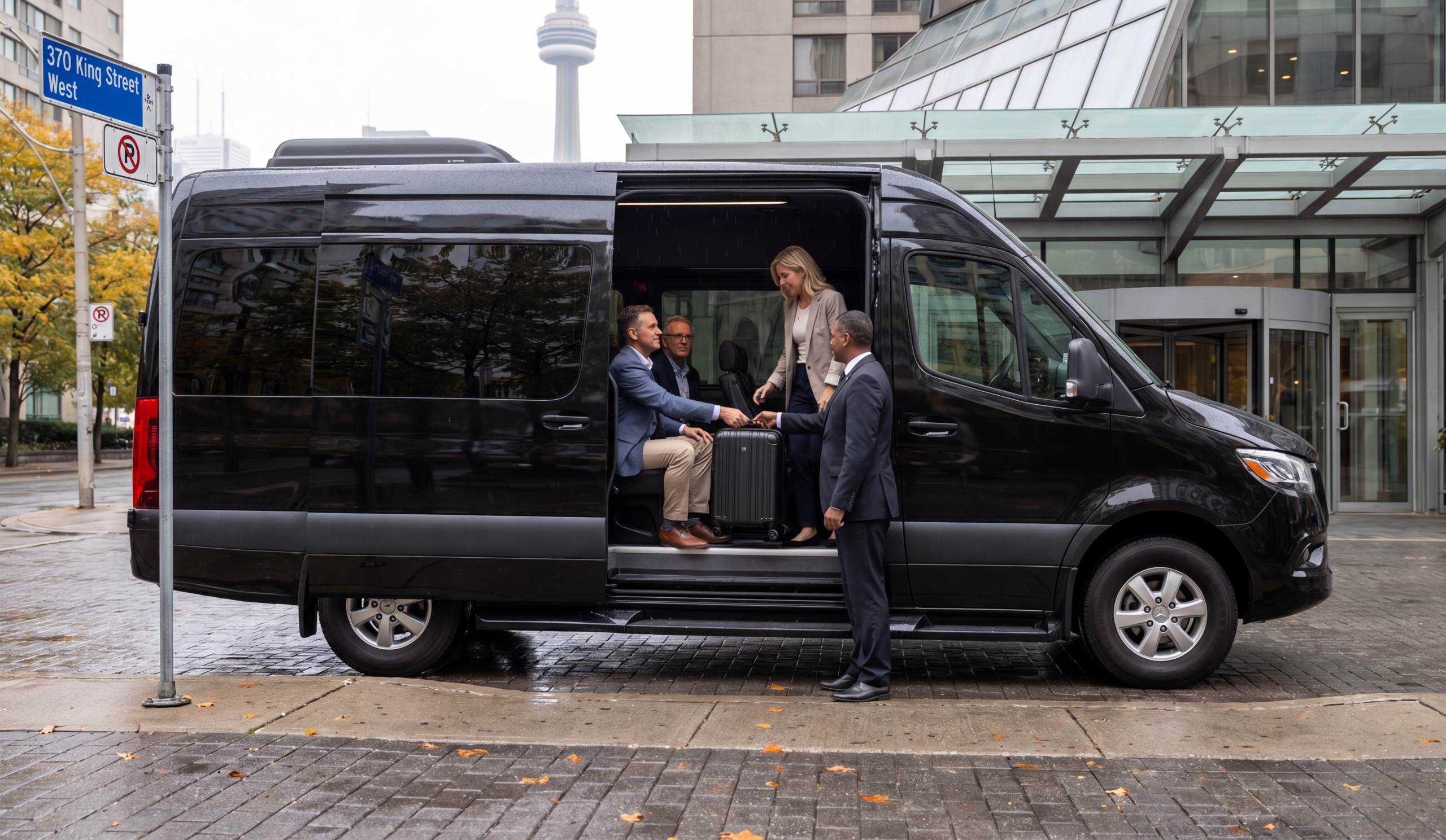
Step on service puts a local driver or host on your coach for a defined stretch. You keep your own vehicle and your own group. We handle the parts of Ontario that change without notice.
Toronto is not a city to learn on arrival. Gardiner Expressway lane closures happen on short notice. King Street has streetcar priority that blocks through traffic at certain hours. Union Station has a drop-off zone that fills fast before events. A local professional knows which kerb is open at 6:30 PM on a game night and which one is blocked by construction. That knowledge saves twenty minutes on a tight itinerary.
The Niagara corridor has its own set of constraints. Queenston-Lewiston is the commercial crossing, and it moves coaches efficiently, but the Rainbow Bridge is the one your group wants for the view. It allows motorcoaches, but the approach queues at peak weekend hours. A step on operator knows when to take the QEW instead of the Niagara Parkway and where the coach lot sits relative to the falls. Venue access at the Fallsview Casino district is not obvious from a map. Kerb space is reserved for specific pickups, and event-day closures reroute everything.
Step on service is not a replacement for your own planning. It is an addition for the legs where local routing matters most. Common uses are the airport transfer from Pearson to downtown Toronto, the evening run from a Niagara winery back to a hotel, and the short hop between venues on a multi-stop day. We also handle overflow when your group splits. Your coach takes the main party. Our 27-seat mini coach or 14-passenger Sprinter takes the smaller group to a second dinner reservation.
We do not sell new rides to your passengers. We do not pick up other groups along the way. The service is yours for the booked time. If your itinerary changes mid-day, the step on professional adjusts the routing on the spot. That is the practical value. You bring the coach. We bring the knowledge of where it can actually stop.
When Hiring Local Costs Less Than Deadheading
The cost of your own coach is not just the miles. It is the empty miles to reach Ontario, the driver’s paid idle days in a hotel, and the fuel burned to reposition for a single evening move. A 54-seat coach deadheading from Ohio or Pennsylvania carries that full weight in fuel, tolls, and driver hours before a single passenger boards.
Run the comparison the way a planner actually does. Take the fully loaded cost of your vehicle sitting in a Toronto lot for two days, plus the driver’s per diem and lodging, plus the empty return leg. Against that, put a quoted local leg from our 27-seat mini coach, 35-seat limousine bus, or 56-seat coach. Sometimes your coach wins. That is fine. But for a 14-person airport transfer at 6 a.m., or a 20-person dinner run from the downtown core to Pearson, the local vehicle wins on fuel and driver hours alone.
The specific situations where local hire makes sense are predictable. You have a group split across two hotels, and your single coach cannot be in both places. You need a late-night leg after your driver has hit legal hours. You have a morning drop-off at the Convention Centre and an evening pickup in Niagara-on-the-Lake, with nothing in between. Holding a 56-seat coach for that gap costs you a full day. A local 14-passenger Sprinter or 27-seat mini coach covers the gap for a fraction of the standby cost.
Step-on service is the cleanest case. Your group flies into Toronto, and you want a local host and vehicle for the city day, while your own coach stays parked until the cross-border leg. You avoid the driver’s idle pay and the hotel night. We handle the surface roads, the Gardiner Expressway congestion, and the parking constraints around the Distillery District. Your coach stays clean and ready for the highway portion.
Do not assume local always wins. For a full 56-passenger group moving from Niagara Falls to Ottawa with no split, your own coach is likely the right call. But for overflow, evening, airport, and step-on legs, the math flips. The honest comparison is not the per-mile rate. It is the total cost of your asset doing nothing versus a quoted local leg at quoted per vehicle and confirmed in writing. Run that number before you decide.
Visiting Operator Questions, Answered
What changed in Ontario in 2021 that affects my US-licensed motorcoach doing charter work there?
As of July 1, 2021, Ontario repealed the Ontario Highway Transport Board Act and Public Vehicles Act, ending the provincial economic licensing system for charter and intercity bus. This means you no longer need a provincial operating licence for your own pre-booked charter group. You still must comply with federal cabotage rules and all safety, insurance, and driver hours regulations.
Can my US coach pick up a group in Buffalo and take them to Toronto for a day trip and return?
Yes, you can carry your own pre-booked group from the US into Ontario and back, as long as you do not sell new rides or pick up separate paying passengers inside Canada. The group must be the same one you originated with in the US. This is allowed under federal cabotage rules for US carriers.
Can I drop a US group in Toronto, then pick up a different Canadian group in Toronto for a local sightseeing tour?
No, that is cabotage. You may only carry your own pre-booked group that you brought into Canada, and you cannot transport a separate paying group on a point-to-point leg within Ontario. Doing so would violate federal cabotage rules and could result in penalties.
My group wants to split into two buses in Toronto, one going to Niagara Falls and one to Ottawa. Can I run both legs with my US coach?
No, split group service is not allowed under cabotage. You may only carry the original group as a single unit; splitting them into separate point-to-point trips within Ontario constitutes prohibited domestic carriage. You would need to use a Canadian carrier for the second leg or keep the group together.
What about overflow passengers from my US group who book separately but ride my coach in Ontario?
Overflow passengers who are not part of your original pre-booked US group cannot be carried on your coach for an Ontario-only leg. That would be selling new rides inside Canada, which is cabotage. All passengers on your coach must be part of the original group you brought across the border.
Can my US coach do an evening dinner run from a Toronto hotel to a restaurant and back for my own group?
Yes, if it is the same pre-booked group you brought from the US, you can move them within Ontario for evening activities. The restriction is on carrying separate paying passengers, not on moving your own group. Keep the manifest identical and do not add anyone locally.
Can I use my US coach to transport my group from Toronto Pearson Airport to their hotel on arrival?
Yes, if that airport transfer is part of your original pre-booked US group itinerary and you are the same carrier that brought them across the border. You cannot pick up a different group at the airport. The airport leg must be incidental to your cross-border charter.
What is a ‘step on’ service and can I provide it in Ontario?
A step-on service is where a local host joins your coach in Ontario to narrate or assist your group. You can allow a step-on host, but you cannot use your coach to carry a separate group that only boards in Ontario. The host is not a passenger for hire, so that is fine.
My US coach is 56 seats. Can I cross at Rainbow Bridge into Ontario?
Yes, Rainbow Bridge allows buses and trucks are banned, but buses are permitted. Your 56-seat coach will fit under the clearance. Just ensure all passengers have proper documents for entering Canada, which is a passport recommended for all, but birth certificates are accepted for US citizens of any age.
Is the Detroit-Windsor Tunnel too low for my 56-seat coach?
No, the tunnel max height is 12 feet 8 inches, and most standard 56-seat coaches are under that. However, you should verify your exact vehicle height before routing. If you are over, use the Ambassador Bridge or another crossing.
Can I use the NEXUS lane at Queenston-Lewiston with my 27-seat mini coach?
No, NEXUS requires every occupant to hold a NEXUS card, and that is not practical for a 27 to 56 passenger coach. Use the regular lanes at Queenston-Lewiston, which allow trucks and buses. Do not attempt NEXUS unless every single passenger has a card.
What documents do my US passengers need to enter Canada by land?
CBSA recommends a passport, but for US citizens of any age, a birth certificate is accepted as proof of identity and citizenship when entering by land. For air travel, a passport is required regardless of age. Always carry a government-issued photo ID for each passenger if possible.
Do minors in my group need a consent letter to enter Canada?
Canada does not legally require a consent letter for a minor, but it is recommended. Border officials may ask for one, especially if the child is not accompanied by both parents or a legal guardian. It is best to carry a notarized consent letter to avoid delays.
My group includes US children under 16 returning to the US by land. Do they need passports?
No, US CBP allows US citizen children under 16 to present a birth certificate instead of a passport when entering the United States by land or sea. For a school, religious, social, or sports team group, the threshold is under 19. This applies to the US-bound leg, not Canada entry.
Can I bring a sports team of 18-year-olds back to the US with just birth certificates?
Yes, if they are part of a school, religious, social, or sports team group under 19 years old, US CBP accepts a birth certificate for land border entry into the US. Ensure each participant has a birth certificate and the group has a letter from the organization. This is a US rule for the US-bound leg.
What if one of my passengers has a criminal record? Can I guarantee they will be allowed into Ontario?
No, we cannot predict an admissibility outcome. Any record, even a minor one, can be grounds for refusal by CBSA. You should route any passenger with a record to a licensed US or Canadian immigration attorney before travel. Do not assume entry is guaranteed.
Can my US coach pick up a group in Ontario that booked me directly online, without any US origin?
No, that is prohibited cabotage. You may only carry a group that you originally brought from the US into Canada. A group that starts and ends in Ontario is a domestic charter and must use a Canadian-licensed carrier. You cannot sell your services to an Ontario-only group.
I have a 35-seat limousine bus. Can I do a wine tour in Niagara-on-the-Lake for my US group?
Yes, as long as the wine tour is for your original pre-booked US group and you do not pick up additional paying passengers in Ontario. You can drive them between wineries and back to the US. Just keep the same manifest throughout.
Can I leave my empty US coach in Ontario overnight and have my group fly home, then pick up a new group next week?
No, you cannot reposition your coach to serve a new Ontario-only group. That would be cabotage. Your coach may only carry the group it brought into Canada. If the group flies home, you must return the empty coach to the US or use it only for that same group’s return.
What about an airport transfer for a group that lands in Toronto but is not my original US group?
That is a step-on or new pickup, which is not allowed. You cannot provide airport transfers for a separate group that only exists in Canada. Your coach must be tied to the US-originating group. Use a Canadian carrier for any airport-only service.
Are there any Ontario-specific permits or fees I need to pay for my US coach?
As of July 1, 2021, Ontario no longer requires a provincial economic licence for charter bus operations. However, you still need valid commercial vehicle registration, insurance, and a driver with proper CDL and endorsements. You may also need to pay tolls at crossings, but no provincial operating permit is required.
Can my 14-passenger Sprinter carry a group from Toronto to Ottawa and back to Toronto for a day trip, if they are all from the US and I brought them?
Yes, that is allowed because it is your original pre-booked group. The federal cabotage rule only prohibits selling new rides or carrying separate paying passengers. Your group can travel any route within Ontario as long as they are the same group you brought across the border.
Covering the Legs Your Coach Cannot
Send the itinerary and the dates. We quote the Ontario legs your own coach cannot cover and confirm in writing.