

CHAUFFEUROPOLIS / ONTARIO JOURNAL
Bellevue in North Frontenac: the journey from Toronto
Toronto and Pearson departures to Bellevue Cottage North Frontenac, with the return planned around your stay.
What to budget for the transfer
Start with these approximate one-way budgets, then book online using your pickup, travel date and passenger details. If the vehicle or itinerary is not offered online, contact us for that arrangement.
| Vehicle | Passenger capacity | From YYZ, one way | From downtown Toronto, one way |
|---|---|---|---|
| Sedan | 2 to 3 passengers | Approx. $425 to $600 | Approx. $425 to $600 |
| SUV | Up to 6 passengers | Approx. $650 to $900 | Approx. $650 to $925 |
| Cadillac Escalade | Up to 6 passengers | Approx. $975 to $1,325 | Approx. $975 to $1,325 |
| Sprinter | Up to 14 passengers | Approx. $1,125 to $1,550 | Approx. $1,125 to $1,575 |
All amounts are CAD, plus 13% HST and 15% to 20% gratuity. Luggage, stops, waiting, tolls and vehicle selection can affect the total. Passenger capacity does not override property occupancy or access limits.
The YYZ ranges are planning estimates based on our published Ottawa rates and the approximate road-distance difference. Downtown Toronto ranges are estimates using Union Station as the reference pickup, not published flat fares. Allowance ranges are not a guarantee of the final price. See our current rates.
Google Maps puts the driving distance at approximately 300 km from YYZ and 300 km from Union Station to the North Frontenac, Ontario area. These are locality reference routes, not measurements to a private cottage entrance. Distances depend on the route selected; some routes use toll roads. Enter the exact address for your booking.
The table covers one outward journey. Add the return when booking if you need both directions; these amounts do not include a driver staying with you or local trips during your visit.
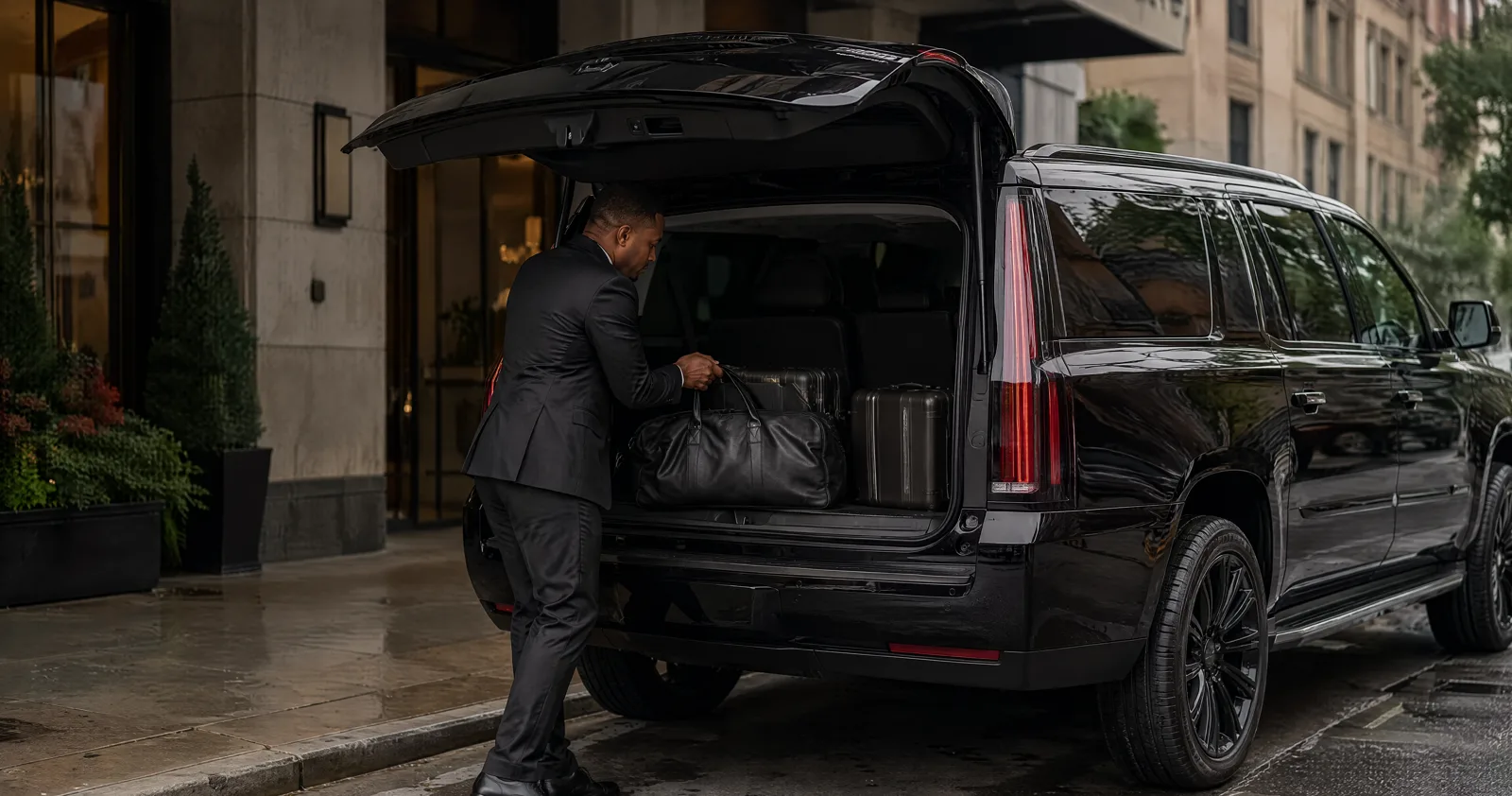
A Toronto or Toronto Pearson (YYZ) transfer to Bellevue Cottage should be planned around the confirmed cottage reservation, the luggage travelling with the group and a host-approved unloading point. Bellevue is an entire-cottage listing in North Frontenac, Ontario. Its published house rules allow a maximum of 11 guests and prohibit parties or events. Arrange an out-of-town, distance-based quotation for the outward journey and the return, rather than applying a Toronto hourly rate to the stay.
The first useful decision is whether everyone can travel together. Friends leaving from Toronto may share a pickup; guests arriving on different flights may need separate collections. Neither arrangement changes the cottage’s occupancy limit. A vehicle with spare seats is not permission to bring extra visitors.
This article concerns Toronto and Pearson journeys to the cottage and back, not short local rides in North Frontenac. Accommodation and transportation are separate bookings. Chauffeuropolis does not imply a partnership with Bellevue or its host.
On this page
- Choose the journey before the vehicle
- What the Bellevue listing actually tells you
- Match a Toronto departure to cottage check-in
- Plan Pearson arrivals without a shared-flight assumption
- Pack for a cottage, not only for the drive
- Agree on the final approach and handover
- Work through an overnight itinerary
- Give the return journey its own booking details
- Know what belongs in the quotation
- Questions about Bellevue transfers
Choose the journey before the vehicle
For Bellevue, the useful comparison starts with a private car, an SUV or a passenger van assessed against the actual travelling party. A full-size coach should not be the default for an 11-guest cottage booking. The listing does not establish coach access, and no vehicle should be assigned on the assumption that a private driveway can accept it.
Write down who is travelling on each leg. Include children, any child-restraint requirements and passengers joining only the return. Then count luggage separately. The number of seats alone says little about room for a week’s cases, food containers, a folded stroller or mobility equipment. Ask for a vehicle recommendation against that complete list rather than selecting the smallest advertised seating capacity that matches the group.
| Journey arrangement | Passenger and luggage fit | Access consideration | Quotation basis |
|---|---|---|---|
| Private car or SUV | A smaller party, after bags and any child restraints are assessed | Confirm the actual vehicle and the host-approved unloading point | Out-of-town distance quotation for the agreed stops and each travel date |
| Passenger van or suitable Sprinter | A shared cottage arrival where the confirmed seating and storage both fit | Host and operator must assess the approach, turning space and unloading position | Distance-based itinerary quotation, with luggage and any waiting stated |
| Separate Toronto and YYZ collections | Guests starting in different places or landing too far apart for a sensible shared departure | Give both drivers the same verified destination instructions | Price each collection and the return arrangement explicitly |
| Outward and return transfers on different days | A stay where no vehicle is needed during the booking | Agree on arrival and departure handovers independently | Two scheduled travel legs, not an assumed vehicle stay at the cottage |
If a van looks suitable for the passenger count but not for the luggage, ask about a different configuration or separate vehicles. Do not plan to fill an aisle with cases. A group arriving with less luggage than it leaves with also needs to disclose the return load, especially if some guests are continuing to an airport after a longer Ontario trip.
Request an itinerary quotation or book your transfer online. Vehicle availability, property access and the accepted itinerary must be confirmed before travel.
What the Bellevue listing actually tells you
The Bellevue Airbnb listing identifies the property as an entire cottage in North Frontenac. The host describes floor-to-ceiling windows and a setting overlooking a lake, with forest around the cottage. The published amenities include a kitchen, waterfront and lake access. These are accommodation descriptions, not evidence about the dimensions of its vehicle approach.
For transport planning, the most useful published details are less scenic: check-in is after 3 p.m., checkout is before 10 a.m., and self check-in uses a lockbox. Treat those times as the listing’s current baseline and check the instructions attached to your own reservation. Early access is not something a transport booking can grant.
The same listing states an 11-guest maximum, no parties or events and no pets. That makes this a cottage-stay article, not a wedding-shuttle or event-transport proposal. Do not arrange extra arrivals for a celebration on the strength of a larger vehicle being available. If your intended use differs from an ordinary stay, resolve it with the host before requesting transportation for it.
One detail deserves care when organising sleeping arrangements. The listing presents bedroom information, but the transport organiser should not translate that into a promise about the bed layout. Ask the host to confirm the sleeping arrangements your group needs. The article does not assign bedrooms or infer how many people can share a particular room.
The exact listing link matters more than the name alone. Keep North Frontenac in the travel instructions and share the reservation’s destination details privately with the operator. A broad place-name search is not a reliable way to identify a private cottage entrance. We do not publish or guess the private address here.
Match a Toronto departure to cottage check-in
Choose an arrival window before choosing a Toronto pickup time. With published check-in after 3 p.m., an early departure only helps if the whole day has a purpose. Reaching the property before access is available can leave the group waiting with bags and groceries. Ask the host about early access first, or plan an agreed stop rather than assuming the cottage will be ready.
For a shared city departure, nominate a meeting point where the proposed vehicle can stop legally and passengers can load safely. A hotel entrance, condominium pickup area or private address may need its own instructions. The person arranging the trip should check building rules and distinguish the passenger meeting time from the time the vehicle is scheduled to leave.
Multiple Toronto pickups may be useful, but they belong in the quotation from the start. A route that collects friends from separate addresses is a different assignment from a single departure point. Supply the addresses in the intended order and let the operator assess the schedule. Do not promise each guest an exact pickup time before the route is confirmed.
Food shopping is another decision to make at home. If the group wants to stop en route, identify whether it needs a quick collection of a prepared order or time to shop. Those are different stops. Confirm that the store can fulfil the order and that the vehicle has room for the resulting bags before making the stop part of the itinerary.
There is no published journey-time promise in this article. The precise destination, departure address, agreed stops and travel-day road conditions all matter. Ask for a planning estimate for your itinerary, then leave room for loading and the final property handover. A map result for North Frontenac as a whole is not a door-to-door estimate for Bellevue.
Plan Pearson arrivals without a shared-flight assumption
For a YYZ collection, give the operator each arriving flight number, travel date and passenger contact. Scheduled landing is not the same as being ready to leave the airport. Travellers may still need to clear arrival formalities and collect bags. The collection instructions and any waiting terms should explain how those steps fit the booking.
A shared airport departure is sensible only when the passengers can realistically meet. If flights arrive apart, compare waiting together with separate transfers. The answer depends on the actual flights, the group’s willingness to wait and the cottage arrival window. Saving a vehicle does not necessarily save the travellers a tiring afternoon.
Choose a lead passenger who can communicate after landing, and give the operator a backup contact. Share the accepted airport meeting instructions with everyone before the flight. Do not tell guests that a driver will meet them inside a terminal with a sign unless that specific arrangement has been confirmed. Follow the collection process supplied for the booked service.
Consider a late arrival against the cottage’s self check-in instructions. A lockbox is useful, but it does not settle every arrival question. The reservation holder needs the access instructions, a working contact method and agreement about where bags can be unloaded. Ask the host about any limits on late arrival rather than interpreting self check-in as unrestricted access at any hour.
If a flight delay changes the plan, notify the transport operator and host separately. A revised vehicle pickup does not automatically change the accommodation arrangements, and a host’s message does not amend the transfer. Ask each party to confirm the new details. The group should work from one updated arrival note, not several conflicting screenshots in a chat.
Pack for a cottage, not only for the drive
Bellevue’s listing includes a kitchen, so food can become a meaningful part of the transport load. Agree on what the group will bring before the vehicle is selected. Several households each bringing a cooler may take more storage than the organiser expects. Describe the containers and their approximate sizes rather than writing only “some groceries” on the enquiry.
Keep travel-day essentials in a small bag that stays accessible. Medication, chargers, children’s supplies and the reservation holder’s arrival instructions should not be buried beneath everyone else’s luggage. For perishable food, arrange suitable packing for the full journey, including any waiting or planned stops. Do not assume a passenger vehicle provides refrigerated storage.
The listing’s lake access may influence what guests want to pack, but it does not establish what equipment the host supplies. Before bringing bulky outdoor items, check both the accommodation instructions and vehicle storage. An item that fits in a personal car with seats folded may not fit alongside a full travelling party in the booked vehicle.
Children’s needs should be settled before departure day. Tell the operator the information needed to assess appropriate restraints and agree who supplies them. Ask about installation and loading time. A child occupies a passenger place; neither a cottage occupancy limit nor a vehicle seat count should be interpreted as excluding children without explicit applicable guidance.
For a traveller with limited mobility, ask two different sets of questions. The operator needs to know about boarding, transfers into a seat and equipment dimensions. The host needs to explain the route from the unloading point to the accommodation, including any steps or uneven surfaces. Vehicle suitability cannot certify the cottage’s accessibility, and a cottage amenity label cannot certify the transport arrangement.
Agree on the final approach and handover
Get arrival directions from the confirmed reservation rather than using a guessed pin. Send the operator the information needed to reach the property, including any approach instructions the host provides. If the address and a navigation result disagree, resolve that difference before travel. The driver should not have to decide between conflicting destinations while carrying the group.
Ask the host whether the proposed vehicle can reach an appropriate unloading place and leave safely. Relevant details include the surface, clearance, gradient, turning space and whether another parked vehicle could obstruct the route. These are questions to answer, not claims that Bellevue has a steep, narrow or difficult drive. The public listing is not a vehicle-access survey.
If the intended vehicle cannot use the final approach, settle a workable alternative before accepting the transport plan. That could change the vehicle choice or require a different host-approved handover. Do not assume guests can carry a full cottage load along an unspecified distance, or that someone at the property will provide onward transport.
For travel in poor weather, check the current access instructions with the host and the journey plan with the operator. Ask who can advise about the last part of the approach close to departure. This is especially important if the reservation holder has never visited. A general weather forecast cannot confirm the condition of a particular private entrance.
At arrival, keep the group together long enough to complete the handover. Confirm that the reservation holder has the necessary access instructions, unload the booked luggage and check the vehicle for personal items. A few minutes spent checking the seats can prevent a phone or medication bag from travelling back toward Toronto without its owner.
Work through an overnight itinerary
Consider a cottage party leaving Toronto together, with one household meeting the vehicle at a single pickup point. The organiser first confirms the reservation, guest list and arrival window. The transport enquiry then describes bags, coolers and any restraint needs. Only after that does the operator recommend a vehicle and assess the travel plan.
If the group wants groceries, it can compare bringing supplies to the pickup point with an agreed collection stop. Bringing them makes the departure load visible. A stop may reduce the amount guests carry across Toronto, but it adds a task to the journey and requires storage capacity afterwards. The better option is the one the group can actually execute without improvising at departure.
On the arrival day, the reservation holder keeps the lockbox instructions available privately. The lead passenger communicates with the driver, while the host’s directions settle the final approach. Guests know in advance that the vehicle is providing a transfer, not remaining at the cottage throughout the stay. Any need for transport during the visit must be arranged separately rather than assumed.
Now change the example: part of the party lands at Pearson while the rest starts in Toronto. The organiser should compare a combined collection against separate journeys, using the real flight details. If a combined itinerary makes the Toronto passengers wait for an uncertain airport release time, separate arrivals may be easier to manage. Confirm who carries shared food or essential supplies so the first group can arrive without depending on the last.
These examples are planning choices, not descriptions of trips already operated to Bellevue. They show why a useful quotation needs more than the property name. The cottage reservation, airport timings, luggage and final access instructions decide the journey. A regional transport article cannot answer those private-booking details for you.
Give the return journey its own booking details
Book the return as a dated journey with its own passenger count, luggage description and destination. “Back to Toronto” may mean the original pickup point, several home addresses or Pearson for a flight. Those are not interchangeable. If people split up after the stay, tell the operator before the quotation is accepted.
Bellevue’s published checkout is before 10 a.m. Work backwards from that requirement to leave time for packing, the host’s checkout instructions and loading. Ask whether everyone must be ready outside before the vehicle arrives, and agree on an appropriate waiting arrangement. Do not assume the group can remain inside after checkout while waiting for a later pickup.
For a return to YYZ, start with the flight departure and the airline’s recommended airport arrival time. Give the operator that information and ask for a suitable cottage collection time based on the confirmed address and planned stops. The trip needs a road buffer as well as time for airport check-in and security. Do not use checkout time as the only basis for scheduling an airport departure.
A group with both Toronto-bound passengers and airport passengers needs a clear drop-off sequence. The earliest flight may constrain the whole journey. If the proposed order leaves an airport connection too tight or creates an unreasonable wait for others, ask about separate return vehicles. Price and confirm the alternative instead of asking a driver to solve it after loading.
Before leaving, check for bags, food containers, chargers and items drying outdoors. Confirm the passenger count with the lead contact, then follow the host’s departure instructions. Keep the host’s private access details out of a public group itinerary. The driver needs the agreed collection instructions, not unnecessary account or lockbox information.
Know what belongs in the quotation
Use the approximate one-way budgets above to plan the trip, then book online with your actual pickup, destination, date, passengers and luggage. Add the return if needed. The selected vehicle and itinerary determine the final price; a GTA hourly rate is not the price of an out-of-town transfer.
The enquiry should identify the Toronto pickup address or YYZ flight details, the cottage reservation dates, the party on each leg, luggage and any planned stops. Include the return destination, required airport arrival if applicable, and the host’s relevant vehicle-access instructions. Supply private address details through the operator’s booking process rather than posting them publicly.
Ask the written quotation to state what is included, how tax and gratuity are treated, and whether parking, waiting or additional stops change the amount. Confirm the cancellation and amendment terms before accepting. These are questions for the specific offer, not a claim that any particular fee is charged or included on every booking.
Keep accommodation charges separate from transportation. An Airbnb total says nothing about the cost of collecting a party at Pearson, and a transport quote does not reserve Bellevue. If the cottage dates change, check transport availability again before assuming the same vehicle and price remain available. The same applies when a new flight changes the return date.
Once confirmed, send guests one short travel note: meeting place, ready time, lead contact, bag plan and return arrangements. The organiser should retain the fuller reservation and quotation. A concise note helps passengers arrive prepared without distributing the host’s private instructions more widely than needed.
Questions about Bellevue transfers
Is this Bellevue Cottage in North Frontenac?
Yes. This article refers to Airbnb listing 1030662156311067931, titled Bellevue and located in North Frontenac, Ontario. Use that exact listing and your confirmed reservation when sharing destination details. Do not substitute a similarly named property or a general map search for the private arrival instructions.
How many guests can stay at Bellevue?
The listing currently states a maximum of 11 guests and prohibits parties or events. Confirm the rules attached to your reservation before booking transport. A vehicle’s passenger capacity is separate from the property’s permitted occupancy and does not authorise additional visitors.
What are the published check-in and checkout times?
The listing currently says check-in after 3 p.m. and checkout before 10 a.m., with self check-in using a lockbox. Confirm those details for your stay. Arrange the outward arrival and return loading around the agreed accommodation times rather than expecting the transfer to change them.
Can the group travel from Pearson instead of downtown Toronto?
A Pearson collection can be included in a transfer enquiry, subject to confirmation of the itinerary and availability. Supply the flight numbers, dates, passenger contacts and luggage. For separate flights, compare a shared departure with separate collections instead of assuming everyone will be ready together.
Can a Sprinter or larger vehicle reach the cottage?
Access is not established by the public listing. Give the host and operator the proposed vehicle details and ask them to agree on a safe unloading point and exit. Do not book a larger vehicle solely because its seating capacity fits the group.
Can we add a grocery stop?
Ask for the stop in the original enquiry and have it included in the accepted itinerary. Identify whether it is a prepared-order collection or a shopping visit, and describe the extra load. A kitchen at the cottage does not mean shopping time or grocery storage is included in the transfer.
Will the vehicle stay for the cottage visit?
Do not assume it will. Outward and return transfers should be specified as separate scheduled legs unless a different arrangement is explicitly quoted and accepted. This article does not promise a vehicle on standby in North Frontenac or destination-local rides during the stay.
How should we book the return for a flight?
Provide the return flight, airline-recommended airport arrival time, passenger count and luggage when requesting the transfer. Ask the operator to assess the collection time from the confirmed cottage address. Allow for checkout tasks, loading and road delays rather than scheduling from the flight departure alone.
Confirm the stay, then the journey
A useful Bellevue travel plan is specific about people, luggage and both handovers. Keep the North Frontenac listing identity intact, respect the property’s guest and event rules, and arrange a vehicle against the actual access information. Then the outward transfer and return can be quoted as the journeys your group needs.
Request a Bellevue itinerary quotation with your Toronto or YYZ origin, travel dates and return plan, or book your transfer online.
Property facts above come from the Bellevue Airbnb listing. Listing rules can change; your confirmed reservation and host instructions govern the stay. Transport advice is planning guidance, not a statement of host approval, guaranteed access or vehicle availability.