

CHAUFFEUROPOLIS / ONTARIO JOURNAL
Golden Point Lakehouse: planning the return to Toronto
Toronto and Pearson departures to Golden Point Lakehouse, with the return planned around your stay.
What to budget for the transfer
Start with these approximate one-way budgets, then book online using your pickup, travel date and passenger details. If the vehicle or itinerary is not offered online, contact us for that arrangement.
| Vehicle | Passenger capacity | From YYZ, one way | From downtown Toronto, one way |
|---|---|---|---|
| Sedan | 2 to 3 passengers | Approx. $400 | Approx. $300 to $450 |
| SUV | Up to 6 passengers | Approx. $590 | Approx. $475 to $650 |
| Cadillac Escalade | Up to 6 passengers | Approx. $880 | Approx. $700 to $975 |
| Sprinter | Up to 14 passengers | Approx. $1,210 | Approx. $975 to $1,325 |
All amounts are CAD, plus 13% HST and 15% to 20% gratuity. Luggage, stops, waiting, tolls and vehicle selection can affect the total. Passenger capacity does not override property occupancy or access limits.
The YYZ column uses our published Muskoka regional guide prices. Downtown Toronto ranges are estimates using Union Station as the reference pickup, not published flat fares. Allowance ranges are not a guarantee of the final price. See our current rates.
Google Maps puts the driving distance at approximately 175 km from YYZ and 200 km from Union Station to the Bracebridge, Ontario area. These are locality reference routes, not measurements to a private cottage entrance. Distances depend on the route selected; some routes use toll roads. Enter the exact address for your booking.
The table covers one outward journey. Add the return when booking if you need both directions; these amounts do not include a driver staying with you or local trips during your visit.
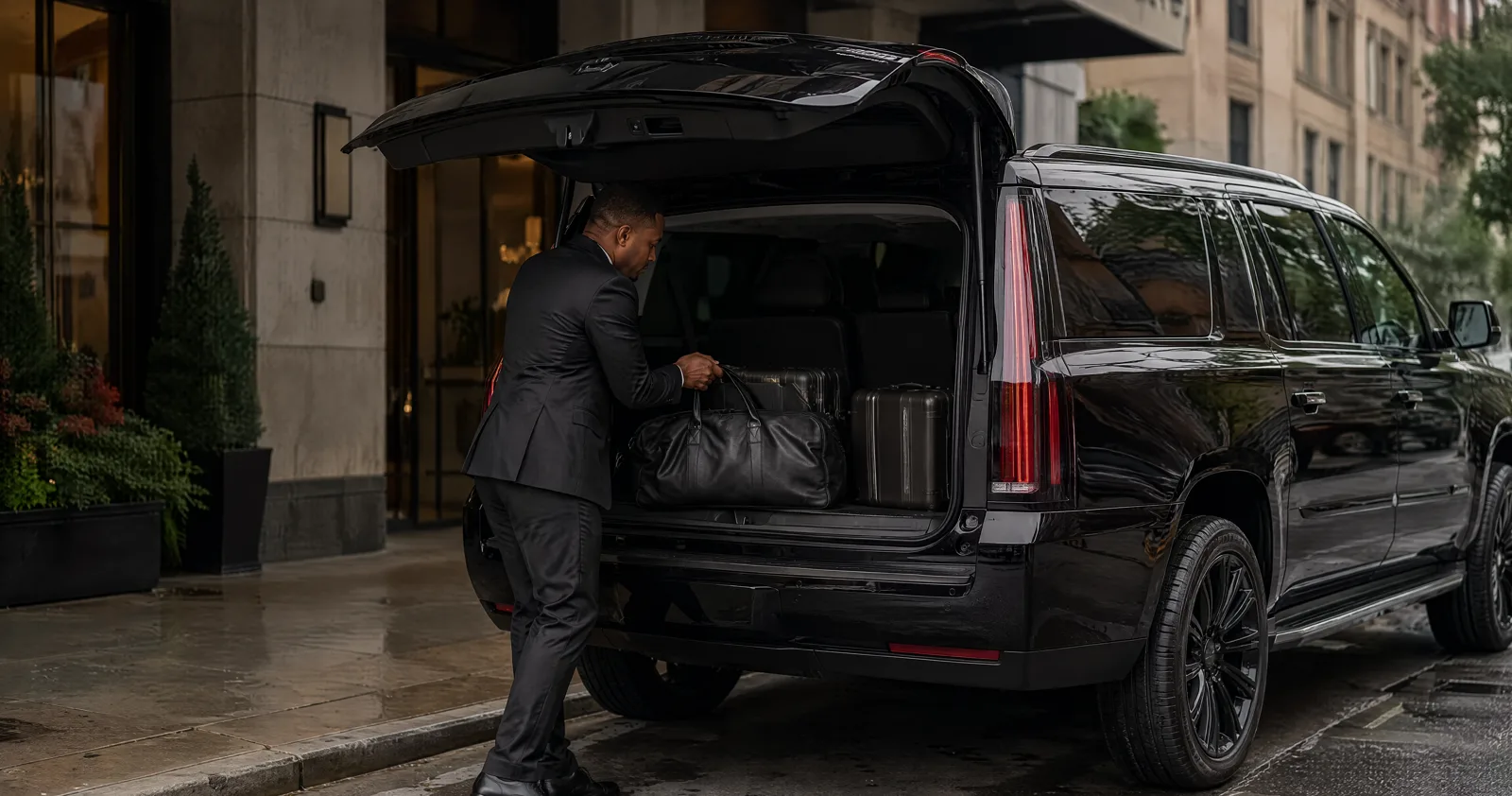
A private transfer between Golden Point Lakehouse and Toronto or Toronto Pearson should be planned around the exact cottage address, the host’s arrival instructions and the group’s luggage. The property is listed in Bracebridge, on Lake Muskoka. Request an out-of-town, distance-based quotation for both directions, with the vehicle and final unloading point confirmed before travel. A Toronto hourly rate is not a substitute for that itinerary quote.
Golden Point is a cottage stay, not a resort arrival with a reception desk and an assumed coach entrance. That distinction changes the journey. Someone needs the check-in instructions, food and weekend bags need room beside the suitcases, and the return to YYZ needs a departure time that protects the flight rather than merely matching checkout.
This article concerns Toronto-based intercity travel to the lakehouse and back. It does not offer short local rides around Bracebridge. Accommodation and transportation are separate bookings; no affiliation between Chauffeuropolis and the property is implied.
On this page
- Choose the journey before choosing the vehicle
- What makes this a Golden Point journey
- Get the address and arrival instructions from the reservation
- Leaving Toronto without a string of uncertain pickups
- Arriving at Pearson with a group
- Pack for the cottage, not only the flight
- Build a weekend around two reliable travel windows
- Take the winter driveway warning seriously
- Work backwards for Golden Point Lakehouse to YYZ
- Compare quotations on the same itinerary
- Send one final travel note
- Questions about Golden Point Lakehouse transfers
Choose the journey before choosing the vehicle
A smaller family arriving on one flight has different needs from friends leaving several Toronto homes. Start with who is actually travelling together, then count bags and any bulky items. A seat count alone will not show whether the vehicle works for a cottage weekend.
| Arrangement to discuss | People and luggage | Access or timing constraint | Quotation basis |
|---|---|---|---|
| Private car or SUV | Smaller party with bags that fit the specified vehicle | Confirm boarding needs and the approved cottage unloading point | Out-of-town distance quote for the dated journey |
| Passenger van or Sprinter | One group sharing a departure, with room assessed for suitcases and cottage supplies | Confirm actual cabin layout, loading space and driveway suitability | Distance-based outward and return itinerary, with agreed stops |
| Separate airport collections | Guests on flights that cannot sensibly share a pickup | Each arrival needs its own flight details and meeting instructions | Quote each movement rather than assuming one vehicle waits indefinitely |
| Separate arrival and departure transfers | Overnight stay without a vehicle retained at the cottage | Fix the return pickup location and time before arrival day | Written round-trip quote showing both dated movements |
| Two smaller vehicles | Party or luggage requirements that do not suit one vehicle | Host must approve arrival arrangements; coordinate unloading rather than filling the driveway | Quote the actual vehicle combination and both return passenger lists |
A mini bus or coach should not be the default for this property. The host advertises four driveway parking spaces, which says nothing about a larger vehicle’s turning circle, clearance or safe unloading position. Do not interpret car parking as coach approval. A van also needs an access check; its suitability cannot be read from the lakehouse photographs.
Ask for the proposed vehicle’s baggage allowance in practical terms. Give suitcase quantities, approximate sizes, stroller details and anything that cannot be folded. Keep groceries and personal bags in the same count. The accepted arrangement must accommodate everything safely without treating the passenger aisle as extra storage.
What makes this a Golden Point journey
The host’s Airbnb listing identifies Golden Point Lakehouse by name in its description, even though its current public headline is “Lake Muskoka Escape w/ Waterfront Sauna & Hot Tub.” It describes an entire cottage in Bracebridge with five bedrooms and three bathrooms, on Lake Muskoka. Use that listing identity when discussing the destination, rather than a similarly named property on Golden Lake.
The listing describes a kitchen, a private beach and dock, kayaks, a sauna and a fire-heated hot tub. Those details explain why a group might travel together for a stay rather than arrive for a single appointment. They also shape packing: meal supplies, outdoor clothes and children’s items may take more room than luggage for a hotel weekend. Check current amenity availability with the host before deciding what to bring.
The cottage’s advertised sleeping arrangements do not establish permission for visitors, a celebration or an event. Let the host approve the actual staying party and any proposed visitors. Transportation capacity is a separate question. Booking more vehicle seats never increases the property’s permitted occupancy or changes its house rules.
A resort transport page can discuss broad service choices across Muskoka. Here the useful detail is narrower: one cottage reservation, one confirmed address, limited driveway parking and a host warning about winter ice. Those are the facts that should shape the travel plan. For the broader airport corridor, see the existing Toronto airport to Muskoka shuttle information; this article adds the lakehouse-specific decisions rather than replacing that regional information.
Get the address and arrival instructions from the reservation
The public listing places the cottage in Bracebridge, but the booker’s confirmed reservation should supply the precise arrival address. Share that address privately with the transportation provider. A general map pin, property nickname or town centre is not enough to calculate the journey or brief the driver.
Ask the host which entrance and unloading position to use, whether the proposed vehicle can turn safely, and what to do if other cars occupy the driveway. The listing’s four parking spaces are relevant for families combining private transfers with self-driving guests. They are not four waiting bays promised to a transport operator.
The host describes the cottage as being at the end of a quiet road among other cottages and homes. That is a reason to settle the approach before arrival, not to assume the road is suitable for turning or waiting. If a different handover point is needed, have the host and operator agree it in advance, including how passengers and bags reach the accommodation. Do not invent a roadside meeting place.
Self check-in by smartlock is listed. Keep the person holding the current entry instructions reachable during the final approach. A driver should not have to solve an expired code while the travelling party waits outside. Confirm when entry is allowed and make the transport schedule fit it; an early vehicle arrival does not bring the accommodation check-in time forward.
Leaving Toronto without a string of uncertain pickups
For guests already in Toronto, choose between a shared meeting point and a defined collection sequence. A shared hotel or residential pickup can simplify the departure when everybody can reach it comfortably. Multiple addresses may be more convenient for families, but each stop changes the schedule and must appear in the quotation.
For a hotel, tell guests whether to wait in the lobby until contacted or meet at an agreed entrance. For a condominium, confirm where loading is permitted and how the lead passenger can be reached. The objective is a lawful, workable boarding point, not a vehicle circling while somebody searches for the group chat.
Set the group’s ready time separately from the vehicle departure time. Bags should be downstairs, children ready to board and any last-minute purchases finished. If one guest is habitually running late, do not conceal that uncertainty inside the plan. Decide whether the group waits and what a changed departure could mean for the host’s arrival window.
A cottage trip often begins with people carrying more than they expected. Collect the final luggage count before the vehicle is assigned, not when the driver opens the loading area. Tell guests when the count becomes final and ask them to flag additions such as a large cooler, folded playpen or bulky sports equipment. A photograph with approximate dimensions can communicate an awkward item better than the word “bag.”
Arriving at Pearson with a group
For a YYZ arrival, supply the operating flight number, travel date, passenger contact and expected checked luggage. Flight landing time is not the time everyone will be ready to board a road vehicle. Passengers may still need to leave the aircraft, complete border formalities and collect bags before following the agreed pickup instructions.
Confirm the airport meeting procedure with the operator for that booking. Do not tell a family to find an unspecified chauffeur at an unspecified terminal door. They need a current contact method, a clear explanation of when to make contact and instructions they can follow after collecting their belongings.
Several flights introduce a choice. One shared transfer may work when the arrivals are compatible and the group accepts the wait. Separate collections may be better when arrivals are far apart, one party has children, or a delay would hold everyone else at the airport. Compare the actual itineraries rather than choosing solely by the number of vehicles.
Give the operator a plan for a materially delayed flight. Ask how waiting, changed pickup times and a missed connection would be handled under the accepted terms. This is a request for the booking’s policy, not a promise of unlimited waiting. Keep the host informed if the expected lakehouse arrival moves later, especially if someone else was planning to meet the group there.
Pack for the cottage, not only the flight
The host lists a kitchen and family amenities including a crib and highchair. Confirm what will be available for your stay before bringing duplicates. Avoid assuming that an amenity shown in a listing settles every family’s requirements: a supplied crib, for example, does not resolve the child-restraint needs for the journey from Toronto.
Tell the operator children’s ages and the restraint requirements before booking, and agree who supplies and fits the appropriate equipment. Mention any passenger who needs help boarding or cannot comfortably manage steps. A vehicle name or a photograph is not proof of wheelchair access or suitability for a particular mobility need.
For groceries, decide whether supplies travel from Toronto, arrive through a separately arranged service, or require an agreed stop on the outward journey. The kitchen makes a meal plan useful, but an unplanned supermarket visit can push the arrival later and add bags after the vehicle has been selected. If a stop is needed, specify the location or proposed area, purpose and expected duration for approval and pricing.
The listing says kayaks are provided and describes a private beach and dock. Confirm equipment availability and the host’s use instructions instead of assuming large recreational items need to travel with you. If bringing your own equipment, disclose it. Wet items on the return also need containment, so pack suitable bags rather than expecting to load loose damp clothing or equipment into the cabin.
Keep medicine, entry instructions, charging cables and essential children’s items in a small accessible bag. They should not be buried beneath the weekend food supply. Loading can then follow the vehicle’s safe storage arrangement without making every short need a reason to unpack everything.
Build a weekend around two reliable travel windows
A useful outward plan connects the Toronto departure or Pearson collection to the host’s permitted arrival window. It does not need a minute-by-minute holiday schedule. Decide who opens the cottage, which bags need unloading first and whether self-driving guests should arrive separately to leave space for the transfer.
For example, a family could travel from one Toronto meeting point, make a pre-agreed food stop and reach the cottage within the confirmed check-in window. On departure day, the same family might return together to a Toronto address. This is an illustrative arrangement, not a published package or a claim about the time the drive will take.
A mixed group needs a different plan. Some guests may arrive from Pearson while others start in Toronto, then leave on different days. Record each movement independently with its own passenger and baggage list. The person arranging the accommodation should not assume that the transport booker has automatically received every guest’s revised flight details.
The lakehouse facilities are reasons to spend time at the property, not evidence that a vehicle will remain available during the stay. If your visit needs no retained vehicle, state that the booking consists of arrival and return transfers. Do not build dinner trips, shopping runs or on-call rides around an intercity transfer reservation. This article is not a local transport programme.
Take the winter driveway warning seriously
The host specifically warns that the roads and driveway can become very icy in winter and says salt will be available for slippery areas. That is a property-specific planning issue. It does not establish that every vehicle can reach the door in every condition, nor does it guarantee a clear walking surface at the moment the group arrives.
Before a winter journey, ask about recent conditions and the planned clearing of the arrival area. Share relevant information with the operator so the final approach can be assessed. Snowbanks may change usable space even where cars normally park. A decision made from a summer photograph is not a winter access check.
Allow passengers time to put on suitable footwear and outer layers before stepping out. Keep essential winter items accessible rather than under the heaviest cases. Anyone with limited balance or mobility should have an agreed boarding and unloading plan; do not leave that conversation until the return vehicle arrives before dawn.
If conditions make the agreed point unsuitable, use the operator and host to decide whether a safe alternative exists or the itinerary must change. Safety should not depend on carrying bags along an unapproved road shoulder. Build room for weather-related uncertainty into the return schedule without claiming that any fixed buffer guarantees arrival for a flight.
Work backwards for Golden Point Lakehouse to YYZ
For the return airport transfer, start with the airline’s required airport arrival guidance and the passenger’s check-in, baggage and assistance needs. Then have the operator assess the dated road journey from the confirmed cottage address. Add time for loading and a suitable allowance for the conditions. Checkout is a property deadline, not a flight-planning calculation.
A group should have a bag-ready time as well as a pickup time. Pack most items the evening before an early departure, gather passports and travel documents, and decide who checks the rooms. Leave the host’s checkout tasks with a named person while somebody else accounts for the passengers and luggage. That division prevents everyone assuming another guest has done the final check.
Send the return flight numbers and terminal information again with the final itinerary. A changed flight can alter the required departure time; a new passenger can change the baggage fit. The return is not automatically a mirror of the outward journey. Guests may be carrying purchases, leaving with different companions or going to a different destination.
If some travellers return to Toronto and others to Pearson, ask whether one agreed route with separate drops or distinct vehicles makes sense. Do not place a discretionary city stop ahead of an airport deadline without having it assessed. The written quotation should identify the order of destinations, not leave the driver to negotiate it with tired passengers on departure morning.
For regional return-service context, the existing Bracebridge to Toronto airport page covers that broader corridor. Golden Point adds the private cottage handover, host coordination and luggage decisions that a town-level departure description cannot settle.
Compare quotations on the same itinerary
Request a distance-based out-of-town quotation using the precise origins and destination, both travel dates, passenger counts, baggage details and approved stops. If the address is not yet available, identify any early estimate as provisional and have it reviewed once the host supplies the confirmed arrival details.
Two offers are comparable only when they cover the same journey. Check whether each includes both directions, the same vehicle arrangement and the same pickup sequence. Ask how taxes, gratuity, airport-related charges, waiting and itinerary changes are treated. Do not assume an item is included because it was not mentioned in a short message.
A smaller headline amount may describe one direction while another covers the round trip. An attractive vehicle description may omit the luggage provision your party needs. Read the actual service details before comparing totals, and have unresolved points answered in writing. No current numerical rate is quoted here because a generic rate cannot stand in for this private-address itinerary.
Use online booking to submit the journey, or request a quote with both dated movements. Keep the accommodation confirmation separate. A transfer enquiry does not reserve the lakehouse, approve extra guests or confirm availability of a particular vehicle.
Keep a record of the version the operator accepted. If a traveller changes a flight, send the new itinerary and ask for acknowledgement rather than assuming a message has amended the reservation. The same applies to a different Toronto pickup address, an extra stop or a departure on another day. A group chat is useful for discussion, but the booking should have one person authorised to confirm changes.
Read the cancellation and change terms alongside the accommodation’s terms. They belong to different reservations and may not move together. If the host changes the stay dates or a flight disruption changes the party’s arrival, contact the transport operator before treating the original transfer as cancelled or transferable. Ask what can be changed, what needs a new quote and when a decision is required. This article does not prescribe either provider’s refund policy.
For a stay with uncertain return plans, decide what must be settled before accepting the transport quote. A flight departure, a Toronto home address and a request to decide on the morning of checkout are not equivalent instructions. If passengers cannot yet commit to the same return, separate requests may be clearer than building a single reservation around incompatible assumptions.
Keep the host’s contact and the operator’s agreed contact method available offline as well as in the group conversation. One traveller’s flat phone should not prevent the party from following the confirmed instructions. Share only what the people handling the journey need: a driver needs arrival and access details, while the rest of the travelling party generally does not need copies of everyone else’s booking documents.
Send one final travel note
Once the booking details are agreed, give the travellers one short version they can use on the day. Include the boarding point, ready time, departure time, luggage arrangement and lead contact. For an airport arrival, include the agreed contact procedure rather than a door number copied from somebody else’s trip.
Send the operator the final passenger list and property handover instructions through the agreed private channel. Keep entry codes and the private cottage address out of public invitations or social posts. The host should know the expected arrival window, while the lead passenger should know how to report a delay. These are separate responsibilities, even if one person is handling both bookings.
Before leaving the cottage, reconcile the return party with the original list. Check bags, charging cables, children’s belongings and items stored away during the stay. If self-driving guests are also departing, coordinate the loading sequence so their cars do not block the approved transfer position. The final few minutes should be spent boarding safely, not renegotiating the route.
Questions about Golden Point Lakehouse transfers
Is Golden Point Lakehouse in Bracebridge or on Golden Lake?
The verified listing identifies Golden Point Lakehouse as an entire cottage in Bracebridge on Lake Muskoka. It is not a basis for routing to Golden Lake. Match the Airbnb listing and the host’s reservation address before confirming transport; similar property names are not reliable journey endpoints.
Can a Sprinter drop us at the cottage door?
Door-side access needs confirmation for the proposed vehicle. The listing’s four parking spaces do not prove suitable clearance, turning room or winter access. Ask the host and operator to agree the unloading point before booking, with any necessary onward movement of passengers and bags explicitly resolved.
Can we arrange Toronto to Golden Point and the return to Pearson?
Yes, those are two different itinerary legs to request together, subject to availability and an accepted quotation. Supply the Toronto collection address for the outward trip and the flight details for the YYZ return. Do not assume the return has the same destination or timing as the first journey.
How long does Golden Point Lakehouse to Toronto airport take?
The journey needs a dated estimate from the confirmed cottage address. No fixed driving time is promised here. The operator should assess the route and expected conditions, then plan pickup around the airline’s airport-arrival guidance, baggage needs and boarding time rather than around checkout alone.
Will the vehicle stay with us for the weekend?
Do not assume a transfer vehicle remains at the property. Separate arrival and return bookings should state the two movements clearly. Any retained service would need its own agreement, including availability, waiting arrangements and permitted parking; it is not included simply because both directions are booked.
Can we stop for groceries on the way from Toronto or YYZ?
An agreed grocery stop can be included in an itinerary request, subject to operator acceptance. Specify it before pricing and vehicle selection so the schedule and loading plan account for the extra supplies. An unplanned stop is a change to discuss, not an entitlement attached to the transfer.
Does the number of seats determine how many guests can stay?
No. Vehicle seating and property occupancy are separate limits. Confirm the staying party and any visitors with the host under the current reservation rules, then choose transportation for that approved group and its luggage. Extra seats do not grant permission for an event or additional overnight guests.
What should we confirm for a winter return flight?
Confirm the pickup point, current road and driveway conditions, safe passenger access and a departure schedule appropriate to the flight. The host warns that the approach can be icy. Keep warm clothing accessible and tell the operator about mobility needs before travel, rather than relying on a last-minute change at the cottage.