

CHAUFFEUROPOLIS / ONTARIO JOURNAL
Deer Lake Wilderness Retreat: a Toronto group departure
Toronto and Pearson departures to Deer Lake Wilderness Retreat, with the return planned around your stay.
What to budget for the transfer
Start with these approximate one-way budgets, then book online using your pickup, travel date and passenger details. If the vehicle or itinerary is not offered online, contact us for that arrangement.
| Vehicle | Passenger capacity | From YYZ, one way | From downtown Toronto, one way |
|---|---|---|---|
| Sedan | 2 to 3 passengers | Approx. $450 to $650 | Approx. $500 to $700 |
| SUV | Up to 6 passengers | Approx. $675 to $950 | Approx. $750 to $1,025 |
| Cadillac Escalade | Up to 6 passengers | Approx. $1,025 to $1,425 | Approx. $1,100 to $1,525 |
| Sprinter | Up to 14 passengers | Approx. $1,425 to $1,950 | Approx. $1,525 to $2,100 |
All amounts are CAD, plus 13% HST and 15% to 20% gratuity. Luggage, stops, waiting, tolls and vehicle selection can affect the total. Passenger capacity does not override property occupancy or access limits.
The YYZ ranges are planning estimates based on our published Muskoka rates and the approximate road-distance difference. Downtown Toronto ranges are estimates using Union Station as the reference pickup, not published flat fares. Allowance ranges are not a guarantee of the final price. See our current rates.
Google Maps puts the driving distance at approximately 295 km from YYZ and 315 km from Union Station to the destination. Distances depend on the route selected; some routes use toll roads. Enter the exact address for your booking.
The table covers one outward journey. Add the return when booking if you need both directions; these amounts do not include a driver staying with you or local trips during your visit.
Toronto or Toronto Pearson (YYZ) to Deer Lake Wilderness Retreat is an out-of-town journey to South River in Ontario's Almaguin Highlands. Plan the outward and return transfers together, match the vehicle to the booked guests and their luggage, and confirm the property's unloading point before choosing a larger vehicle. Ask for a distance-based quotation for the actual itinerary rather than applying a Toronto hourly rate to the trip.
Deer Lake is a small glamping property with several different accommodation styles. Friends sharing the lodge have different packing needs from a couple staying in the geodome, even when they travel north together. Food, outdoor clothing and the final walk to a rental can matter as much as the number of seats.
This article covers Toronto-based intercity travel in both directions. It does not offer a local ride service around South River or imply a partnership between Chauffeuropolis and the retreat. Accommodation, permission for visitors and transport must be arranged separately.
Compare vehicle choices and the quotation basis
On this page
- A small retreat, not a coach-sized resort
- Choose the journey and vehicle together
- South River is the destination reference
- Leave Toronto from a place everyone can reach
- Plan Pearson collection around readiness, not touchdown
- Pack for your rental rather than a hotel room
- Confirm the handover before the vehicle is booked
- Let the stay determine the transport schedule
- Adjust the plan for the season
- Book the return while everyone still agrees
- Ask for a quote that covers the actual trip
- Questions about the Toronto and YYZ journey
- Send the outward and return details together
A small retreat, not a coach-sized resort
The retreat's official website describes four accommodation sites across ten acres. It names the Stargazer Geodome, Cozy Cabin, Boho Bell Tent and Deer Lake Lodge. That mix explains the appeal for a few friends who want to travel together but sleep in different settings. It also makes room allocation the sensible first step in planning transport.
Start with confirmed reservations. Ask who is sleeping in which rental and who is actually travelling in the vehicle. A vehicle's passenger capacity says nothing about the number of people the property permits to stay, visit or gather. Booking transport cannot turn separate accommodation reservations into permission for an event or a whole-property gathering.
Deer Lake Lodge is described as a four-bedroom farmhouse with a family kitchen, dining room, porches and an outdoor deck. The geodome has a panoramic window and skylight, while the Cozy Cabin has a loft sleeping area and kitchenette. The bell tent is another distinct option, with its own deck and meal-preparation setup. Check the description for the rental you have booked rather than assuming every guest has the lodge's facilities.
These differences have practical consequences. A party staying in one building can usually coordinate groceries and luggage labels around one reservation. Friends spread across separate rentals should label supplies by accommodation. That saves unpacking every cooler at the first handover point while someone searches for the bag intended for another site.
Transport planning starts small here. A private car, SUV or appropriately configured passenger van may be the right conversation. A large bus should never be the default simply because the booking enquiry uses the word group.
Choose the journey and vehicle together
Use this comparison to prepare an enquiry, not as confirmation of a particular vehicle or access arrangement. Passenger numbers, luggage dimensions and the host-approved approach determine what can be quoted. No coach access or on-site vehicle parking is established by the property sources used for this article.
| Journey plan | When it may fit | Luggage and access questions | Quotation basis |
|---|---|---|---|
| Private car or SUV | A small party sharing one arrival time | Count suitcases, food bags and any carrier; confirm the unloading point and passenger boarding needs | Distance-based outward and return itinerary, with requested stops identified |
| Passenger van or Sprinter | Friends with confirmed accommodation who want one departure | Ask for the actual seating layout and remaining baggage space; property approach must suit the assigned vehicle | Distance-based group transfer with luggage and access reviewed |
| Separate Toronto and YYZ collections | Some guests are already in Toronto while others are flying in | Keep luggage lists and contacts separate; coordinate arrival with the host rather than requiring everyone to wait at Pearson | Each collection and return movement described in the quote |
| Mini coach or larger vehicle enquiry | Only where the actual travelling party and approved destination arrangements justify it | Obtain explicit access and turning confirmation; do not infer permission from road maps or vehicle seat count | Individually assessed itinerary; no assumption of coach suitability |
An empty seat is not necessarily a place for a suitcase. Ask where larger items will be secured and whether the requested vehicle can carry the full load without blocking an aisle or exit. If the party size changes, send the revised luggage list as well as the new headcount.
Multiple vehicles can be more practical than one larger vehicle when arrival times differ or access is restricted. They also create extra coordination: each needs a passenger list, contact and destination instructions. Compare the whole arrangement rather than choosing by the largest advertised seat count.
For Deer Lake, the useful question is which vehicle brings the confirmed guests and their belongings to an approved handover point. Choosing a vehicle first and trying to fit the stay around it can leave the organiser solving the wrong problem.
South River is the destination reference
Use the full property name and South River, Ontario in every enquiry. Deer Lake is a place name found elsewhere in Canada, including in airport searches. A booking note that says only Deer Lake is too ambiguous for an intercity transfer.
The property's getting-here page places it west of South River in the Almaguin Highlands, between the broader Huntsville and North Bay areas. Its description of a journey from downtown Toronto is orientation, not a guaranteed driving time for your pickup, date or vehicle. A Pearson departure is a different starting point and must be planned separately.
Send the destination details from your current accommodation confirmation to the transport provider privately. Ask the host which entrance and unloading area to use. Do not substitute the centre of South River, a search result pin or the name of a nearby lake for the actual property instructions.
The final approach deserves attention before payment. The organiser should obtain the host's access guidance, and the transport provider should assess it for the assigned vehicle. A route visible on a map cannot establish driveway width, turning space, clearance or whether a vehicle may wait on the property.
Leave Toronto from a place everyone can reach
For guests already in Toronto, one agreed collection point can reduce the uncertainty of several home pickups. Choose a location where the vehicle can stop legally, passengers can wait safely and bags can be loaded without obstructing the pavement. A hotel entrance is useful only if the property permits that collection arrangement.
Separate the meeting time from the departure time in the guest message. People need time to arrive, find the group and load their belongings. The organiser should have a named passenger list and a working phone number for anyone not yet present. Nobody should have to guess whether a late friend is meeting the vehicle or travelling independently.
Work backwards from the retreat's confirmed arrival arrangements. If access to a rental is available later in the day, an early Toronto departure should include an agreed plan for the intervening time. Do not assume the driver can wait indefinitely or that luggage can be left at the property before check-in.
A grocery stop can be useful for a self-catering stay, but put it in the itinerary before the trip is priced. Ask whether the stop is compatible with parking, baggage space and the arrival window. Shopping with the entire party aboard takes a different amount of time from collecting an order that is already packed.
Give passengers the packing limit once the vehicle is confirmed. That is easier than trying to remove bags at the kerb. The final message should also state whether anyone is joining later, so the headcount at the Toronto pickup has a clear meaning.
Plan Pearson collection around readiness, not touchdown
Flight arrival time is the start of an airport arrival process, not the time every passenger is ready beside a vehicle. Guests may still need to clear border formalities, retrieve luggage and follow the collection instructions. Ask the transport provider for its current Pearson meeting procedure and share it without adding an invented terminal meeting point.
Send the flight number, arrival date and terminal information available on the booking. Tell the organiser whether passengers have checked baggage, are travelling with children or need assistance. Those details help distinguish a straightforward shared arrival from one that needs more time and direct communication.
If friends arrive on different flights, compare a shared collection with separate transfers. The earlier passengers may prefer to leave rather than wait through an uncertain delay. Conversely, a group whose flights arrive close together may value staying together. Have the provider quote the arrangement you intend to use and explain what happens if a flight change breaks that plan.
Discuss waiting and delay terms before accepting the quote. Ask how the provider wants passengers to report a delay after landing and which contact should make decisions for the group. Do not assume that flight monitoring, unlimited waiting or a second collection is included unless the confirmation says so.
Keep the host informed if the airport delay changes the expected arrival at Deer Lake. Transport and accommodation have different contacts; telling one does not automatically notify the other. The organiser can send a single updated arrival estimate once the group is actually ready to depart Pearson.
Pack for your rental rather than a hotel room
A self-catering woodland stay produces a different luggage load from a city hotel weekend. Alongside suitcases, guests may bring food, weatherproof clothing, footwear and personal outdoor equipment. List those items before the vehicle is assigned. A cooler or rigid storage box can take up more useful space than its owner expects.
The official accommodation descriptions mention cooking facilities, including kitchenettes for some rentals and a family kitchen at the lodge. They are not identical. Read the current inventory for your reserved unit before deciding what to bring, then ask the host about anything missing from that list. Avoid packing duplicate equipment because someone read the description of a different rental.
Keep items needed immediately on arrival accessible. A jacket, suitable shoes, medication and a phone should not be buried under everyone's groceries. If the host's instructions involve walking between the unloading area and a rental, passengers should know that before choosing their bags.
Food needs a separate plan. Tell the driver about bulky containers before travel and organise appropriate storage for the journey yourself. Do not assume refrigeration, special food handling or space for an unexpected shopping load. Agree which guest owns each shared container so it can be checked off on both journeys.
The retreat's website welcomes pets, but property acceptance does not establish vehicle acceptance. Ask both parties about your particular animal, any carrier and the relevant rules before confirming transport. Include the carrier in the luggage description. Passengers with allergies should be part of that conversation before the group chooses a shared vehicle.
Confirm the handover before the vehicle is booked
The safest arrival plan names an approved unloading point and explains how guests get from there to their accommodation. It does not assume the vehicle can drive to the geodome, cabin, tent or lodge door. The property's public pages do not provide enough information to promise that level of access.
Ask the host about the approach, space to turn, any gate instructions and whether vehicles can remain while luggage is unloaded. Send those answers to the transport provider. If the host identifies a restriction, choose a vehicle and handover arrangement that work within it rather than asking the driver to improvise after arrival.
Access questions are especially important for a guest who has difficulty walking, uses a mobility aid or needs help boarding. Describe the actual requirement privately and ask for specific answers about the assigned vehicle and the route from unloading point to rental. A vehicle photograph cannot establish accessibility, and an accommodation description cannot confirm the whole transfer.
Agree who will receive the party and what to do if the host is not present. Save the approved directions and contact details before departure. If the organiser's phone fails, another passenger should be able to identify the correct booking and contact the property.
At unloading, keep guests and bags together until the driver and organiser have checked the vehicle. Count large items as well as passengers. Splitting into separate rentals before checking for phones, jackets and chargers makes an otherwise simple handover harder to finish.
Let the stay determine the transport schedule
A lodge stay with friends can be organised around a shared meal, while separate glamping reservations may suit guests who want more time alone. Build the transport schedule around the booking you have, not an imagined resort programme. The public accommodation descriptions do not establish group dining service, meeting rooms or event permissions.
For a simple overnight or weekend visit, define the arrival transfer and a separate return collection. Do not assume that the outbound vehicle stays on the property or remains available for excursions. If you want any additional transport, disclose it when enquiring so availability, scope and pricing can be assessed.
The retreat advertises a provincial park day pass with rentals. That does not establish transport to a park, admission arrangements for every passenger or availability for a particular activity. Check the current accommodation terms and park requirements before building a day out around it. A pass and a ride are separate parts of the plan.
Keep the first evening flexible enough to absorb a delayed departure. A meal that depends on everyone arriving at an exact minute is harder to protect than one with supplies already organised. Decide whether the group needs to collect groceries before leaving Toronto or whether the planned stop will still work after a delay.
For friends using separate rentals, nominate one travel organiser without making that person responsible for every accommodation decision. Each booking holder can confirm their own check-in and checkout instructions. The organiser only needs the details that affect departure, luggage and the shared vehicle.
Adjust the plan for the season
The property describes itself as a four-season getaway. That broad description should not replace confirmation that your chosen rental is available and suitable for the dates you want. A tent booking and a farmhouse booking require different questions about comfort, what to bring and the walk from the unloading area.
For a cold-weather stay, ask the host how guests should approach the property and move their luggage in the conditions expected for the visit. Pass that information to the transport provider before departure. Do not promise passengers door-to-door access to an individual rental when the actual handover has not been agreed.
Check the forecast close to travel and keep outerwear accessible during the drive. The luggage that was comfortable to carry in dry weather may be awkward on a wet or snowy path. The organiser should know who needs assistance and should settle any carrying arrangements with the appropriate provider rather than leaving the driver to discover them on arrival.
In warmer weather, food storage and extra outdoor equipment can be the bigger packing issue. Ask guests to declare rigid boxes and bulky items early. A vehicle chosen for suitcases alone may not have spare space for everyone's last-minute additions. Property amenities should be checked against the rental inventory before anybody packs replacement equipment.
Agree on a decision process for a disrupted travel day. The driver assesses the transport operation; the host advises on property access; the organiser communicates the agreed change to passengers. Neither a preferred arrival time nor a booked activity should pressure the driver into an unsafe approach.
Keep the return plan under review during the stay, especially if conditions change. A message confirming the meeting point and passenger count is useful; a casual request to move the pickup to another place is a change that needs acceptance. If the provider recommends an earlier departure for a Pearson flight, bring the affected guests into that decision promptly.
For a party with separate accommodation bookings, these seasonal checks can be divided sensibly. Each booking holder confirms rental-specific requirements, while one organiser collects only the access and luggage information needed for transport. That keeps the shared travel note short without overlooking the differences between the lodge, cabin, geodome and tent.
Book the return while everyone still agrees
Specify a return date, meeting point and passenger list when requesting the outward transfer. A multi-night stay can end with different plans: some guests return to Toronto, others go to Pearson, and someone may leave independently. Those are different destinations and must be described before the quotation is accepted.
Use a ready-to-load time as well as the planned vehicle departure. Guests need to finish their rental's checkout tasks and move their belongings to the approved collection point. If the party is spread across the property, agree where everyone assembles instead of expecting the vehicle to collect from each unit.
For a Pearson return, work backwards from the airline's current airport-arrival guidance. Allow for the journey, a suitable contingency and the time needed to unload at the correct terminal. The property's broad description of travel from Toronto should not be used as a fixed return-time guarantee for a flight.
An early flight may make a different last-night arrangement more comfortable than a very early departure from the retreat. Discuss the options before booking the accommodation and transport. No transfer provider can remove traffic or weather uncertainty simply by giving the trip a firm pickup time.
If the return includes both Toronto and Pearson, ask for the stop order to be priced and recorded. One passenger's preferred drop-off should not quietly add a detour for everyone else. Confirm who can authorise a change and how it affects the accepted itinerary.
Before leaving Deer Lake, check each rental for forgotten items and count the shared food containers. The homeward load may be smaller, but it will not necessarily be packed in the same bags. Give the driver the final passenger count and destination list before departure.
Ask for a quote that covers the actual trip
An out-of-town quotation should identify the journey being purchased. Send the Toronto pickup or Pearson flight details, the dates, accommodation-confirmed destination instructions, passenger count and luggage description. Include the return movement rather than asking for a one-way price and assuming the other direction will be identical.
Mention every planned stop, including groceries and additional passenger pickups. Describe any pet, child-restraint requirement or mobility need early enough for the provider to assess it. The right time to discover that a proposed vehicle cannot meet a requirement is before it is confirmed.
Use the approximate one-way budgets above to plan the trip, then book online with your actual pickup, destination, date, passengers and luggage. Add the return if needed. The selected vehicle and itinerary determine the final price; a GTA hourly rate is not the price of an out-of-town transfer.
A useful final travel note contains only the instructions passengers need: where to meet, when to be ready, what bags are expected, who holds the booking and how the return works. Share sensitive flight, contact and accommodation details directly with the people who need them, not in a public event post.
Questions about the Toronto and YYZ journey
Is this Deer Lake in Ontario?
Yes. This article concerns Deer Lake Wilderness Retreat in the South River area of Ontario's Almaguin Highlands. Use the full property name and Ontario destination instructions when booking. Do not select an airport or transfer product elsewhere in Canada just because it contains Deer Lake.
Can friends book one vehicle while staying in different rentals?
They can request a shared transfer, subject to the confirmed passenger and luggage load and property access. Each accommodation reservation still needs its own approval and arrival instructions. Ask the host whether one unloading point works for the group before finalising the vehicle.
Should we book a Sprinter or a coach?
Start with the booked guests and their bags, then ask which vehicle fits the approved approach. This small property's published accommodation descriptions do not establish coach access. A Sprinter is also subject to the actual configuration and access review; its name alone does not guarantee a suitable load space.
Can we add a grocery stop on the way north?
Request it before the itinerary is quoted. Identify the intended stop, allow for shopping or order collection and include the groceries in the luggage estimate. An unplanned stop can affect the retreat arrival window and the transport agreement.
Will the driver take bags to our rental?
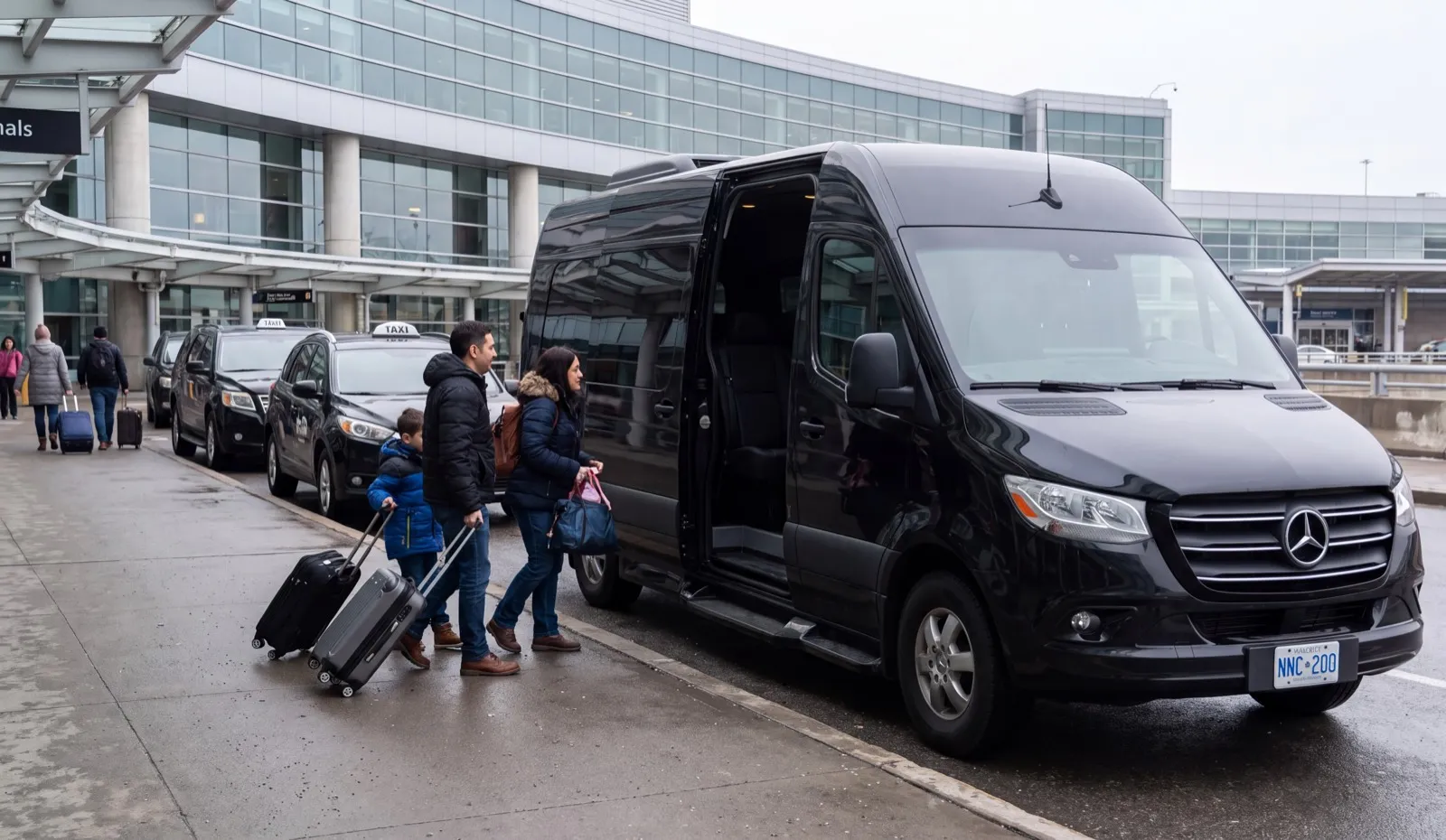
Do not assume luggage delivery beyond the approved unloading point. Ask what assistance the transport provider offers and ask the host about the route to your accommodation. Guests who need carrying assistance should have an agreed arrangement before departure.
Can we travel with a pet?
Ask the transport provider to approve the pet and any carrier before booking, even though the retreat's website welcomes pets. Confirm the accommodation's current rules separately. Pet acceptance by one business does not bind the other, and the carrier must fit the agreed vehicle load.
Is the return to Pearson included automatically?
No return journey should be assumed. Have the quotation and booking confirmation explicitly include the date, pickup arrangements and Pearson drop-off. Supply the departing flight details so the schedule can account for the airline's airport-arrival guidance and a sensible journey contingency.
Does a transfer booking reserve accommodation?
No. Arrange accommodation directly with the retreat or its authorised booking channel. Chauffeuropolis transport is a separate purchase, and a vehicle reservation does not secure rooms, extra visitors, activities or permission for a group gathering.
Send the outward and return details together
Once accommodation and access are confirmed, request a quotation with the full itinerary. Use the Chauffeuropolis booking page for the next booking step after the arrangements are agreed. Include both Toronto or YYZ to Deer Lake and the return destination so nobody has to reconstruct the homeward plan during the stay.