

CHAUFFEUROPOLIS / ONTARIO JOURNAL
Highview Beach House: arranging a Toronto transfer
Toronto and Pearson departures to Highview Beach House, with the return planned around your stay.
What to budget for the transfer
Start with these approximate one-way budgets, then book online using your pickup, travel date and passenger details. If the vehicle or itinerary is not offered online, contact us for that arrangement.
| Vehicle | Passenger capacity | From YYZ, one way | From downtown Toronto, one way |
|---|---|---|---|
| Sedan | 2 to 3 passengers | Approx. $325 to $450 | Approx. $350 to $500 |
| SUV | Up to 6 passengers | Approx. $525 to $750 | Approx. $575 to $825 |
| Cadillac Escalade | Up to 6 passengers | Approx. $675 to $925 | Approx. $725 to $1,025 |
All amounts are CAD, plus 13% HST and 15% to 20% gratuity. Luggage, stops, waiting, tolls and vehicle selection can affect the total. Passenger capacity does not override property occupancy or access limits.
The YYZ ranges are planning estimates based on our published Blue Mountain / Collingwood rates and the approximate road-distance difference. Downtown Toronto ranges are estimates using Union Station as the reference pickup, not published flat fares. Allowance ranges are not a guarantee of the final price. See our current rates.
Google Maps puts the driving distance at approximately 200 km from YYZ and 220 km from Union Station to the Wiarton, Ontario area. These are locality reference routes, not measurements to a private cottage entrance. Distances depend on the route selected; some routes use toll roads. Enter the exact address for your booking.
The table covers one outward journey. Add the return when booking if you need both directions; these amounts do not include a driver staying with you or local trips during your visit.
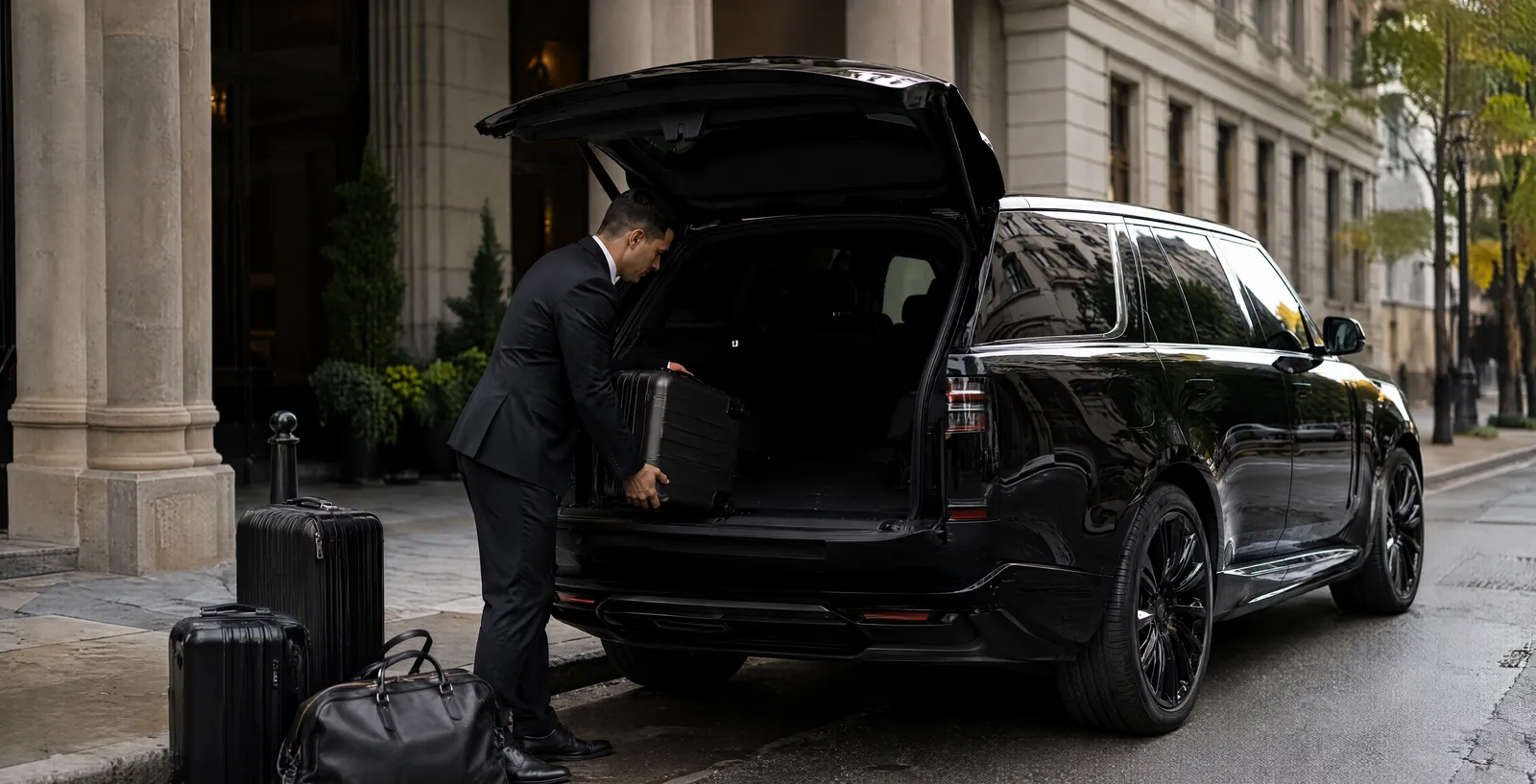
A private transfer from Toronto or Toronto Pearson (YYZ) to Highview Beach House is an intercity journey to a holiday house in Wiarton, Ontario, followed by a return planned around checkout or a flight. Ask for an out-of-town, distance-based quotation using the host-confirmed address, passenger list and luggage load. The house’s waterfront setting does not establish vehicle access, and the number of seats in a vehicle does not establish how many people may stay.
The host’s Airbnb listing describes views of Colpoy’s Bay from the edge of the Niagara escarpment. A kitchen, private beach access and a private hot tub help explain the appeal of staying at the property rather than spending the whole visit on the road. They also change the journey: a family may arrive with groceries, children’s equipment and bags for several nights, rather than just airline suitcases.
There is an important booking detail to resolve first. The listing’s guest summary and house rules show one occupancy limit, while the description gives a different adult-and-child arrangement. Do not choose a passenger count from whichever line suits the group. Have the host confirm the permitted party for your dates before reserving transportation. This article deliberately does not advertise a house capacity.
Chauffeuropolis transportation and the accommodation booking are separate arrangements. No relationship with the host is implied. The journey discussed here begins in Toronto or at Pearson and includes the return; it is not a promise of an on-call vehicle in Wiarton.
On this page
- Choose the journey before the vehicle
- What the waterfront listing tells you, and what it does not
- Resolve the guest-list conflict before paying for transport
- Leave Toronto with the house arrival in mind
- A Pearson arrival starts after landing
- Pack for a house stay, not just an airport ride
- Make the last part of the arrival explicit
- Plan the return around checkout and the next commitment
- Send one complete quotation request
- Questions about Highview Beach House transfers
Choose the journey before the vehicle
For this house, begin with a private car, SUV or passenger-van enquiry, not a coach booking based on the words “group travel.” The useful comparison is between the actual load and the actual route. A small family with rigid suitcases, a stroller and groceries may need a different arrangement from the same number of adults travelling with soft weekend bags.
| Arrangement to discuss | Passenger and luggage fit | Access or timing constraint | Quote basis |
|---|---|---|---|
| Private car or SUV | Small party, subject to the specified vehicle’s bag space and restraint needs | Host-confirmed unloading point; exact vehicle must fit the access | Out-of-town distance quote for the dated journey |
| Passenger van or Sprinter | An approved household group with a larger combined load | Confirm cabin layout, luggage space, vehicle dimensions and a safe handover | Distance-based itinerary covering outward and return movements |
| Separate YYZ and Toronto departures | Travellers arriving on different flights or joining from the city | Each party needs its own pickup instructions and access arrangement | Quote each movement, rather than assuming a second collection is included |
| Separate outbound and return transfers | A stay without a retained vehicle | Return date, loading time and destination agreed before arrival | Written round-trip quotation identifying both dated legs |
| Retained transport by separate agreement | A programme with specific additional movements | Vehicle waiting, driver schedule and property permission must all be confirmed | Bespoke itinerary; not an assumed inclusion in a transfer |
A larger vehicle is not automatically the better choice. Free parking is listed as a house amenity, but that says nothing about the space available to turn a passenger van or unload beside an entrance. Send the vehicle recommendation to the host before the arrangement becomes fixed. If access cannot be confirmed, ask the transport provider and host whether a safe alternative handover is possible. Do not invent a roadside meeting point.
Compare written quotations on the same scope. Both should identify the dates, origins, destination, passenger count, baggage and return plan. A direct outward transfer and a return with several Toronto drop-offs are different pieces of work. Prices that appear similar are not comparable if one leaves those stops, waiting or the return leg unspecified.
What the waterfront listing tells you, and what it does not
The public listing identifies Highview Beach House as an entire home in Wiarton, Ontario. It describes the Niagara escarpment setting and views across Colpoy’s Bay, and lists a kitchen, lake and bay views, private beach access, parking and a private hot tub. These are accommodation facts from the host’s listing, not features provided by the transport booking.
The escarpment matters to an arrival plan. The listing’s safety section mentions nearby water and heights without rails or protection. That is a reason to ask about the route between vehicle, entrance and outdoor areas, especially when children or a traveller with limited mobility are coming. It is not evidence that the driveway itself is steep or unsafe. Those details have not been established.
“Private beach access” also needs to be read carefully. It does not tell you whether the route to the water involves stairs, uneven ground or a carrying distance. A guest who needs a step-free path should ask the host specifically about both the house entrance and the water access. A comfortable ride to the property cannot compensate for an unsuitable final approach on foot.
The listing provides the exact location after booking. Use that confirmed address in the private transport correspondence, together with directions that help identify the correct entrance. A Wiarton map pin or a general search result is not enough for dispatch. There is no need to circulate entry codes to every person in the group or publish them in a shared travel document.
Some listing language describes nearby outings and approximate driving times. Those are not Toronto transfer times, and they do not make an excursion part of the transport reservation. This article does not reproduce them as routing evidence. If the stay includes travel away from the house, settle that separately rather than assuming a vehicle will remain available.
Resolve the guest-list conflict before paying for transport
The public listing currently contains inconsistent occupancy wording. The safest response is to give the host the proposed number of adults and children, including children’s ages, and ask whether that exact party is accepted for the stay. Keep the response with the accommodation confirmation. Avoid using the vehicle’s available seats to justify adding guests.
This matters even if the group already knows each other and intends a quiet holiday. A sleeping arrangement, a visitor rule and a transport passenger list answer different questions. Someone who joins the drive but stays elsewhere still needs a destination on the itinerary. Someone visiting the house for an afternoon may require host permission even if they do not stay overnight.
The house rules and the description should also be checked against the terms attached to the actual booking. If the host gives a clarification, update the travel organiser’s passenger list before requesting the final vehicle. Do not ask the driver to resolve an accommodation disagreement at the door.
For children, give the transport provider ages and the restraint requirements when enquiring. Confirm who supplies and installs the appropriate equipment and whether the proposed vehicle can accommodate it. A child is not merely another name on a count: a restraint position and the bags that accompany family travel may affect the layout. Avoid sending sensitive identity documents when ordinary planning details will do.
Leave Toronto with the house arrival in mind
A city departure should work backwards from when the party is permitted to enter the house. The listing publishes check-in and checkout times, but the reservation confirmation and any host-approved exception should control the actual schedule. Keypad entry does not mean the house is available at any hour. A driver arriving early cannot grant access before the host permits it.
Choose the Toronto origin that the group can actually use. A hotel pickup needs the correct entrance and a place where the vehicle can legally load. A residential pickup needs enough information to distinguish a driveway, front door or agreed curb position. Discuss the location with the provider rather than leaving passengers and driver to negotiate it over several phone calls.
One meeting point can be easier to coordinate than collecting each household separately. The trade-off is that guests must reach it with all their bags. If several pickups are important, provide every address at quotation stage, in the intended sequence. A last-minute addition across the city changes the journey before the trip north has properly begun.
Groceries deserve an explicit decision because the house lists a kitchen. Bring them from the departure point, arrange a separate solution for the stay, or request a planned stop that the provider accepts. Do not assume that a direct transfer includes shopping. A store stop needs time, a suitable parking location and somewhere for purchases to travel safely.
If food is travelling with the party, include coolers and shopping bags in the load description. Passengers should make their own suitable food-storage arrangements; no refrigerated compartment is promised. Keep perishables, fragile items and anything that must remain upright out of an unspecified “few extra bags” category. The driver needs to know the load before arriving.
Road timing should be assessed against the confirmed property address, departure date and pickup window. This article gives no fixed Toronto driving time because a public listing and a city name are not sufficient route inputs. Ask for the planning estimate when the booking details are known, then keep the house handover and road estimate distinct.
A Pearson arrival starts after landing
For a YYZ collection, supply the flight number, arrival date, arriving passengers and a reachable lead contact. The provider’s confirmed airport instructions should tell the party where and how to meet. Do not substitute a generic terminal curb description for those instructions. The flight itinerary is useful preparation, but it is not a vehicle dispatch confirmation.
Landing time is different from ready-to-board time. Passport control, baggage collection and any missing-bag issue come before the passengers can leave the terminal. Ask how flight delays, waiting and changes are handled under the proposed booking. None of those policies should be inferred from the phrase “airport transfer.”
If one household flies in while another leaves from Toronto, compare travelling separately with an agreed combined collection. The city party may prefer to start independently rather than wait through an uncertain airport arrival. On the other hand, some families want to make the road journey together. Either can work as a request, but both need accurate passenger and luggage information before a vehicle is recommended.
For flights arriving far apart, do not make the earliest passengers wait simply because one transfer looks tidier on a spreadsheet. Discuss the likely wait, the house’s access window and the needs of children or older travellers. A delayed final flight could turn a shared collection into a much later arrival than the host expects.
Keep the host informed of material timing changes through the accommodation booking contact. Keep the transport provider informed through its own confirmation channel. One adult should coordinate those conversations so that a revised arrival time does not reach the driver while the host is still expecting the original plan.
Pack for a house stay, not just an airport ride
Count the whole load, including items that were never on a flight. A weekend at a waterfront house may involve food, a stroller, a pet carrier and outdoor bags alongside suitcases. The vehicle recommendation needs that information even if the passenger count is small. Seats and cargo space are separate constraints.
The listing says pets are allowed and sets conditions in its description. Permission from the host does not establish permission in a booked vehicle. Declare the animal and any carrier to the transport provider before accepting the quotation, and confirm the arrangement on both sides. Do not rely on an older property description for current pet terms.
Do not assume that photographs or guest reviews establish which water equipment will be supplied during your stay. If you want to bring bulky equipment, ask the host what is available first and the provider what can be carried second. A roof attachment, trailer or special storage arrangement is not an automatic feature of a private transfer.
A traveller with a mobility aid should describe its dimensions and whether it folds, as well as any boarding assistance needed. The host should answer the separate questions about steps, surfaces and the distance from unloading to the entrance. A vehicle category alone is not an accessibility specification, and a driver should not be expected to improvise an unsafe lift.
Pack anything needed immediately on arrival where it can be reached without emptying the entire luggage area. That might be a child’s coat, medication or the lead guest’s phone with the arrival instructions. At the house, move the party into the agreed safe area before attention turns to outdoor amenities. The first few minutes should be about unloading and getting inside, not exploring the waterfront while bags are still being handled.
Make the last part of the arrival explicit
Ask the host where the proposed vehicle should stop, whether it can turn without reversing onto an unsuitable road, and whether any access conditions apply on the travel date. These are questions to resolve, not known problems with Highview Beach House. The public listing does not establish vehicle clearances or a coach unloading area.
Parking permission and unloading permission should be treated separately. A space listed for overnight guest parking may not be the correct place for a commercial passenger vehicle to wait. For an ordinary drop-off, the plan should allow the driver to unload safely and leave. A retained vehicle would need a separate agreement about where it can wait.
For an evening arrival, ask how guests will identify the entrance and reach it with luggage. For winter travel, ask about the relevant access and walking conditions close to departure. The house’s amenities do not establish road maintenance, snow clearance or the condition of an approach on a particular day. Avoid presenting year-round availability as a guarantee of identical arrival conditions.
Keep the final handover note short: confirmed address, agreed unloading location, lead passenger contact and any relevant access instructions. The accommodation contact should retain responsibility for entry permissions. The provider should retain responsibility for whether its proposed vehicle can safely perform the agreed movement.
Plan the return around checkout and the next commitment
An overnight transfer does not imply a vehicle waiting at the property for the duration of the stay. Book the return as a dated movement, with its own passenger list, luggage estimate and destination. If someone leaves early or another guest joins the return, tell the provider rather than assuming the outward manifest still applies.
Make departure preparation happen before the booked pickup. Guests need time to follow the host’s checkout instructions, gather food and personal belongings, and bring luggage to the agreed loading area. A last look through the bedrooms and kitchen should not begin when the driver is ready to leave. Be ready to vacate by the accommodation’s confirmed deadline.
For a Toronto return, identify each drop-off rather than writing only “back to the city.” The outward pickup address may not be where everyone wants to finish. Multiple hotels, homes or onward stations need to be part of the accepted itinerary. A reverse of the outward route is only correct if the party actually wants that route.
For a return to Pearson, work backwards from the flight using the airline’s reporting advice, the route estimate for that date and a suitable contingency. Airport processing is additional to the drive. Ask the provider to assess the departure time using the flight details and the host-confirmed address; a regional journey estimate should not be treated as a guarantee that a flight can be reached.
A flight leaving much later than checkout creates a gap to solve before the holiday. It does not entitle the party to stay at the house, store bags there or keep the driver waiting. Agree an appropriate plan with the relevant providers. If a very early flight would require an uncomfortable departure, consider whether spending the previous night nearer the airport better suits the party.
The broader Grey Bruce to Toronto airport transportation page addresses regional airport journeys. This house-specific article has a narrower job: connecting the accommodation’s entry, occupancy and luggage decisions with an outward trip from Toronto or YYZ and the return.
Send one complete quotation request
Use the approximate one-way budgets above to plan the trip, then book online with your actual pickup, destination, date, passengers and luggage. Add the return if needed. The selected vehicle and itinerary determine the final price; a GTA hourly rate is not the price of an out-of-town transfer.
- Provide the Toronto address or YYZ flight details for each outward collection.
- Identify Highview Beach House with its booking link, then share the host-confirmed address privately.
- State the host-approved party, children’s restraint needs and any boarding assistance.
- List suitcases, carry-ons, coolers, strollers, carriers and oversized items.
- Give the permitted arrival window and the agreed unloading instructions.
- Specify the return date, pickup time and Toronto addresses or Pearson flight details.
- Name any requested stop, waiting period or additional movement, rather than assuming it is included.
The reply should distinguish what is confirmed from what still needs agreement. Check the vehicle, included movements, waiting terms and any applicable taxes or gratuity before accepting. Accommodation charges, damage deposits and house rules remain separate from the transport quotation.
Use the quotation enquiry or booking page to submit the journey. An enquiry is a request for review, not a promise of availability or property access.
Questions about Highview Beach House transfers
Where is Highview Beach House?
The host’s Airbnb listing places Highview Beach House in Wiarton, Ontario, and describes views of Colpoy’s Bay. The exact location is supplied after booking. Use the host-confirmed address for the transfer rather than a general Wiarton map pin.
Can we travel from Toronto Pearson instead of downtown Toronto?
Request a YYZ-origin transfer with the flight details and full luggage load. Airport collection needs the provider’s own meeting instructions and delay terms. Do not use scheduled landing time as the time every passenger will be ready to board.
How many people can stay at the house?
Confirm the permitted party directly with the host because the public listing contains inconsistent guest-limit wording. Give adult and child numbers and children’s ages. A vehicle’s passenger capacity is not evidence of permitted overnight occupancy.
Does free parking mean a Sprinter can reach the entrance?
No. The listing’s parking amenity does not establish dimensions, turning space or permission for a particular vehicle. Ask the host and provider to agree the unloading point before the vehicle is confirmed.
Can we take groceries or a pet?
Declare groceries, coolers and any pet or carrier when requesting the transfer. The host lists a kitchen and permits pets subject to conditions, but vehicle carriage and any shopping stop need separate agreement with the transport provider.
Is transportation included with the accommodation?
This article does not establish any transport inclusion or affiliation with the house. Reserve the accommodation and transport separately, and check the terms of each confirmation. Do not assume a vehicle remains nearby during the stay.
How should we book the return to YYZ?
Provide the return flight, travel date, passenger list and host-confirmed pickup address when requesting the round trip. Agree a departure that accounts for the road journey and airline reporting requirements. Checkout and airport timing must both be resolved before travel.