

CHAUFFEUROPOLIS / ONTARIO JOURNAL
A Lost Tree Lakehouse stay, departing Toronto
Toronto and Pearson departures to Lost Tree Lakehouse, with the return planned around your stay.
What to budget for the transfer
Start with these approximate one-way budgets, then book online using your pickup, travel date and passenger details. If the vehicle or itinerary is not offered online, contact us for that arrangement.
| Vehicle | Passenger capacity | From YYZ, one way | From downtown Toronto, one way |
|---|---|---|---|
| Sedan | 2 to 3 passengers | Approx. $375 to $550 | Approx. $350 to $500 |
| SUV | Up to 6 passengers | Approx. $575 to $800 | Approx. $525 to $750 |
| Cadillac Escalade | Up to 6 passengers | Approx. $850 to $1,200 | Approx. $800 to $1,100 |
All amounts are CAD, plus 13% HST and 15% to 20% gratuity. Luggage, stops, waiting, tolls and vehicle selection can affect the total. Passenger capacity does not override property occupancy or access limits.
The YYZ ranges are planning estimates based on our published Muskoka rates and the approximate road-distance difference. Downtown Toronto ranges are estimates using Union Station as the reference pickup, not published flat fares. Allowance ranges are not a guarantee of the final price. See our current rates.
Google Maps puts the driving distance at approximately 245 km from YYZ and 225 km from Union Station to the Redstone Lake, Haliburton, Ontario area. These are locality reference routes, not measurements to a private cottage entrance. Distances depend on the route selected; some routes use toll roads. Enter the exact address for your booking.
The table covers one outward journey. Add the return when booking if you need both directions; these amounts do not include a driver staying with you or local trips during your visit.
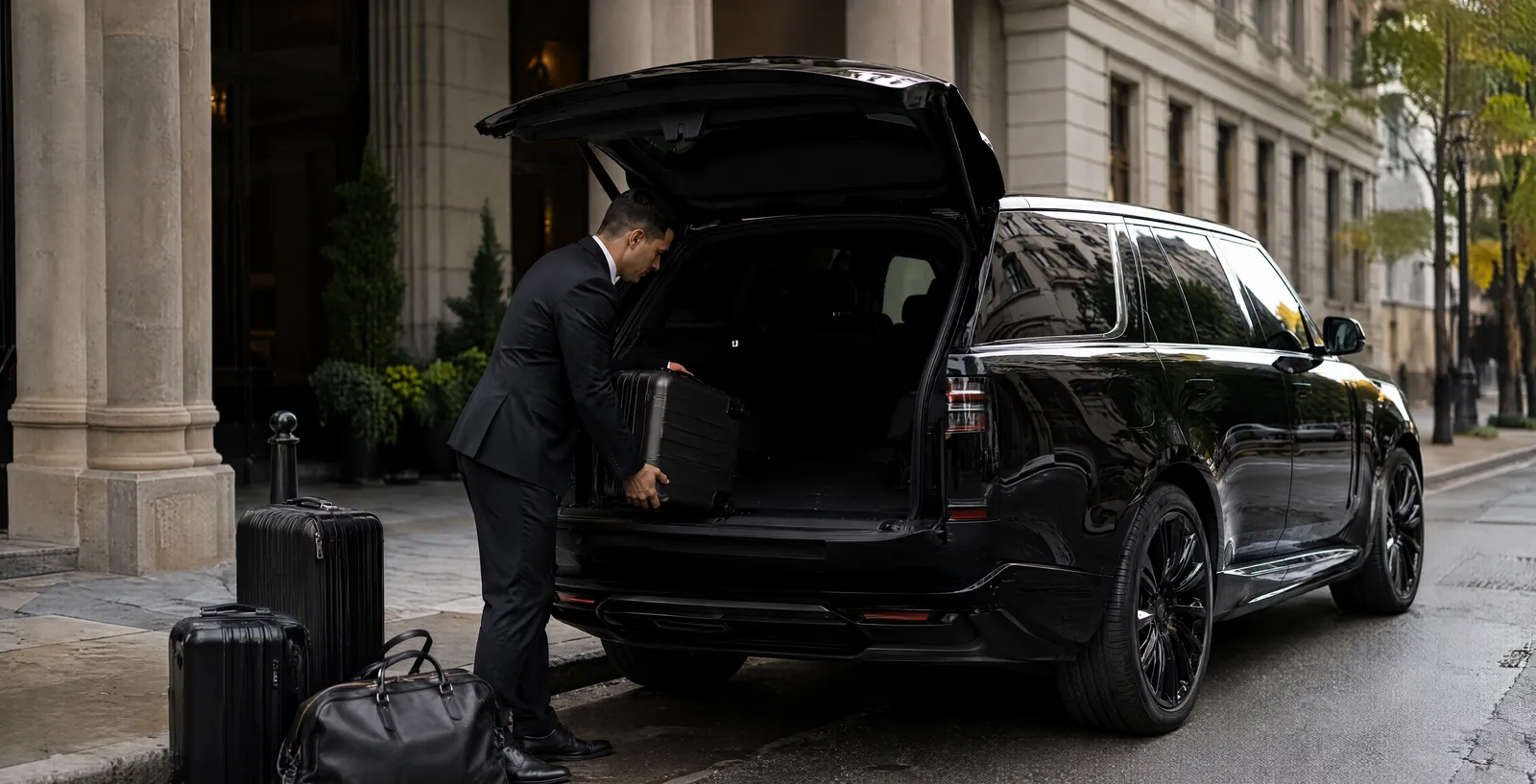
A private transfer from Toronto or Toronto Pearson to Lost Tree Lakehouse should be planned around your confirmed cottage reservation, the people travelling and their luggage. The property is on Redstone Lake in the Haliburton Highlands. Book the outward journey and the return to Toronto or YYZ together, with a host-confirmed arrival point and an out-of-town, distance-based quotation. Do not assume that a larger vehicle can reach the cottage because the listing mentions car parking.
Lost Tree Lakehouse suits a different kind of journey from a resort arrival or a wedding shuttle. The property’s own listing describes accommodation for six adults, three bedrooms and a waterfront reached by 150 stairs. Those details shape a stay: who can comfortably use the shoreline, what needs to travel from the city, and whether the whole party can arrive together without filling every available seat with bags.
This article focuses on Toronto-based intercity travel for an overnight stay, including Pearson arrivals and the journey home. It does not offer destination-local rides around Haliburton. Chauffeuropolis transportation and the cottage reservation are separate bookings; no relationship with the property or its manager is implied.
On this page
- Choose the journey before the vehicle
- What makes this lakehouse different
- Leave Toronto with one workable departure plan
- Connect a Pearson arrival to cottage check-in
- Pack for the lake without overloading the vehicle
- Confirm the final approach and handover
- Build a stay that works without a car
- Plan the return before you leave home
- Prepare a useful transfer quotation
- Questions about the journey
Choose the journey before the vehicle
For a small cottage party, the useful comparison is between a suitable private car or SUV, a passenger van with the right luggage arrangement, and separate transfers for guests with different schedules. Vehicle choice should follow the actual passenger list. Six adults travelling for several nights can have a very different load from a couple carrying two overnight bags, even though both parties are going to the same property.
| Journey arrangement | When to consider it | Luggage and access questions | Quotation basis |
|---|---|---|---|
| Private car or SUV | A smaller party leaving from one Toronto address or arriving together at YYZ | Confirm usable luggage space with all required seats occupied, plus any child-seat or mobility needs. The host must confirm the final meeting point. | Out-of-town distance-based quote for the stated pickup and property handover. |
| Passenger van or Sprinter | An approved cottage party that benefits from travelling together with more bags | Ask for the actual seating and cargo configuration. Van access, turning space and unloading are not established by the car-parking description. | Quote the route, vehicle configuration, stops and both travel dates. |
| Separate private transfers | Flights, work schedules or return destinations do not align | Each vehicle needs its own passenger and bag count. Check that staggered arrivals fit the host’s access instructions. | Quote each movement explicitly; compare the total plan rather than one journey in isolation. |
| Larger charter vehicle | Not the default for this small-property stay | The listing does not establish coach access or permission for a larger gathering. More seats do not increase the permitted cottage occupancy. | Do not select this option without a genuine need and specific property and transport approval. |
A more spacious vehicle is not automatically the more practical one. If its final approach is unsuitable, the extra room solves one problem and creates another. Conversely, choosing the smallest vehicle by passenger count alone can leave no sensible place for groceries, winter clothing or a folded stroller. Send the load details before accepting a vehicle recommendation, rather than discovering the shortfall at the Toronto pickup.
Ask whether the proposal covers two separate transfers or a vehicle remaining available during the stay. These are different arrangements. A return reservation does not mean a driver waits nearby for the weekend, and neither arrangement should be inferred from a photograph or a vehicle name. The written itinerary should make the agreed service clear.
What makes this lakehouse different
The Lost Tree Lakehouse property listing from About that Stay places the cottage on Redstone Lake in the Haliburton Highlands. It describes a forested 4.25-acre property, three bedrooms with king beds, and accommodation for six adults. Two bedrooms are listed on the main floor, with the third in the loft. Treat the booking confirmation as the authority for the permitted party and room arrangements on your dates.
The waterfront is a material planning detail, not just a view. The listing describes 150 stairs leading down to the shoreline and dock. A private transfer can remove the need for guests to drive from Toronto, but it cannot make that route to the water step-free. Anyone who has difficulty with stairs should discuss the property layout with the host before paying for a stay or planning a waterfront afternoon.
The host also lists a kitchen, hot tub, sauna and water equipment. These can make a cottage-centred visit appealing, but equipment availability and permitted use belong to the accommodation booking. Do not arrange transport around an assumed activity session or a promised amenity capacity. The listing has inconsistent descriptions of the bathrooms and hot-tub seating, so this article does not use those details to make suitability promises.
For transport planning, the most useful combination is a small overnight party, a self-catering property and a potentially substantial amount of luggage. That calls for a more careful loading plan than a restaurant transfer. It also rewards an uncomplicated arrival: guests know where to meet, food is accounted for, and the person holding the cottage instructions is travelling with the first arriving party.
This is not a regional limo-service directory. A broad Haliburton transport search may cover hotels, events and many unrelated addresses. Here, the value lies in preparing for this particular stay, especially the stairs to the water, the small accommodation scale and the difference between listed car parking and verified passenger-vehicle access.
Leave Toronto with one workable departure plan
Start with the cottage’s confirmed check-in window and work backwards with the transport provider. There is no single dependable Toronto departure time without a pickup address, travel date and approved destination handover. A downtown hotel pickup, a residential pickup and a Pearson arrival do not begin from the same place or involve the same loading process.
One shared meeting point can reduce confusion when friends live across the city. Choose a place where the booked vehicle can stop legally and where passengers can wait with their bags without obstructing an entrance. A hotel lobby can be a useful assembly point for hotel guests, but the hotel and transport provider still need to agree on the loading location. Do not name a curb simply because it appears convenient on a map.
If multiple pickups are necessary, list them in the quote request. Give the provider the real addresses and ask for a proposed order. Last-minute additions change the route and may change both timing and price. The person organising the trip should circulate one final version, with the pickup order, passenger allocation and a contact number that will be answered during travel.
Separate the time guests should be ready from the intended vehicle departure. Loading luggage, securing a child restraint and checking that everyone is present all take place before the journey begins. Guests should not read the departure time as an invitation to leave their apartment then. A short shared message is usually enough to prevent that misunderstanding.
Avoid making the first evening depend on a precise arrival minute. Road conditions and the group’s readiness can change. Agree on a realistic arrival window, tell the host if it shifts, and keep any time-sensitive grocery collection or meal arrangement visible in the itinerary. A relaxed stay begins more easily when the transfer is not carrying an impossible schedule.
Connect a Pearson arrival to cottage check-in
For a YYZ departure, send the flight number, travel date and the number of passengers arriving on that flight. Landing time is not vehicle departure time. Guests still need to leave the aircraft, complete any applicable arrival formalities, collect checked bags and reach the confirmed meeting point. Use the transport provider’s current airport pickup instructions rather than a generic instruction to meet outside.
When friends arrive on different flights, decide whether they will wait for one shared departure or travel separately. A shared vehicle can keep the party together, but a delayed flight can hold everyone at the airport. Separate transfers may avoid a long wait while introducing a second arrival at the cottage. The sensible choice depends on the actual flight spread and the group’s tolerance for waiting, not just the number of available seats.
Keep the host’s check-in arrangements in the same planning conversation. An early flight does not establish permission to enter the cottage early. Likewise, a late flight should not be paired with an assumed late-night handover. Ask how access will work if the party arrives after the original window, and make sure the traveller who holds those instructions is reachable.
Passengers connecting straight from a flight may prefer a short food or comfort stop. Put that request into the itinerary before travel. The driver can then assess a suitable stop as part of the route rather than being asked to improvise after leaving the airport. If groceries are needed, specify whether the party wants to shop or collect a prepared order; the time and loading needs differ.
Keep essential medication, travel documents, phones and the accommodation instructions in a bag that stays accessible. Checked suitcases may be packed into the rear luggage area, and an airport delay can make a tired group less patient with searching through them. These are small decisions, but they matter on a journey that continues beyond the airport into an overnight stay.
Pack for the lake without overloading the vehicle
Count bags by type rather than telling the provider that everyone has normal luggage. State how many large suitcases, cabin bags and soft bags are travelling. Add food boxes, coolers, a stroller, a pet carrier or mobility equipment separately. A bag count that excludes these items is incomplete, even when the passenger count is correct.
The property’s listing includes kayaks, paddle boards and a canoe. That is a reason to ask the host what will be available, rather than automatically bringing bulky equipment from Toronto. Confirm seasonal access, use instructions and any equipment needs directly with the host. Transport should not be booked on the assumption that sports equipment can be carried externally or fitted into an unspecified vehicle.
For a self-catering stay, groceries can be the largest uncounted part of the load. Decide who buys shared food and whether it will already be packed at pickup. Several guests each bringing a cooler can change the vehicle requirement. Consolidating shared supplies before departure also makes unloading less confusing: food arrives together rather than in bags scattered among different passengers’ belongings.
If the group plans to buy food en route, ask for that stop to be included in the quote. A collection with a prepared order and a full supermarket shop are not the same commitment. Check collection arrangements independently, allow for loading, and do not promise a specific store or detour before the transport provider has reviewed the journey.
Tell the provider about child restraints and accessibility needs at the enquiry stage. Describe the help or equipment needed without assuming a particular vehicle can provide it. A larger passenger van is not necessarily wheelchair accessible, and the ability to board the vehicle says nothing about the stairs at the property. The transport and accommodation questions need separate, specific answers.
Confirm the final approach and handover
The host’s listing states parking for up to three cars. That does not establish the turning radius, clearance, surface condition or suitability of the approach for a van or coach. Ask the host for the current arrival instructions and send the relevant access information to the transport provider before the vehicle is confirmed.
Use the exact address and arrival directions supplied with the reservation. A property name and a lake name are not enough for a dispatch instruction. This article deliberately does not reproduce a private street address from a search snippet. The booking contact should privately share the host-confirmed destination details with the company arranging the transfer.
Agree on the actual handover location. Is the vehicle able and permitted to stop at the agreed unloading point, and how far must guests carry their bags from there? If there are steps or an uneven path, establish who can manage them. Do not assume that a driver can move baggage through the property or down to the shoreline; any assistance needs to be discussed in advance.
For winter or poor-weather travel, ask the host about current access conditions and the provider about the proposed vehicle’s suitability. An attractive winter photograph does not confirm that the approach is clear on the day of travel. The host and transport provider have different information, and the organiser needs both before considering the arrival plan settled.
There should also be a fallback if the intended handover becomes unsuitable. That does not mean choosing an arbitrary roadside drop-off. It means asking the host and provider to agree on a safe alternative, with the passengers’ mobility and luggage taken into account. If no acceptable option is available, the itinerary needs to change before the group leaves Toronto.
Build a stay that works without a car
A private transfer removes the need to bring a personal vehicle, but the stay still needs to work after the driver leaves. For a quiet cottage weekend, that may mean arriving with food and spending most of the visit at the lakehouse. For a party expecting repeated restaurant visits or outings, a simple outward-and-return booking may not cover the plan.
Discuss that difference before making the transport reservation. This article concerns the Toronto corridor, not on-demand service within the destination area. Do not assume a Toronto-based vehicle will remain nearby, that a spontaneous local ride will be available, or that additional journeys are included. If the holiday depends on independent travel during the stay, resolve that need separately before committing to a car-free visit.
A useful first-evening plan is modest: arrive within the agreed window, unload, find the shared supplies and let everyone understand the layout. The property description suggests opportunities to spend time at the cottage itself. There is no need to squeeze an unconfirmed outing between arrival and dinner just because a list of regional attractions is available online.
Before a waterfront day, consider the return climb as well as the descent. The listing’s 150 stairs are relevant when choosing what to carry down and when assessing whether everyone can join. Guests who remain near the house should have a plan they are comfortable with. A transport article cannot decide whether the terrain is suitable for an individual, but it can make sure the question is not missed.
Keep host rules separate from transport arrangements. Guest numbers, pets, water activities and amenity use are matters for the accommodation provider. Permission to bring a pet to the cottage, for example, does not automatically settle the vehicle’s pet arrangement. Confirm both where relevant, and do not ask a driver or booking agent to interpret accommodation rules on the host’s behalf.
Plan the return before you leave home
Reserve the journey back with the outward transfer, even if the return passenger list differs. Give the date, pickup location and each final destination. A Toronto hotel, a residential address and Pearson are different endpoints. If guests split between them, the order and timing should be reviewed before everyone assumes one vehicle can satisfy all commitments.
For a return to YYZ, begin with the flight details and the airline’s current airport-arrival guidance. Ask the transport provider to propose a departure that allows for the drive, loading and a reasonable disruption margin. Do not subtract an advertised destination driving time from the flight departure and treat the result as a safe pickup time.
The host’s checkout deadline is a separate constraint. If the transport pickup and checkout do not align, ask the host what is permitted rather than assuming the group can stay inside, leave bags on site or wait on the property indefinitely. The driver should receive a ready-to-depart time, not a time when guests begin packing and cleaning.
Use the final evening to check the return load. Food, wet clothing, purchases and items borrowed from other guests may mean the bags are arranged differently from the outward journey. Keep wet or dirty equipment contained and tell the provider about any substantial change. An accurate outbound manifest is useful, but it does not automatically describe the journey home.
Name one return-day contact and keep that person’s phone available while preparing to leave. Share any host-approved change to the meeting point with the transport provider, not only with other passengers. Before departure, check the accommodation instructions for closing up and count people and bags at the vehicle. That is easier than discovering a forgotten bag after the group has started south.
Prepare a useful transfer quotation
Use the approximate one-way budgets above to plan the trip, then book online with your actual pickup, destination, date, passengers and luggage. Add the return if needed. The selected vehicle and itinerary determine the final price; a GTA hourly rate is not the price of an out-of-town transfer.
Your enquiry should contain enough detail for the provider to assess the journey without guessing. Include the confirmed accommodation name, private arrival instructions, passenger count, luggage description, Toronto pickup address or YYZ flight details, desired arrival window and return destinations. Add planned stops and any assistance or equipment needs before asking for the final price.
- Confirm both travel dates and the number of passengers on each journey.
- Describe bags, groceries and unusual items alongside the seating requirement.
- Supply the host-approved handover point and any known access constraints.
- Identify flight commitments, checkout timing and requested stops.
- Ask what the quote includes and how waiting, changes, tax and gratuity are handled.
When comparing proposals, compare the same itinerary. A quote for one outward transfer is not comparable with a round-trip arrangement; a direct journey is not identical to one with multiple Toronto pickups and a shopping stop. Ask for unclear items to be stated in writing before deciding, rather than choosing a headline price and discovering a different service later.
You can request a quotation once those details are ready, or use the Chauffeuropolis booking page for the trip request. The accommodation reservation remains separate. Vehicle availability and the final arrival arrangement must be confirmed; an enquiry alone is not a confirmed transfer.
Questions about the journey
Where is Lost Tree Lakehouse?
Lost Tree Lakehouse is on Redstone Lake in the Haliburton Highlands, according to its About that Stay listing. Use the exact destination address and arrival instructions supplied by the host for your reservation rather than a lake name or a search-result map pin.
Can our whole cottage party travel from Toronto together?
Possibly, subject to a suitable available vehicle, luggage space and confirmed property access. The listing describes accommodation for six adults, but vehicle seats and permitted cottage occupancy are separate limits. Send the provider your actual passenger and bag counts before choosing a vehicle.
Is the shoreline step-free?
No step-free route to the shoreline is established by the source. The host’s listing describes 150 stairs down to the waterfront. Discuss individual mobility needs and the property’s layout directly with the host; booking a private transfer does not resolve access within the property.
Does the cottage’s parking mean a Sprinter can reach it?
No. The listing’s parking for up to three cars does not establish van clearance, turning space or the suitability of the approach. The host and transport provider need to confirm the intended vehicle and handover point before the arrival plan is accepted.
Can we travel directly from Pearson?
Request a YYZ-to-property transfer with your flight number, arrival date, passenger count and luggage details. The pickup must allow for airport arrivals procedures, and the cottage handover must fit the host’s confirmed access arrangements. Do not treat landing time as vehicle departure time.
Is transport available throughout the cottage stay?
An outward-and-return reservation does not establish vehicle availability during the stay. Agree on every required movement separately. This article covers Toronto and Pearson intercity journeys, not an on-demand local transport service around the lakehouse.
How should we schedule a return to Pearson?
Give the provider your flight details and ask for a pickup proposal that accounts for the drive, loading and the airline’s current arrival guidance. Reconcile that proposal with the host’s checkout instructions. An advertised driving estimate alone is not enough to choose the departure time.
Are groceries or extra stops included?
Only the agreed itinerary establishes which stops are included. Ask for shopping or collection stops in the quotation and describe the extra cargo. Do not assume a direct transfer price includes a supermarket visit, waiting time or an additional Toronto pickup.