

CHAUFFEUROPOLIS / ONTARIO JOURNAL
A stay at the Dorchester Hotel, starting in Toronto
Toronto and Pearson departures to The Dorchester Hotel, with the return planned around your stay.
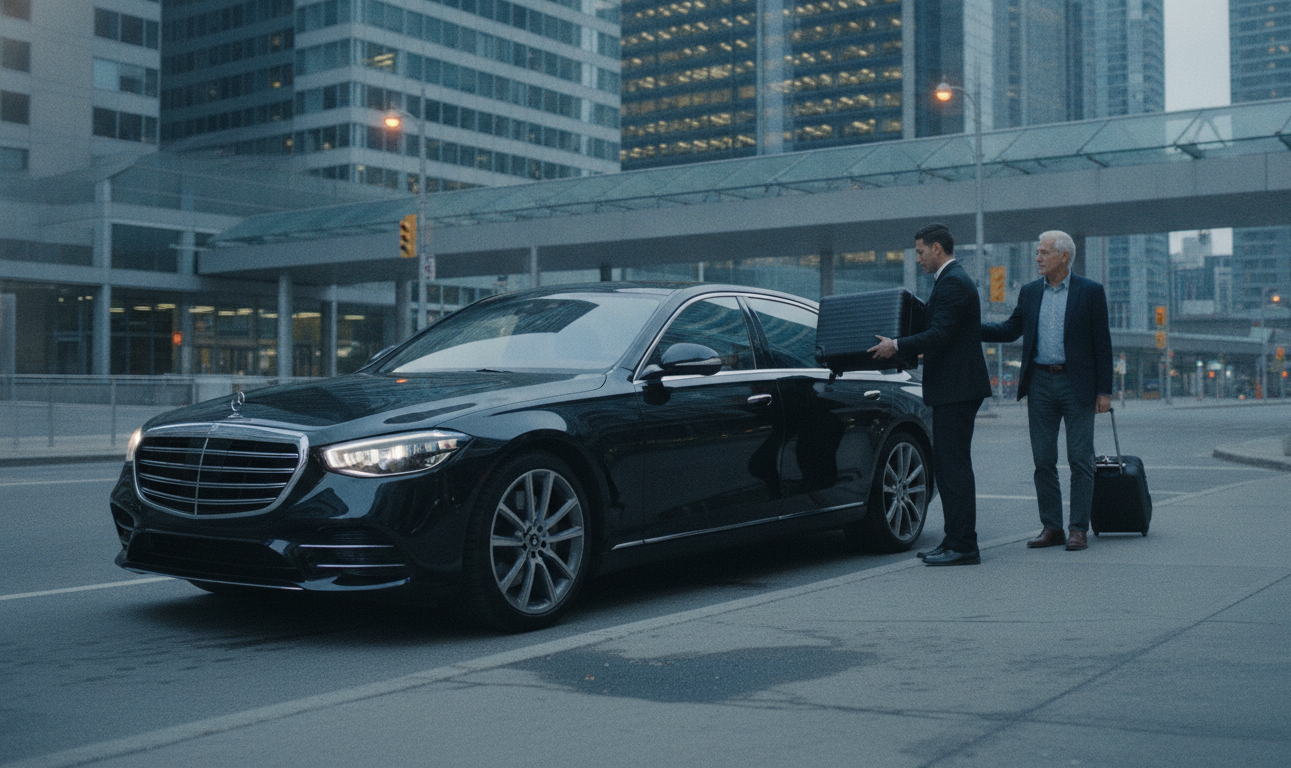
What to budget for the transfer
Start with these approximate one-way budgets, then book online using your pickup, travel date and passenger details. If the vehicle or itinerary is not offered online, contact us for that arrangement.
| Vehicle | Passenger capacity | From YYZ, one way | From downtown Toronto, one way |
|---|---|---|---|
| Sedan | 2 to 3 passengers | Approx. $270 | Approx. $250 to $375 |
| SUV | Up to 6 passengers | Approx. $450 | Approx. $425 to $625 |
| Cadillac Escalade | Up to 6 passengers | Approx. $560 | Approx. $550 to $775 |
| Sprinter | Up to 14 passengers | Approx. $950 | Approx. $925 to $1,300 |
All amounts are CAD, plus 13% HST and 15% to 20% gratuity. Luggage, stops, waiting, tolls and vehicle selection can affect the total. Passenger capacity does not override property occupancy or access limits.
The YYZ column uses our published Blue Mountain / Collingwood regional guide prices. Downtown Toronto ranges are estimates using Union Station as the reference pickup, not published flat fares. Allowance ranges are not a guarantee of the final price. See our current rates.
Google Maps puts the driving distance at approximately 140 km from YYZ and 165 km from Union Station to the destination. Distances depend on the route selected; some routes use toll roads. Enter the exact address for your booking.
The table covers one outward journey. Add the return when booking if you need both directions; these amounts do not include a driver staying with you or local trips during your visit.
For a group travelling from Toronto or Toronto Pearson Airport to The Dorchester Hotel in Collingwood, arrange an intercity transfer around the guest list, luggage and hotel-approved unloading point. Include the return to Toronto or YYZ in the same request. The trip needs an out-of-town, distance-based quotation, not a Toronto hourly rate stretched across a weekend. A larger vehicle is an option to assess, not proof that a coach can stop at the hotel entrance.
The Dorchester is a downtown boutique hotel, rather than a sprawling resort arrival complex. Its official website describes 26 guest rooms, a small meeting room and The Tremont Café within the property. Those details make it an appealing setting for a shared weekend or a compact team gathering. They also give the transport organiser a particular job: bring the right people to the right arrival point without treating the hotel frontage as a bus terminal.
This article covers a Toronto-based journey to the hotel and the journey home. It does not offer a destination-local shuttle circuit, and “guest shuttle” does not mean a scheduled hotel-operated service. Hotel rooms, restaurant bookings and transportation remain separate reservations. Chauffeuropolis is not presented here as an official hotel partner.
On this page
- Choose the journey before the vehicle
- Why this downtown hotel changes the arrival plan
- Build the passenger list around rooms and bags
- Leave Toronto from a workable meeting point
- Give Pearson arrivals their own plan
- Make the hotel handover specific
- Plan a retreat without confusing seats and meeting capacity
- Keep a leisure weekend from becoming a transport timetable
- Treat the return as a separate journey
- Prepare a useful quotation request
- Questions guests ask
Choose the journey before the vehicle
The useful comparison is not simply car versus bus. It is one departure versus several, ordinary weekend bags versus bulky equipment, and a shared arrival versus an arrival split by flight times. Pick the arrangement that fits those facts before choosing a vehicle class. Availability, the actual cabin layout and the hotel’s access instructions still need confirmation.
| Journey arrangement | When it is worth considering | Luggage and access checks | Quote basis |
|---|---|---|---|
| Private car or SUV | A small party sharing a Toronto pickup or one YYZ arrival | Confirm occupied seats and usable luggage space together; check the agreed hotel handover point | Out-of-town distance quotation for the actual one-way or return itinerary |
| Sprinter-type group vehicle | Guests ready to leave together with an agreed luggage count | Specify suitcases, cabin bags and unusual items; confirm the assigned vehicle can use the arrival point | Route, dates, vehicle configuration, stops and return arrangements |
| Mini bus | A larger party whose arrival and departure times align | Do not assume advertised seating leaves room for every suitcase; hotel access and unloading still require approval | Distance-based group itinerary with any waiting or additional movements stated separately |
| Separate arrival groups | Flights or Toronto departure times are too far apart for a sensible shared pickup | Maintain a passenger and luggage list for each vehicle rather than one combined total | Each movement quoted explicitly, with the return groups identified |
A full-size coach should not be the default for a boutique-hotel stay. If a larger party needs one, first establish an acceptable loading and unloading arrangement with the property and transport operator. Do not buy extra seats to solve a luggage problem without checking whether the larger vehicle can complete the intended handover.
There is a trade-off when splitting the party. Two departures may avoid a long airport wait, but they create two passenger lists and two arrival messages. One departure is simpler to communicate, but only if everyone can realistically meet it. Ask for alternatives when the choice is close. Compare the whole itinerary rather than dividing a headline price by a theoretical seat count.
Why this downtown hotel changes the arrival plan
The hotel’s official homepage places it in downtown Collingwood, close to shops, dining and the waterfront. It also describes the building’s history as The Dominion Hotel, opened in 1895. This is a stay centred on a town and a historic building, not an assumption that every guest will spend the weekend inside a resort campus.
That distinction affects what to book from Toronto. A party staying at The Dorchester may need only a coordinated outward transfer and a return pickup. If your group adds an activity elsewhere, decide whether that movement belongs in the original transport request or is being arranged separately. A hotel room reservation should not be read as including transport to another attraction.
The homepage identifies The Tremont Café within the hotel. That can make a dinner-led arrival attractive, but restaurant availability is a separate question. If dinner is the first commitment, leave room for unloading, checking in where available, and getting ready. Do not make a restaurant reservation the minute a navigation app predicts the vehicle will arrive.
One source detail deserves care before dispatch. The homepage’s history section names 172 Hurontario Street, while the supplied research records include 174 Hurontario Street. This article does not choose a loading address from that discrepancy. Have the property confirm the exact guest entrance and vehicle meeting point, then use the same instruction in the driver brief and guest message. A street number alone does not establish permission to stop.
For broader city transport choices, see the established Collingwood limo service page. The narrower question here is how one hotel group’s Toronto or Pearson journey should be organised.
Build the passenger list around rooms and bags
The Dorchester’s guest-room page lists several room types, including Classic King, Classic King Studio, Classic Queens and a One Bedroom Suite. Some descriptions include a kitchen or sofa bed, while others describe a different layout. Guests should book the room type they need directly with the hotel instead of assuming every room has the same facilities.
For transport, the important number is the number of people actually boarding. Room count is not passenger count. Two colleagues may book separate rooms but share a vehicle; a family may share one room and bring several bags. Someone who joins dinner but sleeps elsewhere may not be part of the Toronto return at all.
Make a simple list with each traveller’s outward pickup, return destination and luggage. Count children as passengers rather than as spare capacity. Discuss any required child restraint before vehicle assignment, including who will supply it and whether the proposed arrangement is suitable. Avoid asking a driver to resolve that question beside a loaded vehicle.
Ask about bags in plain language. “One suitcase and one small bag each” is more useful than “normal luggage.” A ski bag, stroller, folding mobility aid or presentation case changes the space needed. Keep essential medication, travel documents and items needed during the journey in an accessible personal bag, not under the rest of the group’s luggage.
There is no need to circulate room numbers or everyone’s personal details to the whole group. The organiser needs a boarding list; the hotel needs its own reservation information. Share only the information each party needs, and give guests one person to contact if their plans change. That keeps a room change from accidentally becoming an unreported transport change.
Leave Toronto from a workable meeting point
A single Toronto meeting point usually makes the departure easier to explain. Choose it for practical loading, not simply because it is familiar. An office lobby, hotel entrance or other agreed location needs space for passengers to assemble and a legal place for the assigned vehicle to stop. The operator should confirm the actual pickup instruction before it is sent to guests.
Multiple home pickups can be convenient for individuals but make the group departure depend on every earlier stop. If several Toronto addresses are essential, provide them before quoting and identify the pickup order in the final itinerary. Do not describe a trip as direct while also expecting unlisted collections across the city.
Work backwards from the first commitment in Collingwood. Start with the time guests must be ready, then allow for arrival tasks and a route estimate appropriate to the departure date. A weekend away with no fixed first appointment can accept a different schedule from a team meeting whose first speaker is on the same vehicle.
Separate the time guests should assemble from the intended departure time. People need a chance to find the vehicle, load bags and check that everyone is present. A departure message should not require the driver to search several entrances while the organiser is calling missing guests. Put one recognisable meeting point and one contact number in the final instructions.
If someone is late, the organiser should follow the agreed waiting and change arrangements rather than promising that the vehicle will wait indefinitely. A delay can affect the hotel arrival, dinner booking and driver schedule. Decide in advance who can authorise a change and how the rest of the party will be told.
Give Pearson arrivals their own plan
YYZ guests need a flight-based plan, not a Toronto street-pickup instruction copied into an airport message. Supply the travel date, airline, flight number, arrival terminal and the names of passengers on each flight. A scheduled landing time is not a promise that guests will be ready to board a vehicle at that moment.
Checked luggage, immigration where applicable and the walk to the agreed meeting point all come after landing. Get pickup instructions from the transport operator for the actual booking. Do not tell guests to wait at an invented door number, or assume that the same meeting arrangement applies to every terminal and vehicle class.
For several flights, ask a practical question: how long would the earliest arrival wait if the latest flight is on time? Then consider what happens if that flight is delayed. Guests travelling with children or arriving after a long journey may value an earlier departure more than sharing one vehicle with colleagues they will see at the hotel.
A shared flight does not guarantee a shared readiness time either. One traveller may be missing a bag while the others are ready. Agree who communicates with the operator, what waiting arrangements apply and when a split transfer would need a new quotation. Keep those decisions with the organiser instead of asking tired guests to negotiate them in a group chat.
When some guests start in Toronto and others at Pearson, compare separate departures with a combined route. Picking everyone up in one vehicle may sound tidy but can add detours and waiting. The right choice depends on the addresses and flight schedule; it should be quoted from those details, not inferred from a map of the region.
Make the hotel handover specific
A successful arrival ends when guests and luggage reach the agreed handover point, not when a vehicle enters Collingwood. Ask the property where the particular vehicle may unload, whether that point is appropriate for the group and how guests should reach the entrance from there. Confirm any walking distance with the hotel rather than labelling an unverified stop “door-to-door.”
The person confirming access should know the proposed vehicle class. Permission that works for a car should not be assumed to cover a mini bus. The operator also needs to assess the instruction for the assigned vehicle and current conditions. Hotel approval and a safe, legal stopping arrangement are related checks, not interchangeable ones.
For guests with limited mobility, describe the assistance needed before booking. Ask about the path from the agreed stop to the entrance, steps, luggage handling and the suitability of the vehicle. This article does not establish accessible-room availability, lift access or wheelchair-capable transport. Those requirements need individual confirmation rather than a broad reassurance that the hotel is convenient.
Separate unloading from parking. A vehicle may be able to set guests down without being able to remain there during check-in or a meeting. If the driver is expected to wait, include the duration and the proposed waiting arrangement in the booking discussion. An overnight hotel stay does not mean the vehicle and driver remain available throughout it.
Before departure from Toronto, give the driver and group lead the same hotel contact and arrival note. If the agreed point changes, update both. Guests should not receive one instruction from an old email while the driver receives another from a last-minute phone call.
Plan a retreat without confusing seats and meeting capacity
The hotel’s homepage describes The Dominion Room as a meeting space for up to 20 guests. That is the property’s published meeting description, not a transport allowance or a guarantee that every room layout suits every event. Discuss attendance, layout, equipment and any catering with the hotel before treating the meeting as confirmed.
A vehicle’s available seats answer a different question. Even if a vehicle can carry the entire party, that does not increase the meeting room’s permitted attendance. Likewise, the hotel’s 26 guest rooms do not establish how many people may attend a particular gathering or how many rooms are available on the chosen dates.
For a team leaving Toronto together, use the vehicle journey to preserve a clean start to the day rather than to squeeze in the first formal meeting. People may need to answer messages, rest or deal with motion discomfort. If the first session matters, schedule it after the arrival tasks and tell the facilitator when the group is expected to be ready.
Presenters carrying equipment should identify it with their luggage. Screens, demonstration materials and event supplies should not appear as an extra load after the vehicle has been selected. Ask the hotel which items are already provided and what still needs to travel. That avoids paying to transport something unnecessary or discovering that essential equipment has no safe storage position.
For the return, give the final session a real finish. A meeting that “ends around lunch” is not a useful departure instruction when some participants have flights. Set the guest-ready time, account for checkout and make clear whether anyone is leaving separately. The transport schedule should reflect the agreed programme, not quietly depend on it finishing early.
Keep a leisure weekend from becoming a transport timetable
The Dorchester’s guest-room page presents the hotel as a base for stays that can include downtown Collingwood and visits to Blue Mountain. That does not make an activity transfer part of a Toronto hotel journey. Decide what the group actually wants together: the outward ride, a shared dinner, an activity on another day or simply the return home.
For a leisure party, too much coordination can defeat the point of travelling together. If everyone arrives at the hotel on Friday but wants different Saturday plans, a fixed local circuit may not suit them. Book only the agreed intercity movements in this itinerary. Any additional travel should be discussed as a separate scope rather than treated as spare use of the same driver.
A ski-oriented stay deserves a luggage check before a vehicle check. Ask who is bringing equipment, who expects to rent it and whether bulky outerwear adds bags. Blue Mountain is a separate destination from the hotel’s downtown location. Do not assume accommodation at The Dorchester includes slope transport, equipment carriage or an activity booking.
For a birthday, anniversary or friends’ dinner, clarify the final Toronto return destinations. The group may arrive from one meeting point but want to finish at several addresses. That is a different return route, even when the passenger count is unchanged. Quote it before the weekend instead of leaving guests to ask for extra drop-offs once they are aboard.
Keep the guest note short enough to use. Include the date, assembly point, departure time, luggage allowance agreed for that vehicle and return details. Hotel and restaurant confirmations can remain separate. The useful document at boarding is the one that answers “where do I go now?” without making guests search through the whole weekend programme.
Treat the return as a separate journey
The return needs its own passenger list because not everyone who arrives together leaves together. A colleague may fly from Pearson, another may stay an extra night, and a couple may want a Toronto address different from the original pickup. Confirm those differences before selecting the return vehicle and route.
For a YYZ departure, start with the flight and the airline’s check-in and baggage deadlines. Agree a target airport arrival, then work backwards using the operator’s route assessment and a suitable allowance for road conditions. Do not use the hotel’s promotional Toronto travel-time description as a guaranteed airport transfer duration.
A mixed airport-and-city return requires a deliberate drop-off order. The earliest flight may determine the whole departure, and taking city-bound guests through Pearson may not be the most useful arrangement. Ask whether two movements make more sense. The comparison should include passenger convenience and flight constraints, not just the number of vehicles.
Before the vehicle arrives, guests should finish checkout and have luggage ready at the agreed assembly point. Ask the hotel about luggage storage if departure is later than checkout; do not assume it is available or included. The hotel pickup instruction should be reconfirmed for the return rather than copied from an outward drop-off that may have used a different arrangement.
Weather and traffic can affect both directions. Discuss any date-specific concerns with the operator when setting the schedule, then use updated instructions close to travel. Avoid a timetable with no margin between hotel departure and the airport’s required arrival. A short delay should not immediately become a missed-flight problem.
Prepare a useful quotation request
Request an out-of-town, distance-based quotation with both directions described. No current fare is quoted here because the actual route, vehicle, luggage and service arrangements have not been confirmed. Toronto hourly figures are not a substitute for a quotation to this Collingwood hotel.
Send the travel dates, Toronto pickup addresses or YYZ flight details, passenger count, bag count and any special equipment. Add the intended hotel arrival window, the confirmed unloading instruction if available, and each return destination. If the property has not yet approved the vehicle access arrangement, say so instead of treating it as settled.
Ask what the written quotation includes and what could change it. Waiting, additional stops, itinerary revisions, taxes, gratuity and any driver arrangements should be clear where applicable. Do not assume that a return booking means continuous vehicle availability during the stay. Two transfers and a vehicle retained for the weekend are different requests.
You can request a quotation or book your transfer online once these details are ready. Keep the hotel reservation reference available for your own coordination, but do not include payment-card information or unnecessary personal data in a general travel brief. A usable quotation starts with the journey, not a collection of sensitive documents.
Questions guests ask
Is this the Dorchester in Collingwood?
Yes. This article concerns The Dorchester Hotel in downtown Collingwood, Ontario, not another property with the Dorchester name. Use the hotel’s official website and confirm its guest entrance before issuing the final pickup or arrival instruction.
Does guest shuttle mean the hotel runs the vehicle?
No. Here it means a separately arranged group journey from Toronto or YYZ to the hotel and back. No hotel-operated timetable, hotel affiliation or included transfer is established by this article.
Can a coach unload outside the hotel?
Coach access is not verified. Ask the property and transport operator to confirm a suitable unloading point for the actual vehicle before booking it. A hotel street address is not evidence of coach stopping or parking permission.
Can guests from different flights share the journey?
They can be considered for a shared departure if the flight schedule and agreed waiting arrangements make it practical. Supply each flight and terminal, compare the likely waiting time, and request separate movements when the arrival groups are too far apart.
Does the meeting room capacity determine the vehicle size?
No. The hotel currently describes The Dominion Room as accommodating up to 20 meeting guests, but the event arrangement must be confirmed with the property. Vehicle choice depends separately on the travelling party, luggage and access; extra vehicle seats do not increase venue occupancy.
Should we reserve the return when booking the outward trip?
Include the return in the initial quotation request when the plan is known. Give its date, guest-ready time, passenger list and Toronto or YYZ destinations. Any later change should be accepted in an updated itinerary rather than assumed to fit the original booking.
Are Blue Mountain trips included in the hotel transfer?
No activity transfer is included merely because the hotel is near Blue Mountain. This article covers Toronto or Pearson to The Dorchester and the return journey. Discuss other movements separately and confirm who is arranging them.
How is the journey priced?
Request an out-of-town, distance-based quotation for the agreed itinerary. Passenger and luggage requirements, vehicle choice, stops, waiting and return arrangements need to be stated. No fixed route price or hourly package is promised here.