
Professional Transportation Solutions
Complete Private Transportation Services for Toronto’s Business Community
Chauffeuropolis operates Toronto’s most comprehensive corporate transportation service, specializing in executive sedan deployment from $83/hour, Mercedes Sprinter group shuttles accommodating 7-14 passengers from $150/hour, and dedicated executive car services across Toronto’s Financial District, North York corporate centers, Mississauga technology corridors, and throughout the Greater Toronto Area including Hamilton, Burlington, Oakville, Markham, and Vaughan. Our private transportation company maintains a professional fleet spanning executive sedans (Lexus ES, Cadillac XTS), luxury SUVs (Navigator, Yukon), premium Escalades, 7-passenger VIP Sprinters at $195/hour, and 14-passenger executive Sprinters, with transparent hourly rates, corporate account billing, and 24/7 availability for Toronto’s professional community.
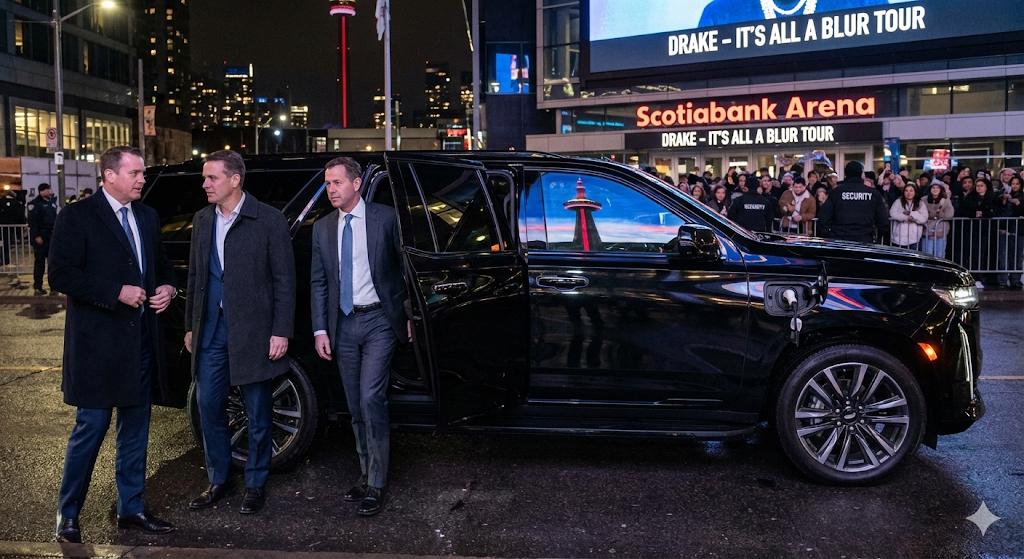
The distinction between professional private transportation and consumer ride-sharing becomes immediately apparent in corporate scenarios requiring multi-stop coordination, executive presence, and reliability that cannot accommodate surge pricing or driver availability uncertainty. When Bay Street law firms coordinate client transportation between courts and offices, when financial institutions manage visiting delegation logistics, when technology companies transport interview candidates through precise schedules—these scenarios demand the professional execution, vehicle consistency, and accountability infrastructure that defines legitimate private transportation operations.
Our approach centers on three core service categories: individual executive transportation for senior professionals requiring dedicated chauffeur services, corporate account management for organizations with recurring transportation requirements, and group shuttle coordination for teams, events, and collective travel scenarios. Each category deploys specific vehicle platforms, pricing structures, and operational protocols designed for that use case’s particular requirements.

Executive Transportation Fleet
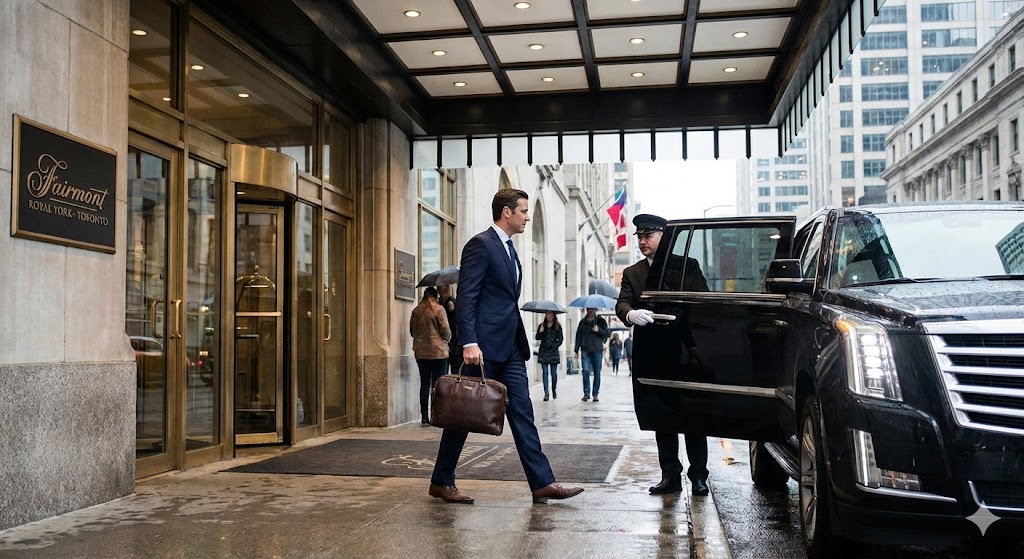
Individual Executive Services

Enterprise Solutions
Corporate Transportation Account Management
Organizations with recurring transportation requirements—law firms managing client coordination, financial institutions facilitating visiting executive logistics, technology companies coordinating candidate interview circuits, consulting practices deploying teams across the Greater Toronto Area—benefit significantly from dedicated corporate account structures that eliminate booking friction while providing centralized billing, usage reporting, and volume-based preferential rates.
The corporate account framework functions as your organization’s private transportation department without the overhead of maintaining vehicles, employing drivers, or managing logistics infrastructure. Your designated administrators receive direct booking access, real-time vehicle tracking, automatic receipt distribution, and consolidated monthly billing that integrates seamlessly with corporate expense management systems. For Bay Street legal practices coordinating between courthouses and offices, this means partners can dispatch vehicles for client transport without administrative involvement—the system handles driver assignment, route optimization, and billing automatically.
Volume-based pricing tiers activate automatically as your organization’s monthly usage increases. A law firm utilizing 40 hours monthly of executive sedan service receives different rate structures than organizations booking occasional transportation, while enterprises coordinating daily executive commutes or regular corporate shuttle operations access the most favorable pricing tiers. The billing transparency eliminates surprise charges—your monthly statement details every trip with precise timestamps, vehicle specifications, driver identification, and itemized costs.
Beyond individual executive transportation, corporate accounts coordinate complex multi-vehicle deployments for conference shuttle logistics, corporate retreat transportation to Muskoka and Niagara venues, corporate holiday party coordination, and team-building event logistics. A single account manages everything from daily executive commutes to annual company gatherings requiring 6-vehicle Sprinter deployments.

Group Transportation Solutions
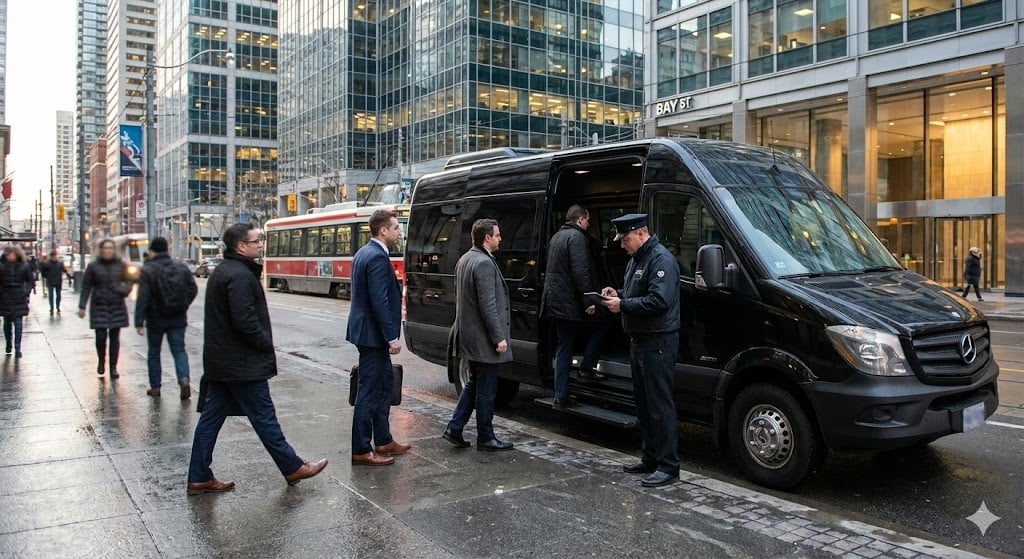
Mercedes Sprinter Executive Platforms



Strategic Applications
When Organizations Deploy Group Transportation
Mercedes Sprinter platforms solve specific organizational challenges that individual vehicle deployment cannot address efficiently. Consider a Toronto consulting firm hosting 12 visiting executives from New York—coordinating six separate sedans means six different pickup times, six different routes, six separate billing transactions, and six points of potential failure. A single 14-passenger executive Sprinter consolidates this complexity into one vehicle, one driver, one coordinated schedule, and one transparent charge of $175/hour with a 5-hour minimum ($875 total).
The economics become particularly compelling for recurring scenarios. A financial institution conducting weekly team meetings at their Oakville training facility from downtown Toronto offices—that’s 45km each direction with 10-14 employees. Individual vehicles would cost $1,200-1,600 weekly (multiple sedans and SUVs at hourly rates), while a single Sprinter deployment handles the entire team for $875 (5-hour booking) with the added benefit of the mobile meeting environment facilitated by conference table configurations.
Corporate retreat logistics represent another high-value Sprinter application. When Bay Street law firms coordinate partner retreats at Langdon Hall in Cambridge or leadership offsites in Niagara-on-the-Lake, the transportation component becomes critical success infrastructure. Teams departing together maintain schedule integrity, the mobile environment enables pre-meeting preparation during transit, and the unified arrival creates appropriate professional presence rather than staggered individual vehicle appearances.
Event coordination scenarios—corporate holiday parties, conference shuttle operations, team-building activities—deploy Sprinter platforms for the same consolidation benefits plus the alcohol consumption consideration that makes individual vehicle coordination problematic. A technology company hosting 50 employees at a Burlington waterfront venue typically deploys 3-4 Sprinters in coordinated rotation, ensuring safe transport while maintaining professional standards that reflect organizational values.
Premium Tier Vehicles
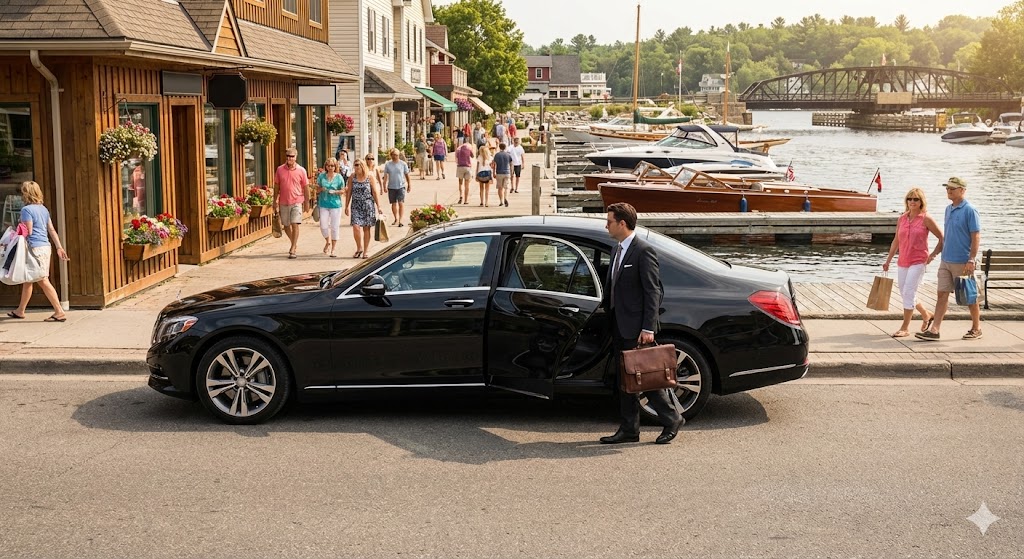
Elevated Executive Platforms
Financial Clarity
How Private Transportation Pricing Actually Functions
Transportation pricing transparency eliminates the primary friction point that prevents organizations from implementing professional car service solutions. The hourly rate structure provides absolute predictability—when you book a Lexus ES sedan at $83/hour with a 4-hour minimum, your cost is precisely $332 before HST and gratuity, regardless of whether you make 3 stops or 12 stops, whether you spend 15 minutes at each location or 45 minutes, whether traffic adds 30 minutes to your return journey—the rate remains fixed at the hourly booking.
This predictability extends across all vehicle categories and time commitments. An executive SUV at $135/hour with a 4-hour minimum costs $540, a 14-passenger executive Sprinter at $175/hour with a 5-hour minimum costs $875, and a Cadillac Escalade at $175/hour with a 5-hour minimum likewise costs $875. The minimum hour requirements reflect operational realities—vehicle deployment, driver scheduling, route optimization—while ensuring cost-effectiveness for both parties.
Beyond the base hourly rate, two additional components appear on every invoice: HST at 13% (federal sales tax applicable to all Canadian commercial transportation) and gratuity typically ranging from 15-20% for exceptional service. A $540 executive SUV booking becomes $610.20 with HST, then $701.73-732.24 with gratuity. These calculations remain consistent across all bookings—no surge pricing during peak demand periods, no weather-based rate adjustments, no last-minute fees for evening or weekend deployments. The rate you receive when booking is the rate you pay, period.
For point-to-point scenarios not requiring hourly flexibility—straightforward airport transfers to Toronto Pearson, simple hotel-to-office routes, direct venue transportation—flat-rate pricing provides even greater cost certainty. A sedan from downtown Toronto to Pearson YYZ costs a fixed $95, an SUV to the same destination costs $130, regardless of traffic conditions or time of day. This eliminates the calculation uncertainty of meter-based services or surge-pricing platforms where the same route might cost $60 one day and $180 the next depending on demand algorithms.

Service Selection Guide
Matching Transportation to Your Requirements
| SCENARIO | RECOMMENDED VEHICLE | RATE STRUCTURE |
|---|---|---|
| Senior partner client meeting circuit (3-4 stops, 6 hours) | Executive Sedan (Lexus ES) | $83/hour × 6 hours = $498 + HST/gratuity |
| Executive team to Langdon Hall retreat (12 people, full day) | Executive Sprinter (14-pax) | $175/hour × 10 hours = $1,750 + HST/gratuity |
| CEO private airport transfer (Pearson YYZ one-way) | Executive SUV or Escalade | Flat rate $130-160 + HST/gratuity |
| VIP visiting delegation (6 executives, 8-hour business day) | VIP Sprinter (7-pax jet seating) | $195/hour × 8 hours = $1,560 + HST/gratuity |
| Corporate holiday party (80 employees, 4 hours) | 6 × Standard Sprinter (14-pax each) | $150/hour × 6 vehicles × 4 hours = $3,600 + HST/gratuity |
| Weekly team meeting Hamilton to Toronto (10 people, 5 hours) | Standard Sprinter recurring | $150/hour × 5 hours = $750/week + HST/gratuity |
| Large conference (200 attendees, full-day shuttle rotation) | 5 × Charter Buses (40-pax) | $2,100/day × 5 buses = $10,500 + HST/gratuity |
Coverage Territory
Comprehensive Greater Toronto Area Operations
Our private transportation company maintains operational coverage across the complete Greater Toronto Area, Hamilton Burlington Oakville corridor, and extended Southern Ontario business regions. Downtown Toronto’s Financial District—King Street West, Bay Street, University Avenue—represents our highest-density service area with dedicated vehicles positioned for rapid deployment to law firms at Osgoode Hall, financial institutions in the TD Centre complex, consulting practices throughout the banking core, and technology companies occupying converted warehouse districts.
North York’s corporate centers along Yonge Street and Highway 401 corridor receive equivalent service density, particularly for organizations in the Markham Road technology hub, Vaughan corporate parks, and Richmond Hill professional districts. Mississauga operations focus on the Airport Corporate Centre, Square One business district, and Meadowvale technology corridor—areas generating significant executive transportation demand due to proximity to Toronto Pearson International Airport and concentrated corporate presence.
Hamilton Burlington Oakville regions represent significant corporate transportation markets often underserved by Toronto-centric providers. Hamilton’s downtown core and industrial sectors generate recurring executive shuttle requirements between manufacturing facilities and corporate headquarters. Burlington’s lakefront corporate campus developments coordinate frequent Toronto connections. Oakville’s corporate offices along the QEW corridor deploy professional transportation for executive teams commuting from Toronto residences.
Extended service areas include Kitchener-Waterloo technology corridor for corporate shuttle coordination, Cambridge manufacturing districts particularly for Langdon Hall retreat logistics, Niagara region for corporate entertainment and wine tour deployments, and Muskoka resort corridor for executive retreats and leadership offsite coordination.
Common Questions
Frequently Asked Questions
What vehicles are included in Toronto private transportation services?
Chauffeuropolis operates executive sedans (Lexus ES, Cadillac XTS) at $83/hour with 4-hour minimums accommodating 2 passengers, executive SUVs (Navigator, Yukon) at $135/hour for 5 passengers, Cadillac Escalades at $175/hour for premium positioning, VIP Sprinters with 7-passenger jet seating at $195/hour, 14-passenger executive Sprinters with conference tables at $175/hour, standard 14-passenger Sprinters at $150/hour for cost-effective group transport, Mercedes S-Class sedans at $250/hour for ultimate executive presence (hourly bookings only, never airport transfers), Sprinter limo party vans at $215/hour with entertainment systems for 14 passengers, and charter buses accommodating 28-40 passengers at $2,100/day for large group coordination across the Greater Toronto Area. All rates require minimum booking hours and exclude HST (13%) and gratuity (15-20%).
How much does corporate transportation cost in Toronto?
Toronto corporate transportation pricing follows transparent hourly structures: executive sedans cost $83/hour with a 4-hour minimum ($332 base), executive SUVs cost $135/hour with a 4-hour minimum ($540 base), Cadillac Escalades cost $175/hour with a 4-5 hour minimum ($700-$875 base), and Mercedes Sprinter vans range from $150-195/hour depending on configuration with 5-hour minimums ($750-$975 base). For example, a typical Bay Street law firm booking 6 hours of executive sedan service for client coordination pays $498 before HST and gratuity, totaling approximately $600-640 all-inclusive. Corporate account structures provide volume-based preferential rates for organizations booking recurring transportation, with monthly billing consolidation and automated receipt distribution. Point-to-point airport transfers use flat rates: $95 sedan to Pearson YYZ, $130 SUV to Pearson, eliminating hourly calculation for straightforward one-way routes.
When should companies use Sprinter vans versus individual sedans?
Deploy 14-passenger executive Sprinters at $175/hour when transporting 6+ executives together, coordinating corporate retreat logistics to venues like Langdon Hall or Niagara-on-the-Lake, facilitating team meetings requiring mobile conference environments, managing multi-stop coordination where unified arrival creates professional presence, or handling scenarios where alcohol consumption makes individual vehicle deployment inappropriate. Use individual executive sedans at $83/hour when senior professionals require dedicated chauffeur services for client meeting circuits, privacy considerations prevent group travel, schedule flexibility demands separate vehicles for different executives, or individual positioning requirements justify the per-person allocation. The economic crossover typically occurs at 4-5 passengers—below this threshold, multiple sedans often provide equivalent or better value while offering schedule independence; above this threshold, Sprinter consolidation delivers significant cost advantages plus operational simplification. A consulting firm deploying 10 executives to an Oakville training facility pays $1,350 for three sedans (assuming 5 hours each at $270) versus $875 for a single Sprinter ($175 × 5 hours), representing 35% cost reduction while eliminating coordination complexity.
What is included in Toronto corporate account services?
Corporate transportation accounts provide designated administrator access for booking management, real-time vehicle tracking and driver communication, automatic receipt distribution to relevant cost centers, consolidated monthly billing with detailed trip itemization (timestamps, vehicle specifications, driver identification, route details), volume-based preferential rate structures that activate automatically as usage increases, dedicated account representative for complex logistics coordination, priority vehicle allocation during peak demand periods, streamlined invoice reconciliation compatible with corporate expense management systems, and ability to coordinate multi-vehicle deployments for conferences, retreats, and corporate events through single centralized interface. Bay Street law firms typically configure accounts allowing partners to dispatch vehicles for client transportation without administrative involvement—the system handles driver assignment, route optimization, client notification, and billing automatically. Technology companies use corporate accounts to manage recurring interview candidate circuits, visiting executive coordination, and team shuttle operations to satellite offices, with monthly statements providing complete transportation audit trails for financial reporting and cost allocation across departments or projects.
How far in advance should Toronto private transportation be booked?
Standard executive transportation bookings (sedans, SUVs for business meetings, airport transfers during normal business hours) require 24-hour advance notice for guaranteed availability, with 48-72 hour booking recommended during peak corporate demand periods including Monday morning Financial District deployments, Friday afternoon executive commutes, quarterly earnings season when Bay Street activity intensifies, and major conference dates at venues like Metro Toronto Convention Centre or International Centre Mississauga. Large group coordination (Sprinter vans, charter buses for corporate events, multi-vehicle retreat logistics) requires 5-7 days minimum advance booking to ensure fleet availability and driver scheduling, with 2-3 weeks recommended for complex deployments involving 20+ passengers or multi-day coordination. Same-day executive transportation remains available based on real-time fleet positioning, though carries $50 rush coordination fee and cannot guarantee specific vehicle preference. Corporate account holders receive priority allocation during constrained availability periods, while recurring weekly or monthly bookings (executive commutes, regular team meetings, standing airport transfer schedules) can be established as permanent calendar commitments requiring no per-trip booking confirmation.
What Toronto neighborhoods does the private transportation company serve?
Complete coverage spans downtown Toronto’s Financial District (King Street West, Bay Street, University Avenue), Yorkville luxury residential and hotel district, Rosedale executive neighborhoods, Forest Hill professional communities, North York corporate centers along Yonge Street corridor, Mississauga’s Airport Corporate Centre and Square One business district, Oakville’s lakefront corporate campuses along QEW corridor, Burlington’s downtown core and waterfront development zones, Hamilton’s urban business district and industrial sectors, Markham technology hub along Highway 404 corridor, Vaughan corporate parks in the Highway 400-407 interchange area, Richmond Hill professional districts, Brampton’s commercial centers, Scarborough corporate developments, Etobicoke’s business parks and executive residential areas, Cambridge manufacturing districts particularly for Langdon Hall coordination, Kitchener-Waterloo technology corridor, Niagara Falls tourism and conference infrastructure, Niagara-on-the-Lake wine country and luxury venue coordination, St. Catharines business districts, and Muskoka resort corridor for executive retreat logistics to properties like JW Marriott Rosseau, Deerhurst Resort, and Taboo Muskoka.
Are hourly minimums required for all Toronto private transportation bookings?
Executive sedans and SUVs require 4-hour minimums ($332 sedan base, $540 SUV base) for hourly bookings, reflecting operational deployment costs and ensuring cost-effectiveness for professional chauffeur services involving vehicle positioning, driver scheduling, and route coordination. Mercedes Sprinter platforms require 5-hour minimums ($750-$975 depending on configuration) due to larger vehicle operational complexity and typical use cases involving extended corporate events, retreat transportation, or full-day group coordination. Point-to-point airport transfers bypass hourly structures entirely, using flat-rate pricing ($95 sedan to Pearson YYZ, $130 SUV to Pearson) that eliminates minimum hour requirements for straightforward one-way routes where flexibility isn’t needed. The hourly minimum framework prevents uneconomical 1-2 hour bookings that would create inefficient vehicle utilization—organizations requiring brief transportation commitments typically benefit more from fixed-route transfers rather than hourly chauffeur availability. For genuinely short-duration scenarios (90-minute client pickup requiring vehicle standby, 2-hour executive appearance at single venue), consultation with account coordinators can sometimes accommodate abbreviated bookings at adjusted per-hour rates, though this remains exception rather than standard practice.
What makes professional private transportation different from consumer ride services?
Professional private transportation provides pre-booked dedicated vehicles with confirmed drivers, guaranteed vehicle class specifications eliminating the random-condition uncertainty of consumer platforms, transparent fixed pricing without surge algorithms or demand-based rate fluctuations, multi-stop flexibility included in hourly rates versus per-segment charges, professional chauffeur training emphasizing discretion and corporate protocol, commercial liability insurance coverage substantially exceeding consumer ride-sharing minimums, corporate account billing infrastructure with centralized invoicing and detailed reporting, real-time coordination capabilities for complex logistics scenarios involving multiple vehicles or tight timing windows, and accountability frameworks where organizations interface with professional transportation companies rather than independent contractor networks. When Bay Street law firms coordinate sensitive client transportation, the differential becomes material—professional services guarantee the vehicle type requested, provide driver background verification and commercial licensing, maintain consistent quality standards across all deployments, and offer recourse mechanisms if service expectations aren’t met. Consumer platforms optimize for low-cost single-destination efficiency; professional private transportation optimizes for reliability, consistency, and the organizational requirements that define corporate use cases including executive presence, schedule flexibility, and operational predictability.
Can Toronto private transportation handle last-minute corporate emergencies?
Same-day emergency transportation remains available based on real-time fleet positioning and driver availability, accommodating scenarios like unexpected client arrivals requiring immediate airport pickup, sudden executive travel needs for crisis management situations, last-minute meeting additions to existing schedules, or urgent document courier requirements between offices and courthouses. Emergency bookings carry $50 rush coordination fee reflecting the operational complexity of rerouting vehicles from scheduled deployments or activating backup drivers on short notice. Availability fluctuates significantly based on time of day and current demand—morning Financial District peak (7-9am Monday-Friday) and evening executive departure windows (4-7pm) represent constrained periods where emergency accommodation may require premium vehicles (Escalade versus standard sedan) or longer wait times (45-60 minutes versus typical 15-20 minute deployment). Corporate account holders receive priority queue positioning for emergency requests, while organizations with recurring transportation relationships benefit from familiarity—our dispatch already knows your typical pickup locations, preferred routes, billing protocols, and executive preferences, accelerating emergency coordination versus new customer onboarding during crisis scenarios. For truly time-critical situations (client arriving Pearson YYZ in 90 minutes, partner needed at courthouse in 45 minutes), call direct coordination line rather than online booking to enable real-time logistics problem-solving.
How does billing work for recurring corporate transportation in Toronto?
Recurring corporate transportation—weekly executive commutes, regular team shuttles between Toronto and satellite offices, standing airport transfer schedules for visiting executives, monthly partner meeting circuits—configures as permanent calendar commitments requiring no per-trip booking confirmation once established. Organizations receive consolidated monthly invoices detailing every trip with precise timestamps showing pickup and dropoff times, vehicle specifications identifying exact sedan/SUV/Sprinter deployed, driver identification for accountability tracking, route details documenting stops and mileage, itemized costs breaking down base rates plus HST plus gratuity, and cost center allocation codes if your organization requires departmental expense tracking. The monthly statement format integrates seamlessly with corporate expense management systems including SAP Concur, Expensify, and custom enterprise resource planning platforms, with electronic invoice delivery supporting automated accounts payable workflows. Volume-based preferential rates activate automatically as monthly usage increases—a law firm utilizing 40 hours monthly of executive sedan service receives different rate structures than organizations booking occasional transportation, with tiered pricing adjustments occurring transparently without requiring negotiation or contract amendments. Payment terms typically follow net-30 commercial standard, though organizations preferring automated credit card billing can configure monthly recurring charges eliminating invoice processing entirely.
What capacity limitations apply to different Toronto private transportation vehicles?
Executive sedans (Lexus ES, Cadillac XTS) accommodate 2 passengers maximum with 3 standard suitcases or 2 suitcases plus 2 carry-ons, making them appropriate for individual executive transport or couples but insufficient for families or small teams. Executive SUVs (Navigator, Yukon) handle 5 passengers with 5-6 large suitcases, suitable for executive teams of 3-4 professionals or families requiring luggage space for extended trips. Cadillac Escalades provide identical 5-passenger capacity with premium positioning rather than capacity advantage. VIP Sprinters with jet seating accommodate 7 passengers maximum with strict 3-luggage limitation due to luxury configuration prioritizing comfort over storage—this platform suits small executive teams traveling light or premium wine tour groups where luggage isn’t factor. Standard 14-passenger Sprinters handle full teams with moderate luggage (10-12 bags), while executive Sprinters with conference table configurations sacrifice some luggage capacity for mobile meeting environment. Charter buses (28-40 passengers) provide undercarriage storage for substantial luggage volumes, appropriate for conference transportation or large group coordination where everyone needs overnight bags. Organizations must accurately communicate passenger counts and luggage requirements during booking—deploying sedan for 4-person team creates operational failure, while over-specifying Sprinter for 3 executives wastes budget on unnecessary capacity. Corporate account coordinators help match vehicle specifications to actual requirements rather than defaulting to largest available platform.
Does Toronto private transportation serve airports outside the GTA?
Complete coverage includes Toronto Pearson International Airport (YYZ) as primary hub with flat-rate sedan transfers at $95 and SUV transfers at $130 from downtown Toronto, Billy Bishop Toronto City Airport with dedicated island ferry coordination and downtown proximity rates, Hamilton International Airport serving the Hamilton-Burlington corridor with regional pricing structures, and Buffalo Niagara International Airport (BUF) in Western New York accommodating cross-border executive travel with customs documentation support and enhanced wait-time protocols. Extended airport service reaches London International Airport for southwestern Ontario corporate connections, Ottawa Macdonald-Cartier International Airport for government and consulting sector travel between Ontario’s capital cities, and Montreal-Pierre Elliott Trudeau International Airport for intercity executive coordination between Toronto and Montreal business centers. Cross-border and extended-distance airport transfers utilize point-to-point distance-based pricing rather than hourly structures—for example, Toronto to Buffalo Niagara Airport costs approximately $350-450 for executive SUV one-way, while Toronto to Ottawa airport approaches $850-950 for sedan service reflecting the 450km distance. These routes benefit from flat-rate predictability versus hourly booking that would require 6-8 hour minimums creating cost inefficiency. Organizations coordinating regular executive travel to secondary airports (weekly Hamilton flights, monthly Buffalo crossings for US connections) establish recurring flat-rate agreements through corporate account structures.
How do you coordinate multi-vehicle deployments for Toronto corporate events?
Large-scale corporate event transportation—holiday parties with 80-150 employees, conference shuttle operations for 200+ attendees, corporate retreat coordination for executive teams departing from multiple Toronto locations—deploys dedicated event coordinator working directly with your planning team to map pickup locations across Greater Toronto Area, establish synchronized departure windows ensuring unified venue arrival, assign specific vehicles to designated employee groups (executive leadership in Escalades, general attendance in Sprinter vans), coordinate real-time communication between drivers during execution, and manage contingency protocols for traffic delays or attendance variations. A typical corporate holiday party scenario: technology company with 120 employees hosting event at Burlington waterfront venue deploys 4 standard Sprinters in coordinated rotation—Sprinter 1 and 2 depart downtown Toronto offices at 6:00pm collecting 28 employees, Sprinter 3 departs North York campus at 6:15pm with 14 attendees, Sprinter 4 handles Mississauga contingent at 6:20pm, with all vehicles coordinating 7:00pm venue arrival enabling simultaneous team entry rather than staggered individual appearances. Return logistics deploy same vehicles on rotating schedule throughout event conclusion (10pm-midnight) ensuring no employee waits more than 20 minutes for departure. Pricing for this deployment: $150/hour × 4 Sprinters × 6 hours = $3,600 base plus HST and gratuity, substantially more cost-effective than individual vehicle coordination while providing professional execution reflecting organizational standards.
What Toronto corporate venues require specialized transportation coordination?
High-complexity venues requiring enhanced coordination include Langdon Hall Country House Hotel & Spa in Cambridge where narrow country lane access and limited parking necessitate coordinated Sprinter deployments rather than multiple individual vehicles, Niagara-on-the-Lake wine country venues like Peller Estates and Trius Winery where alcohol consumption makes professional return transportation mandatory and rural locations preclude consumer ride-sharing availability, Muskoka resort properties (JW Marriott Rosseau, Deerhurst Resort, Taboo Muskoka) where 140km distance from Toronto plus resort campus navigation requires experienced drivers and full-day booking commitments, Metro Toronto Convention Centre and International Centre Mississauga during major conferences where coordinating 200+ attendee shuttle operations demands precise timing and dedicated staging areas, corporate campuses in Markham and Vaughan technology corridor where security protocols require pre-registered vehicles and driver credentialing, Roy Thomson Hall and Four Seasons Centre for performing arts events where concentrated arrival/departure windows create congestion requiring professional drop-off choreography, and private golf clubs (Oakville Golf Club, King Valley Golf Club, Eagles Nest Golf Club) where member expectations demand discrete professional presence rather than consumer transportation platforms. Organizations hosting events at these venues benefit significantly from transportation providers with venue-specific operational experience—our drivers know Langdon Hall’s service entrance protocols, understand Muskoka resort campus layouts, maintain credentialing for secured corporate campuses, and execute downtown Toronto performing arts venue logistics efficiently during high-volume event periods.
Can Toronto corporate transportation accommodate accessibility requirements?
Wheelchair-accessible vehicle availability requires advance coordination (48-72 hours minimum) to ensure appropriate van deployment with ramp or lift capabilities, securing mobility devices safely, and assigning drivers trained in accessibility protocols. Standard executive sedans and SUVs cannot accommodate wheelchairs but serve passengers with moderate mobility limitations who can transfer from wheelchair to vehicle seat with driver assistance. Organizations should communicate specific accessibility requirements during booking—wheelchair dimensions and weight for securing protocols, whether passenger can transfer independently or requires physical assistance, any medical equipment requiring transport (oxygen tanks, specialized seating), sensory accommodations (service animals, quiet environment preferences), and communication needs (hearing assistance, visual impairment considerations). Corporate events involving employees with diverse accessibility requirements benefit from mixed fleet deployment—accessible vans for wheelchair users, executive SUVs with running board assist for seniors or individuals with limited mobility, standard vehicles for general attendance—ensuring all participants receive appropriate transportation matching their specific needs. The advance notice requirement reflects operational reality: accessible vehicle fleet represents smaller percentage of overall capacity, specialized equipment certification requires verification, and driver training in accessibility protocols necessitates specific personnel assignment rather than general dispatch rotation. Organizations with recurring accessibility requirements establish these specifications in corporate account profiles enabling automatic deployment without per-trip recommunication.
What payment methods does Toronto corporate transportation accept?
Corporate accounts configure automated monthly billing to organizational credit cards (Visa, Mastercard, American Express) eliminating per-trip payment friction, with consolidated invoicing providing detailed expense documentation for corporate accounting systems. Individual executive bookings accept all major credit cards with immediate charge processing and electronic receipt delivery. Purchase order systems accommodate government agencies and large enterprises requiring formal procurement workflows, with net-30 payment terms following invoice delivery and detailed vendor documentation supporting accounts payable integration. Wire transfer and EFT (Electronic Funds Transfer) options serve international organizations or specific corporate banking requirements. Cash payment remains available though uncommon in corporate transportation contexts due to receipt documentation preferences and expense reporting requirements—professional organizations typically require credit card or purchase order trails for financial audit compliance. For high-value bookings (multi-day retreats, large conference shuttle operations exceeding $5,000), deposit structures often apply with 50% advance payment securing vehicle commitment and balance due upon service completion. Corporate account holders bypass deposit requirements through established credit relationships, while new organizational customers may require deposit for first booking before transitioning to standard net-30 commercial terms once payment reliability demonstrates. Gratuity can be pre-authorized on credit cards or added manually post-service, with 15% standard and 18-20% for exceptional execution.
How does weather impact Toronto private transportation reliability?
Professional private transportation maintains operational continuity during Toronto’s winter conditions through all-season tire deployment on entire fleet, enhanced advance departure buffers during active snowfall or ice conditions, real-time traffic monitoring adjusting routes around weather-related delays, driver training in winter driving protocols, and proactive client communication when weather necessitates schedule modifications. Unlike consumer platforms where individual drivers make availability decisions creating service gaps during challenging conditions, professional transportation companies maintain commercial operational commitments—your 6:00am airport departure proceeds regardless of overnight snowfall, though departure time might advance to 5:30am providing buffer for reduced highway speeds. The key differential involves predictability: organizations receive advance notice if weather requires schedule adjustment (“we recommend 5:30am departure rather than 6:00am due to forecasted snow accumulation”) versus discovering transportation unavailability at pickup time. Extreme weather scenarios (blizzard conditions closing highways, ice storms creating hazardous driving conditions) may necessitate service postponement, but professional transportation companies communicate proactively rather than leaving clients stranded. Corporate account holders receive priority communication during weather events, with dedicated coordinators managing schedule adjustments across multiple bookings simultaneously—particularly valuable for organizations with 10+ employees requiring coordinated conference transportation where weather affects everyone identically. Summer construction season and major event traffic (Blue Jays playoffs, Raptors championship parades, Santa Claus Parade) receive similar proactive coordination with advance departure time recommendations ensuring schedule reliability despite predictable congestion.
Can Toronto corporate transportation provide driver services outside business hours?
24/7 availability accommodates corporate scenarios requiring early morning airport departures (4:00am-6:00am executive flights), late evening entertainment transportation (corporate dinners concluding 11:00pm-midnight), overnight shift coordination for organizations operating continuous operations, weekend corporate retreat logistics, and holiday period business travel when most services reduce availability. Late-night bookings (10:00pm-6:00am) carry no premium surcharges despite reduced driver pool availability—the $83/hour executive sedan rate remains constant whether booking occurs Tuesday afternoon or Saturday 2:00am. This 24/7 rate consistency differentiates professional private transportation from consumer platforms where overnight and weekend demand generates surge pricing multiples. Weekend corporate events (Saturday conference transportation, Sunday team-building activities) deploy at standard hourly rates, though advance booking importance intensifies as weekend driver availability represents smaller percentage of total fleet capacity versus weekday business hour deployments. Statutory holidays (Christmas, New Year’s Day, Thanksgiving) maintain service availability for organizations requiring transportation during these periods, particularly relevant for hospitality sector corporate clients, healthcare organizations with continuous operations, and international businesses where Canadian holidays don’t halt global activities. Organizations coordinating overnight or early-morning transportation should still observe 24-hour advance booking minimum despite 24/7 availability—calling for 3:00am airport pickup at 2:45am creates dispatch challenges even though service theoretically operates continuously. Corporate account coordination helps manage recurring overnight requirements (weekly executive red-eye flight pickups, regular late-evening client dinner transportation) through standing schedule configurations.
What happens if Toronto corporate transportation encounters traffic delays?
Hourly booking structures eliminate traffic risk entirely—whether your 6-hour executive sedan booking encounters 45 minutes of unexpected Highway 401 congestion or proceeds perfectly on schedule, the cost remains fixed at 6 hours × $83/hour = $498 base. This predictability advantage distinguishes hourly professional transportation from metered services where traffic delays generate exponential cost increases. Point-to-point flat-rate transfers (airport pickups, hotel-to-office routes) likewise absorb traffic variation—the $95 sedan rate from downtown Toronto to Pearson YYZ applies whether the journey requires 35 minutes at midnight or 90 minutes during rush hour. Professional drivers monitor real-time traffic conditions and adjust routes dynamically, communicating with clients when significant delays occur and providing revised arrival estimates. For time-sensitive scenarios (court appearances with strict start times, flight departures with check-in deadlines, client meetings where punctuality signals professional respect), drivers recommend departure buffers accounting for typical traffic patterns—a Friday 4:00pm departure from Financial District to Pearson during summer construction season might warrant 90-minute advance departure versus the normal 45-minute buffer, ensuring arrival reliability despite congestion risk. Organizations benefit from driver experience with Toronto traffic patterns: understanding that Gardiner Expressway eastbound experiences severe delays 7:30-9:00am weekdays, that Highway 401 through Mississauga becomes parking lot 4:00-6:30pm, that events at Scotiabank Arena or Rogers Centre create localized downtown congestion requiring alternate routing. This operational knowledge prevents the “GPS says 30 minutes but actually requires 75 minutes” scenarios that undermine transportation reliability.
Does Toronto private transportation handle confidential business discussions?
Professional chauffeur training emphasizes discretion protocols including maintaining absolute confidentiality regarding passenger conversations, destinations, and observable business activities. Drivers understand they may overhear sensitive discussions during attorney-client coordination, board-level strategy conversations, merger acquisition negotiations, or confidential personnel matters—this information remains strictly confidential with no external disclosure. Privacy partition options in executive SUVs and Sprinter configurations provide physical separation between driver and passenger compartments when visual discretion enhances confidentiality. Organizations requiring enhanced security protocols (law firms managing high-profile litigation, financial institutions coordinating sensitive transactions, technology companies protecting intellectual property discussions) can establish specific driver assignments ensuring familiar personnel handle confidential transportation rather than rotating through general dispatch pool. The confidentiality framework extends to pickup and dropoff locations—drivers don’t discuss where executives travel, which clients receive transportation, or what venues host corporate events. This discretion proves particularly valuable in competitive Toronto business environment where Bay Street law firms coordinate opposing parties in same legal matters, where investment banks manage competing acquisition scenarios, where consulting practices serve rival corporate clients—professional transportation must maintain information barriers preventing inadvertent disclosure. Corporate account agreements can formalize confidentiality commitments through non-disclosure provisions, though professional transportation companies maintain these standards as operational baseline rather than exception requiring special arrangement.